Snakes in the henhouse…doodah, doodah

Apparently it was officially Snake Week here on the farm.  I guess somehow I missed the announcement.  I have found a snake in the chicken coop three times in about as many days.  No, wait.  FOUR times.  Sorry.  I am losing count.

Snake one:  Large black ratsnake, northeast corner of the coop.  Easy catch, no problems.

Snake two:  Another large black ratsnake, same corner.  It is midnight.  Jason has already gone to bed and I had forgotten to close the coop.  I am sweeping my flashlight over all the hens and BAM! there’s another dadgum snake.  He sees me and tries to escape out the little hole he came in.  I grab a hold (a’holt) of his tail and hang on for dear life.  He’s not escaping the Crocodile Huntress of East Texas!  Bear in mind that I am trying to hold onto my flashlight and the butt end of a snake simultaneously here.  After a few minutes, it is apparent that he’s not giving up and neither am I, and his head end is already outside, and no amount of pulling is going to get this snake back in the coop.  Naturally, I forgot to turn on the coop light when I came in, and I now need a third hand to flip the switch.  Since I couldn’t pop one of those out, I take a deep breath, clutch that snake tail in my left hand, get the flashlight in my right and STREEEEEEEEETCH myself into a weird ‘X’ looking position and somehow manage to flip the light on with the tip of my flashlight.  All the while not quite sure that Mr. Snake’s head has not popped back into the room.  I work at him a little more with both hands, trying not to damage any scales in the process, and it’s obvious we are like the proverbial two old goats on the log over a ravine.  Ever heard of that one?  Neither would move out of the way for the other, so they both fell in and died.  But, I was ready to get into bed, so I let go of the tail, and ran as fast as I could around the corner of the coop.  There he was, snaking down the side of the tin and WA-POW my hand shoots out like a bullet and snatches his head.  His mouth is wide open and boy, is he mad at me!  I told him to get over it and I plopped him in my official handy-dandy snake bucket.

Snake Three:  We come home after dark, and Jason drives me up to the henhouse to collect eggs for the last time for the day.  I gather up a shirtfull of eggs, balancing them carefully in the front of my t-shirt.  I talk to the hens and…yeah you guessed it.  Another snake, same corner.  (See the pattern here?)  I look around wildly, hoping that Jason sees my look of desperation.  I have people beating down my doors for these eggs, and I can’t afford to break any.  I see no response, so I hold onto my shirt with my left hand and say a little prayer for the safety of my right hand.  Luckily, the snake’s head is within my grabbing distance and POW!  I grab up that snake with my right hand.  I come out of the coop balancing a dozen eggs and a 3 foot long snake.  Jason apologizes for not seeing me, but it’s nothing that the Huntress can’t handle.

Snake Four:  Snake four was last night.  A smaller ratsnake, probably 2.5-3 foot long.  I was gathering the last laid eggs, look up, and there’s a snake’s head, peering down at me.  I think to myself, “You have GOT to be (………) me”.  (You can add in your own word here, but I wasn’t really thinking “kidding”).  Anyway, of course, I am alone.  This snake is the smartest by far.  He has completely wedged himself behind a board holding up the tin, and there is absolutely no way to get him out.  I go outside and beat on the tin to try and run him out.  I poke him with sticks.  He must have flattened himself to the width of a piece of paper, I swear.  I go out and beat on the tin again.  I come back inside and as I am poking him with another stick, here comes a yellowjacket, rubbing his eyes, looking at me and my flashlight as if to say, “What in the HELL is going on out here?!?”  I freeze.  Snakes, I can do.  Snakes PLUS an angry nest of yellowjackets? Mmmmmm, not so much.  Then I hear buzzing.  I decide that even the Huntress can’t win them all and I shut off my light and run out the door.  As I walk back to the house, somewhat dejected, the comical aspect of the entire situation occurs to me.

I am not big into video games, but I think we can all relate to Super Mario Brothers, right?  You know how each successive level gets more and more difficult?  It occurs to me, at that very moment, how this is really getting to be like a video game.

Level One:  Catch a snake in the open, while wearing pajamas and flip flops

Level Two:  Catch a snake in the open, while wearing pajamas, flip flops, and carrying a flashlight.

Level Three:  Catch a snake in a building, while wearing flip flops, and the snake is about 5 foot above your head.

Level Four: Same as three, except the snake is large and angry, and you must get it down with a pole saw, a nervous husband, and finally a rake.

Level Five:  Catch a snake in a chicken coop.

Level Six:  Catch a snake in a chicken coop, while in pajamas and flip flops, and balancing a flashlight.

Level Seven:  Catch a snake single handedly, in a chicken coop, while balancing a shirt full of delicate eggs in one hand.

Level Eight:  Catch a snake in a coop, single-handed, while being attacked by an angry nest of yellowjackets.

Level Nine (hypothesized): Catch a snake in a coop, single-handed, while also  playing “Beer Barrel Polka” on an accordian and a kazoo, and being attacked  by an angry pack of rabid raccoons, while wearing stilts.

Enough said?

Is it also a strange coincidence that my Chinese astrology symbol is the Snake?

What’s up, my peeps?

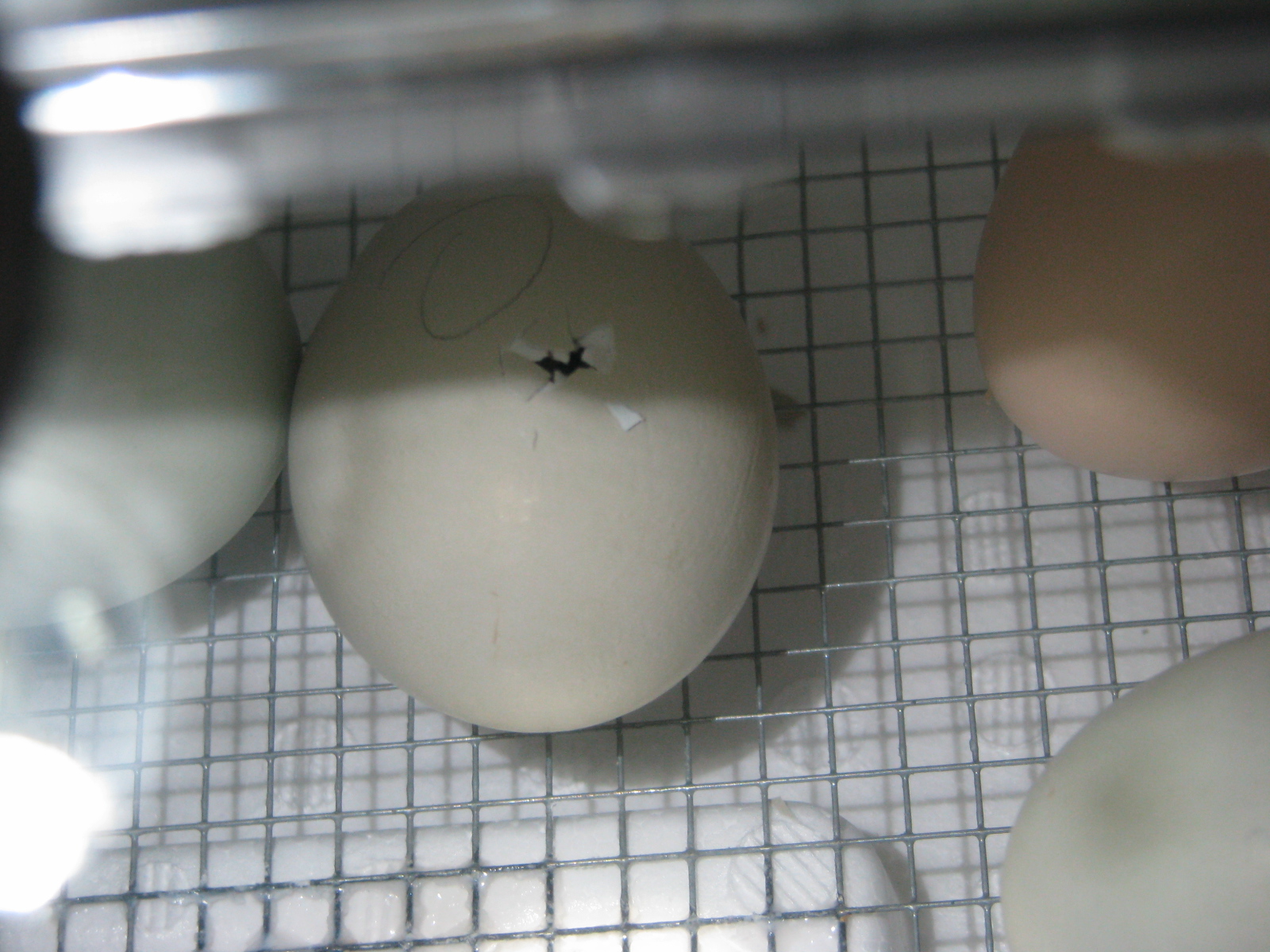
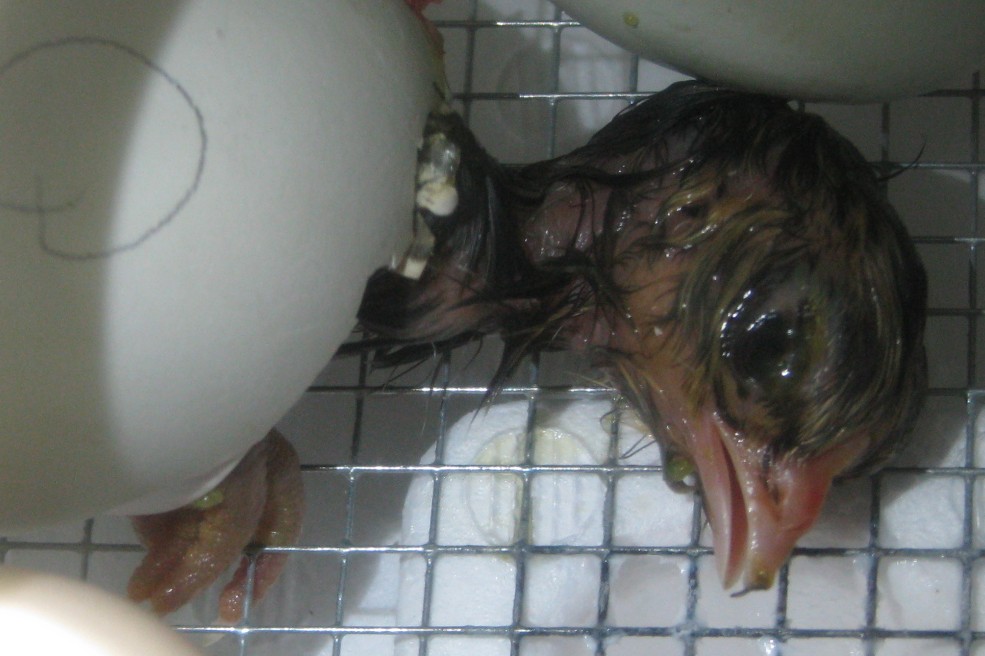
This was my first official attempt at hatching chicken eggs.  I used a Little Giant incubator, with no fan, but with an auto egg turner.  Temperature was kept at 99.5 degrees as much as possible, and humidity was kept rather low (called a dry hatch) at about 35-40 percent.  After 21 days, here’s what happened:

This tiny break in the shell is called a ‘pip’ (above pic).  The baby chick has broken through the inner membranes to make a tiny hole, and to put a tiny crack in the shell.  Baby chicks will remain in this phase for as long as a day.  You have to remember that the chick has been scratching non-stop for hours with the tiny ‘egg tooth’ on their beak to get to this point.  They need some rest!

 Here’s the next phase.  The chick has now opened up the pip and is enlarging the hole.  He’s getting ready to…..

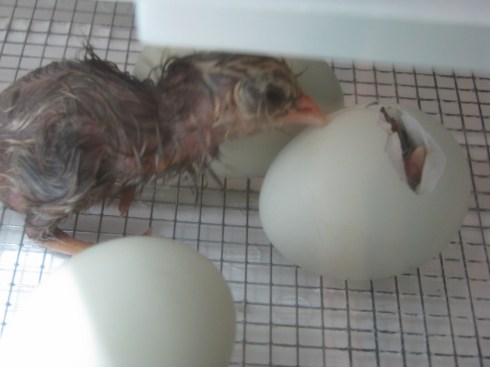
ZIP!  This is my favorite part of the hatching process.  You can see that his sibling is eagerly awaiting his arrival.  The ‘zip’ stage is where the chick literally zips all the way around the egg.  This part goes fairly quickly.  That baby chick is READY to get outta there now.


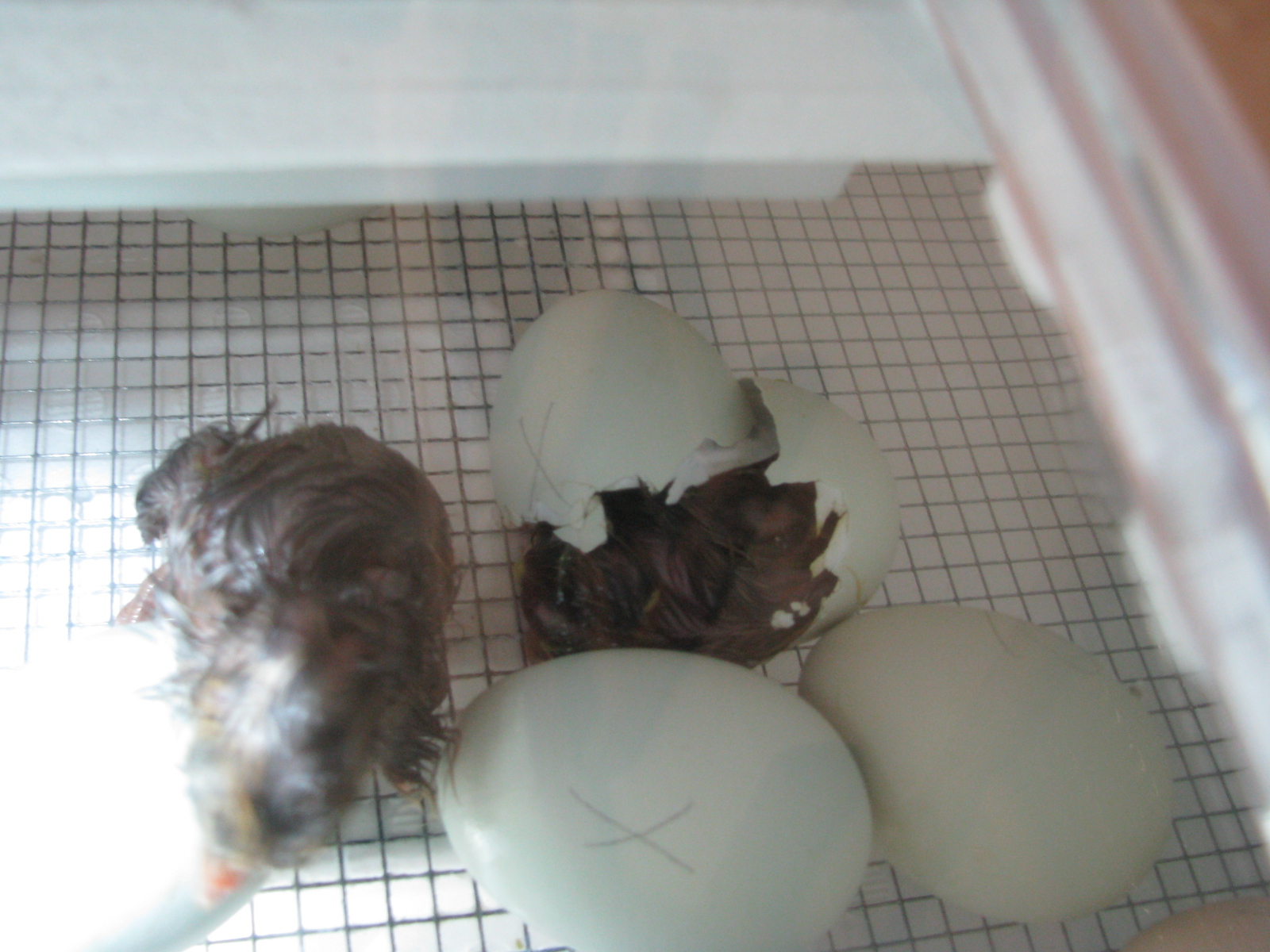
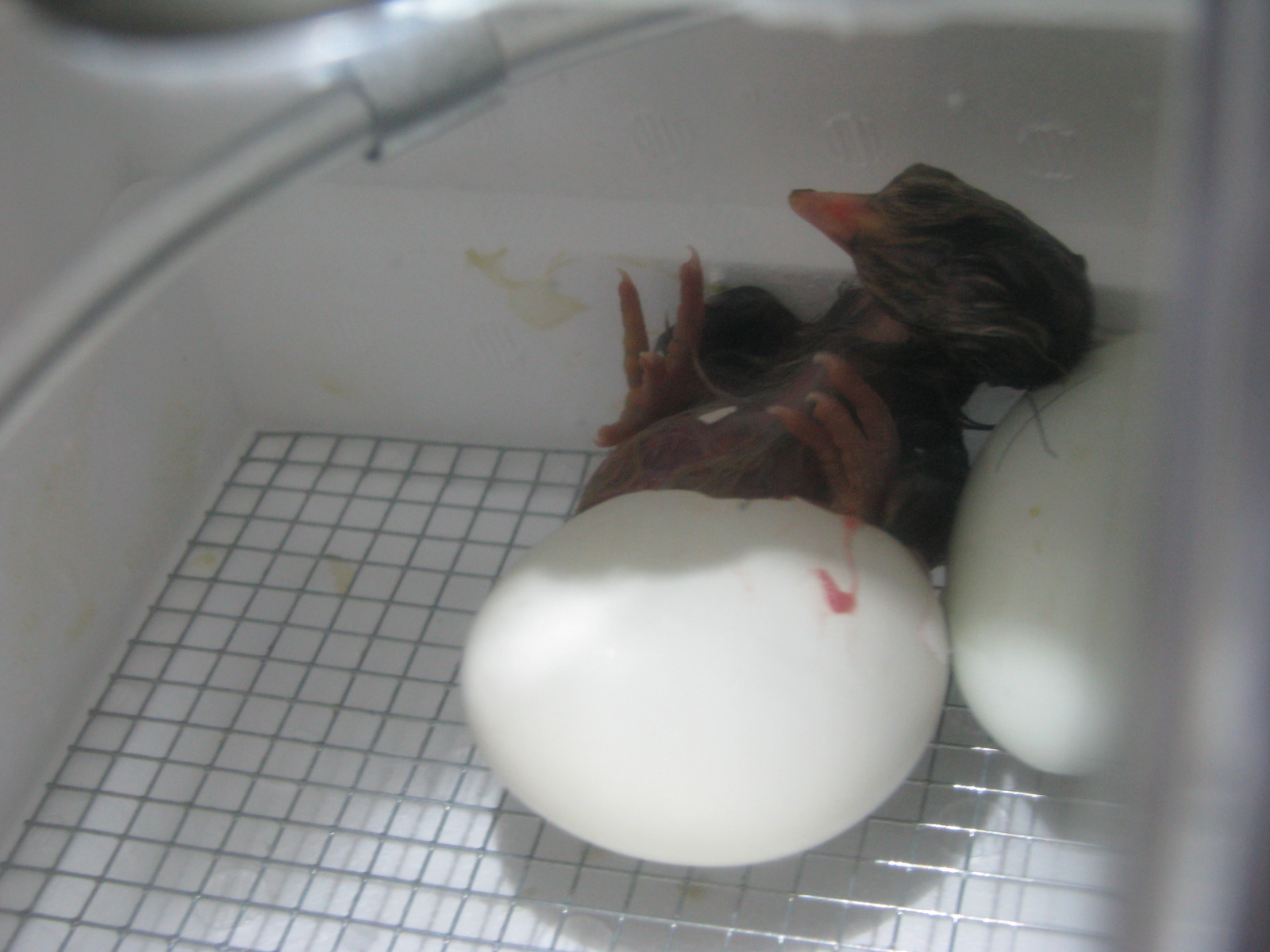
 The chick shoves the zipped eggshell as hard as he can, and:

He’s out of there!  Now it’s just time to dry off, which takes several hours.

My hatching percentage wasn’t great at all…likely due to the fact I was inexperienced with hatching bird eggs (I have hatched reptile eggs 100% in the past).  This time around, I am trying a higher humidity level since I went and checked humidity with a hygrometer under a brooding hen and found it to be around 60%.  I’m currently setting more eggs at 99.5 to 100 degrees with the humidity around 50-52% and at the 2 week check, which was yesterday, I only had 2 eggs not develop further after my Week 1 check, so I’m excited!  Right now I have 11 ‘Easter egger’ eggs and 4 Silkie cross eggs. 

Here are more post-hatch images:

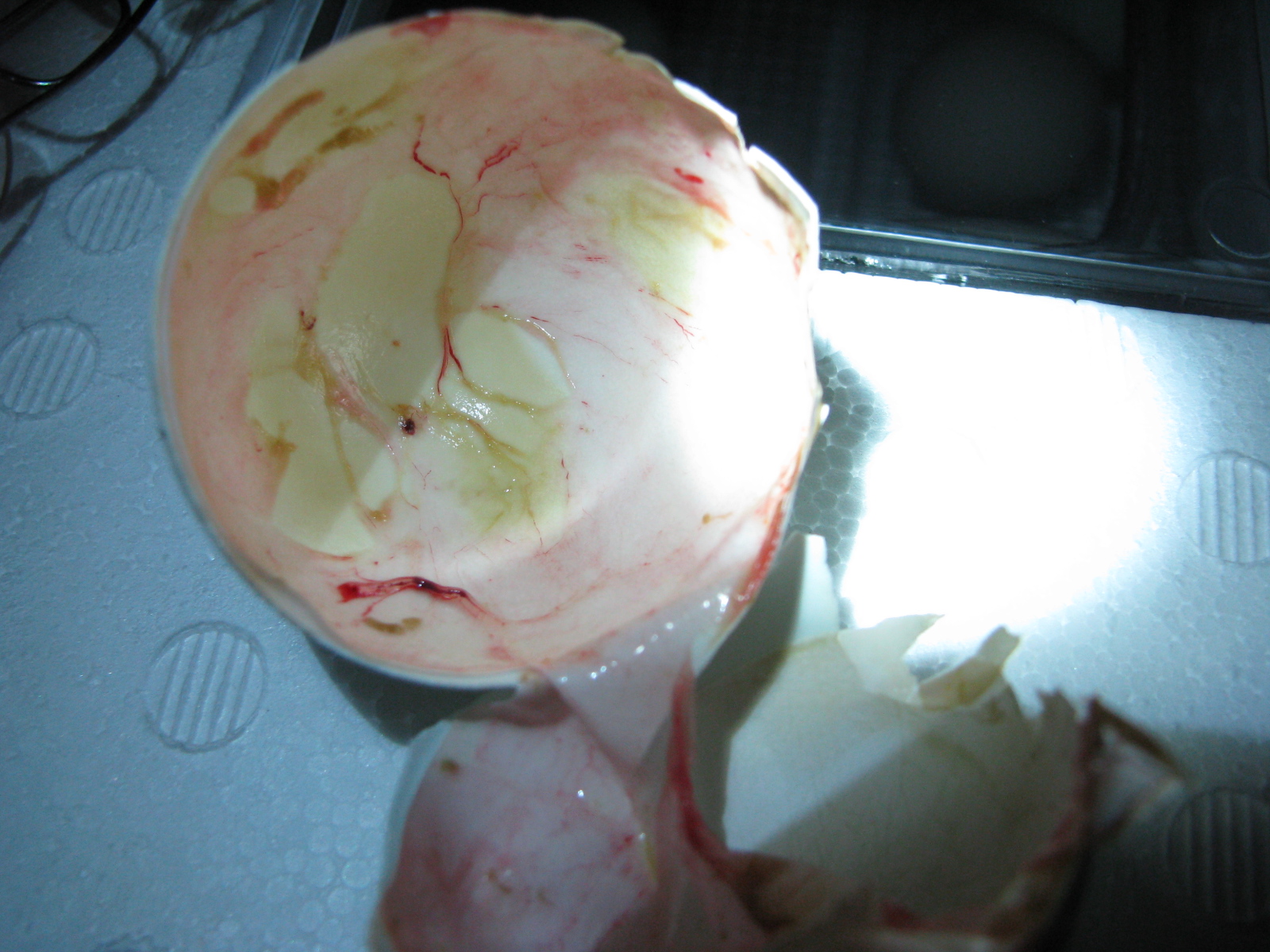
Here is the shell after a good hatch.  There are 2 inner membranes in the shell.  The first one closest to the chick contains the blood vessels which have sustained the chick in utero, if you will.  It is a very thin, clear membrane.  The next membrane is a tough, whitish membrane.  If the chick takes too long to hatch, this membrane will dry out too much, causing the chick to suffocate/die in the shell.  This is another reason why correct humidity is so critical.  You’ll see that there is a little pink…this is just where the vessels were.  The chick absorbs the blood which was in them during the hatching process.  This is why you CANNOT just peel a chick who is almost ready to hatch out of the shell.  Doing so will cause massive hemorrhaging and death to the chick.  I have ‘helped’ some chicks hatch, but it is an extremely slow, delicate procedure that must be done in gradual phases, over the course of many hours.

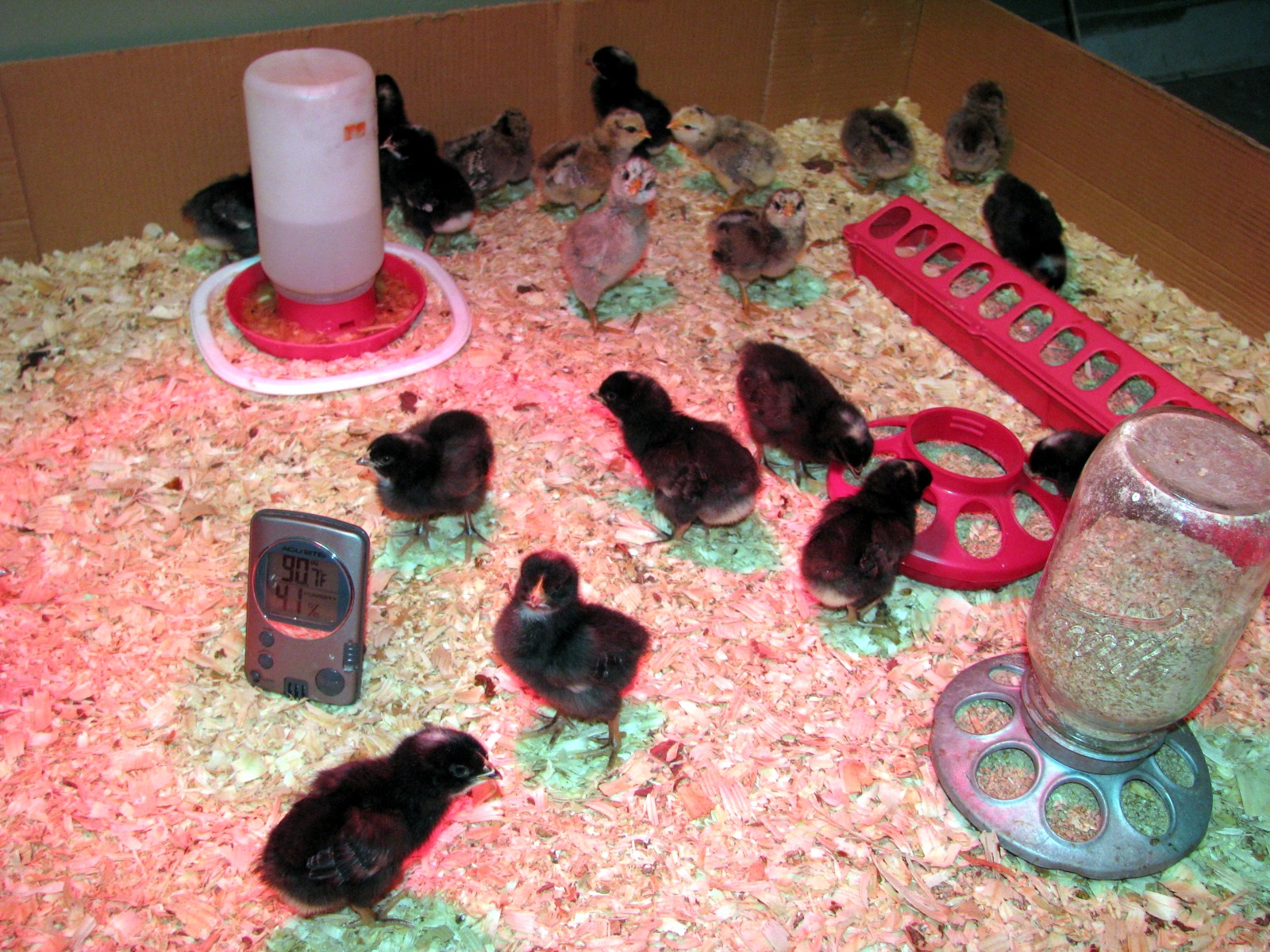
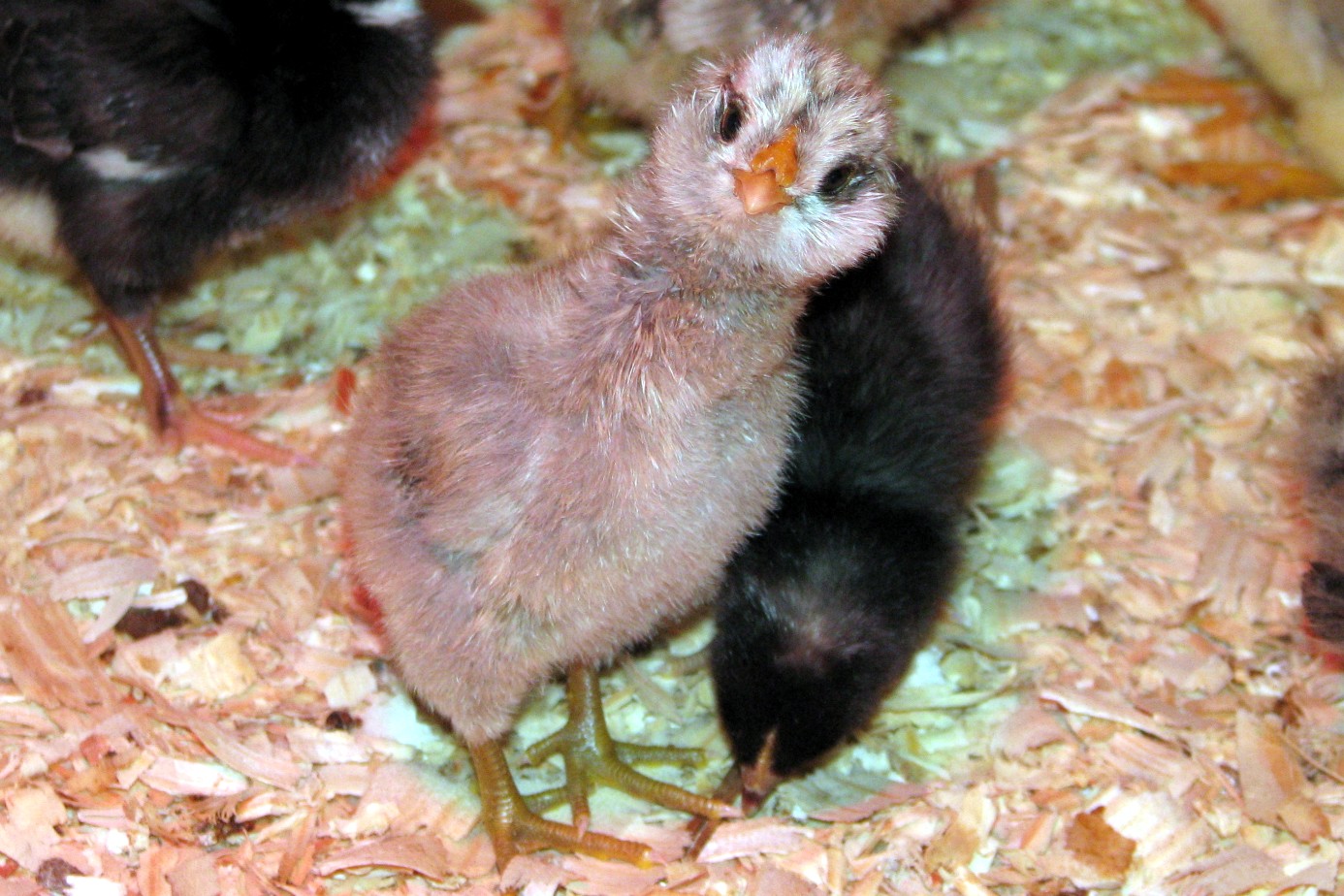
Now here’s some cute and fluffy pics of the chicks at a few days old.  The black chicks, which are Barred Plymouth Rocks, are not the ones I hatched myself.

And, how do YOU do?

A very special thanks to the Swanson family for allowing me to hatch their eggs!

Where’s Wayward?

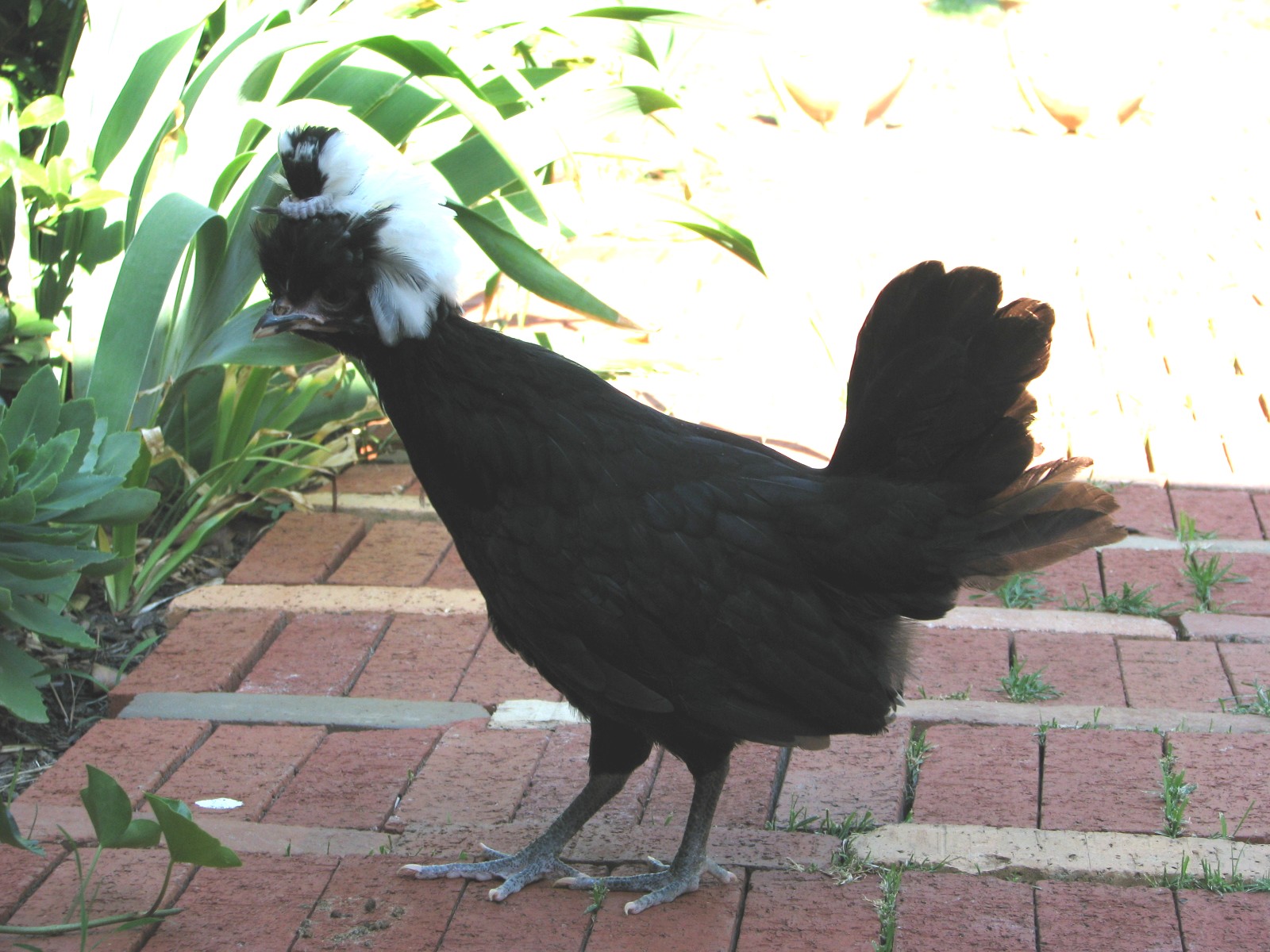
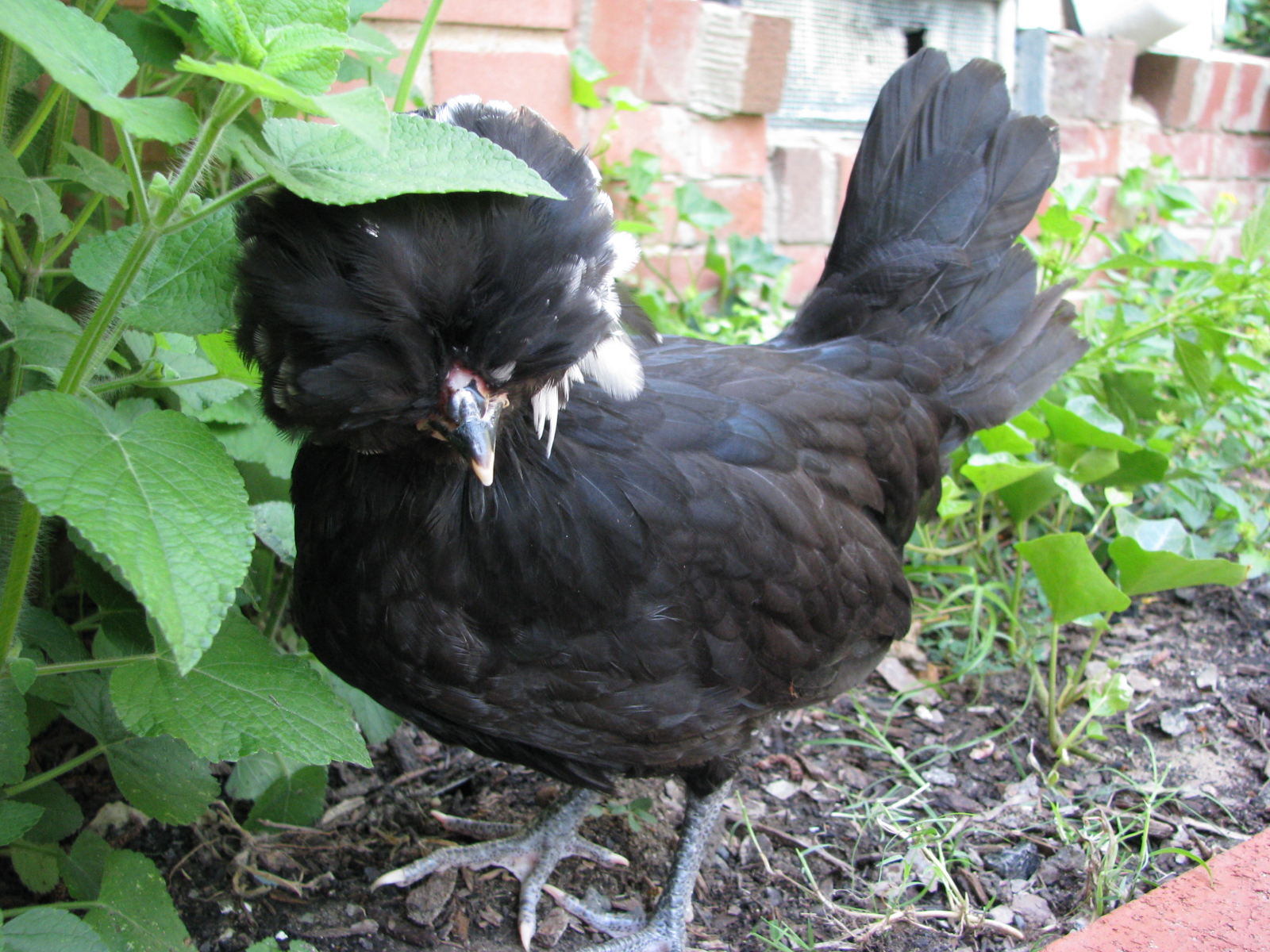
A few months back, I got some Polish chickens from the feed store.  Polish are a breed with a so-called ‘top hat’, which is just a big ball of feathers atop their little heads, which pretty much make the chicken look like a creature with a chicken body with a lollipop stick head and neck.  Really, it looks very similar to a Dr. Seuss Truffula Tree, stuck on a bird’s body. That’s a bit more accurate.  Anyway, due to the large ball of feathers on their head, their vision tend to be partially, if not almost fully, occluded.  Enter Wayward.

Wayward Jones is a White Crested Black Polish. This means she is primarily a black chicken with a white poof on top of her head.  I knew Wayward was ‘special’ pretty much from the start.  During their first outdoor excursions, Wayward would always end up where the other chickens WEREN’T, crying desperately for someone to come and find her.  When I did go to retrieve her, she was usually so happy to see someone, she would run and jump into my hands and up my arm. 

One morning as we were leaving, we were almost out the gate when we saw a certain chicken over in the orchard who came running to the truck.  Mind you, the others were on the complete opposite side of the house, and this is really a pretty good clip away.  I’m not good with distance, but let’s just say it was a ways away!  Again, she was so happy, she ran to me and I deposited her with the other chicks. 

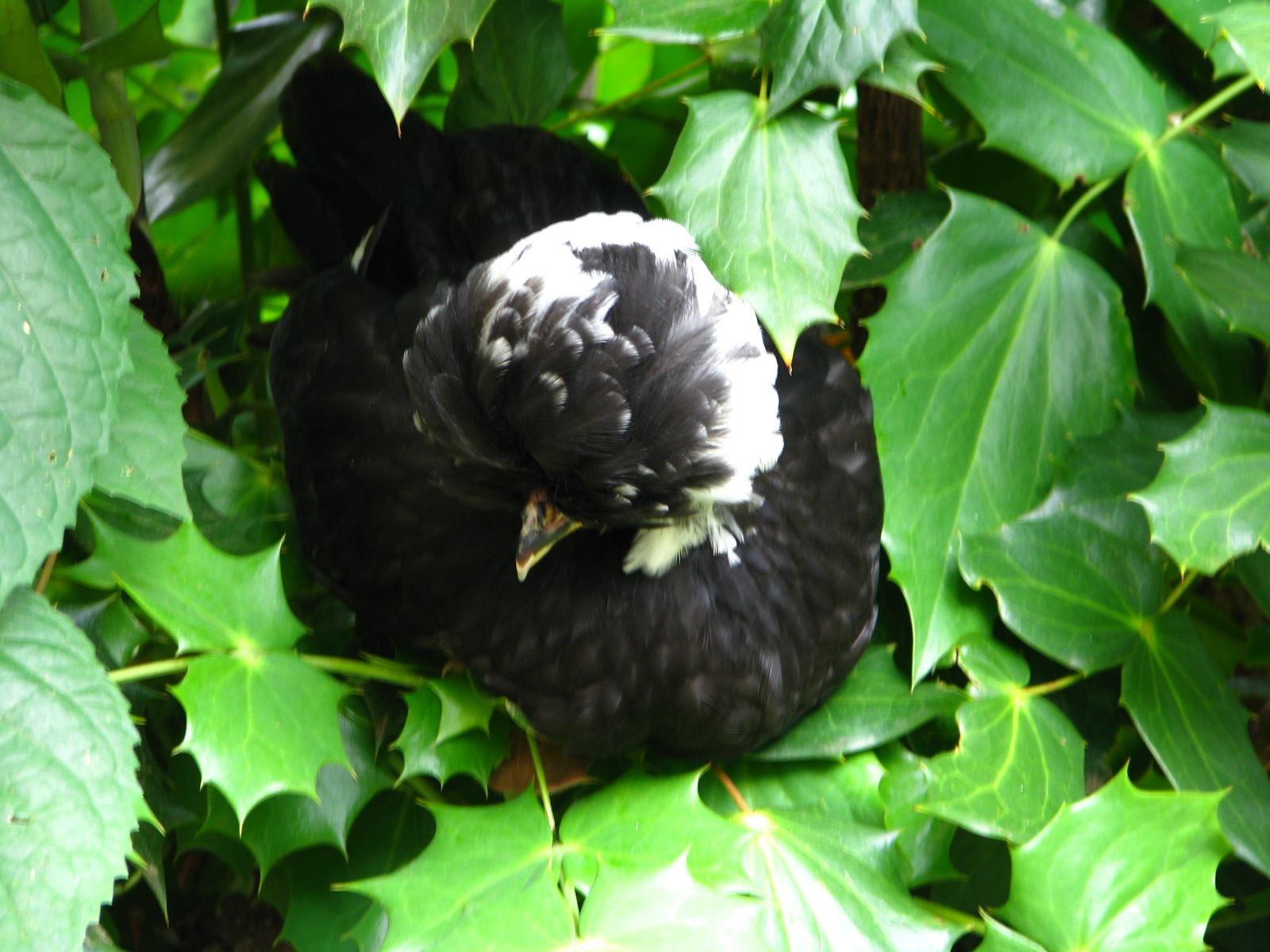
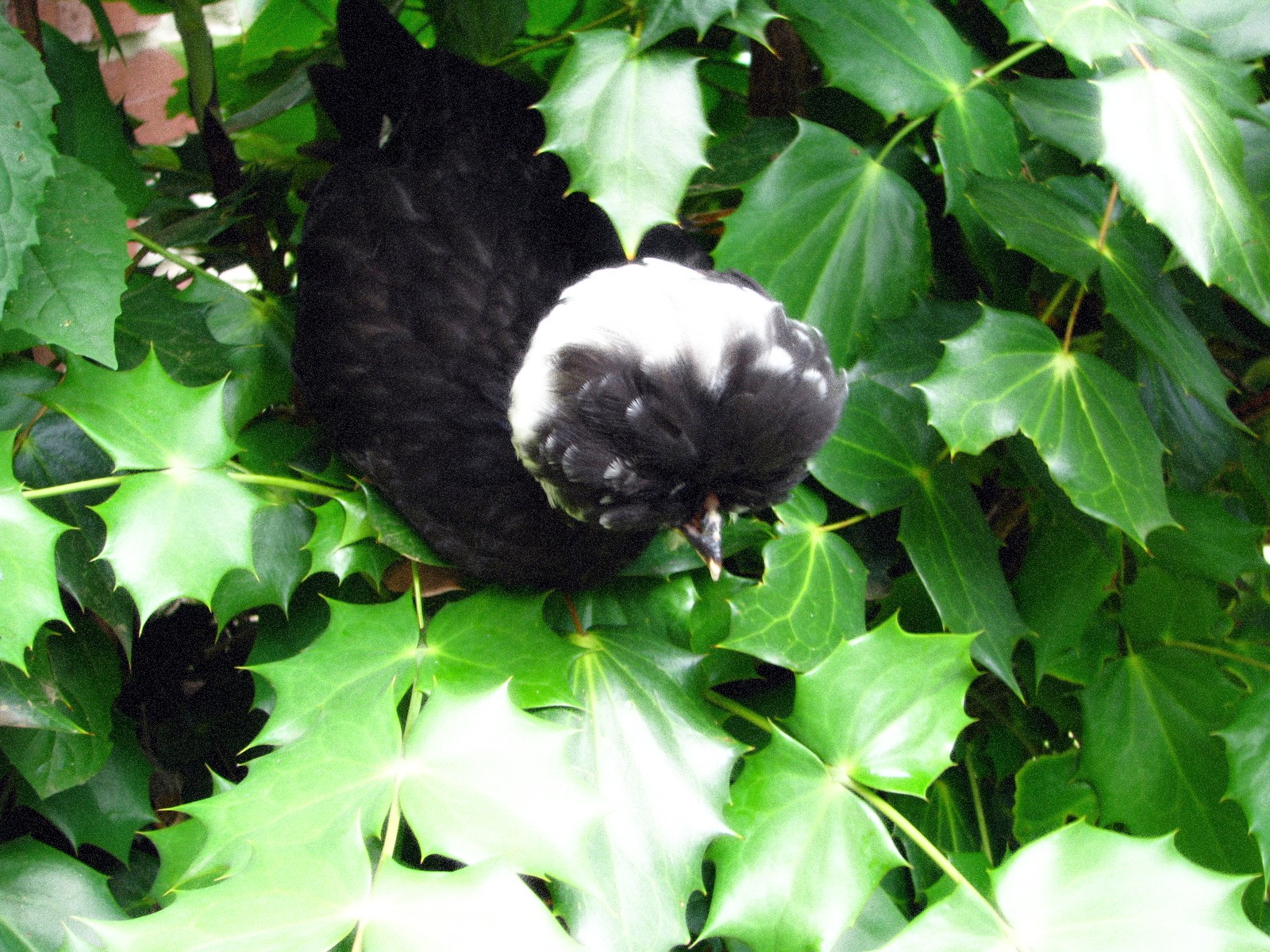
This scenario has repeated itself dozens of times over the last several weeks.  One day, I found Wayward in a shrub at dusk, so lost she just gave up calling and roosted.  The other day, I found her roosting on the back of a plastic toy dump truck.  The last straw was last Saturday when I was hanging our laundry to dry on our deck.  I saw a bird WAAAAAAAY down the hill behind our house, almost to the creek, and believe me, it’s a long way for a little chicken to go.  I looked at it for a minute, thinking it looked an awful lot like a guinea (which I do not have anymore, they are in the freezer now), before realizing who it was.  My shoulders slumped and I shook my head.  I thought to myself: One day, I’m going to get a collect call from Mexico, they’re going to connect me, and there will be nothing but clucking on the other end, and I’m gonna know EXACTLY who it is. I can foresee the conversation….

Me:  Sure, I’ll accept a collect call.

WJ: Booooooock???  Bock, Bock?

Me:  Wayward?  Is it you? You’ve been gone for weeks!

WJ: BOCK!  Booock, bock, bock, bock

Me: Well, I’m glad you’re OK, but what are you doing in Mexico?

WJ: Bock, bock, bock, booock, bock.

Me:  You got arrested for WHAT?  Where does a chicken hide drugs?

WJ: Bock, boooock, bock, bock, booock

Me: (irritated) OK, look, I don’t want to know any more about it. We’re not telling Jason, and we’re never speaking of this again.  I’ll pick you up in a week.

(connection ends)

 So, I flagged down Jason, who was blowing off the driveway.  I said, “Come look at THIS.”  He said, “Ok, where’s Wayward?”  Does that give you ANY idea how routine this is? I could have been asking him to come look at anything on earth, but he knew it was Wayward, right off the bat.

So, I went and retrieved Wayward yet again, but this time I had a plan.  I took a hairband and made her a ponytail (chickentail?) out of her head feathers.  She went into a slight stage of shock, then surprise.  She ran around in circles, so excited she could finally see something other than the backside of those feathers.  This is the story of Wayward Jones the Polish chicken.

Super Fantastic Cat Alarm 5000

The other day, I adopted a housecat.  I have only had a housecat once in my adult life…for about a month (he was pretty much dumped in my lap and loved to dump on my bath rugs, so I found him another home).  Anyway, we found ‘Garfield’ on Craigslist.  Strangely, he was only about 3 minutes from our house. 

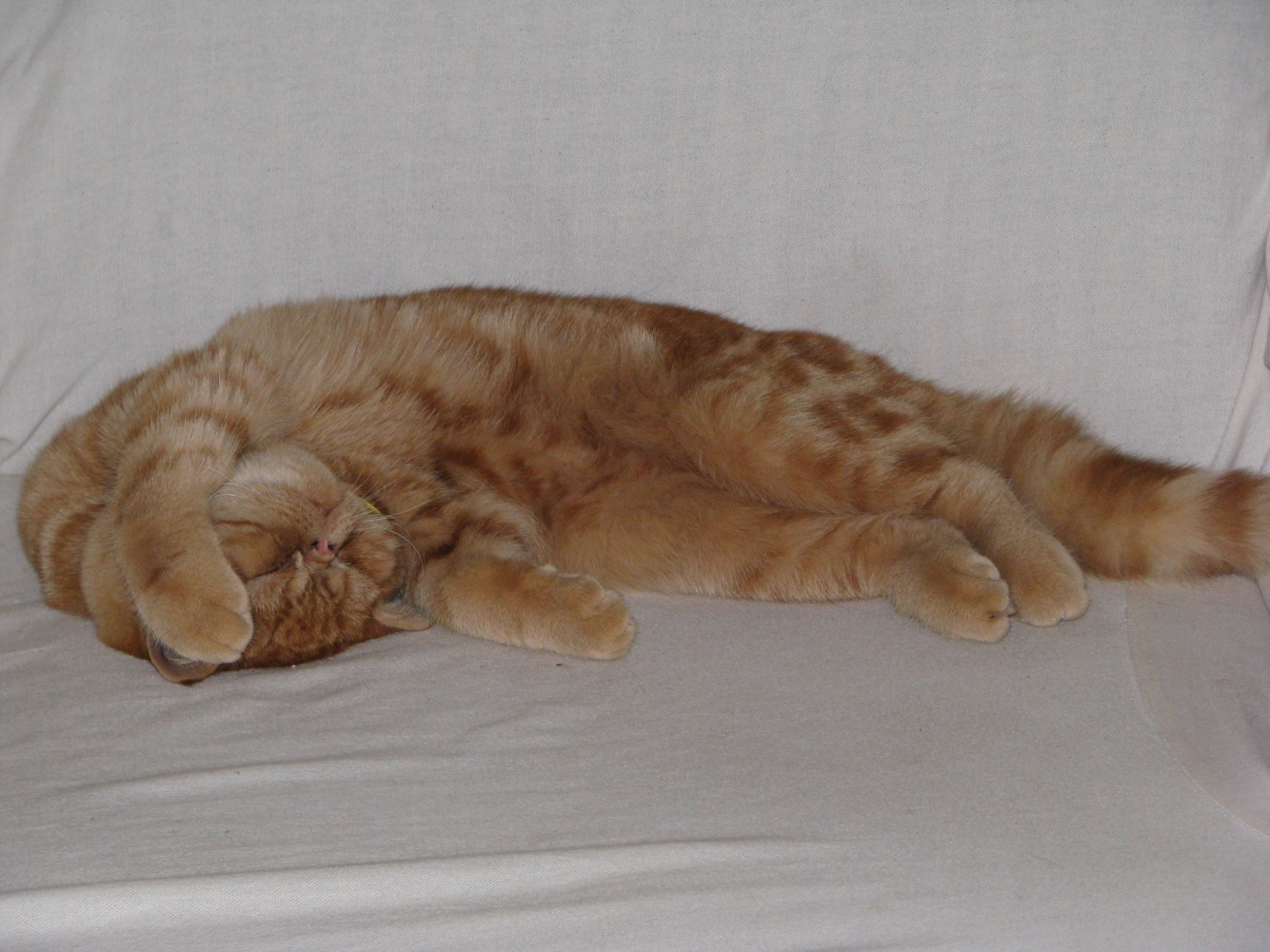
Garfield is the funniest-looking cat I have ever laid eyes upon.  He is an Exotic Shorthair, which is basically a Persian with shorter hair and a perfectly flat face.  I mean, really flat.  Here is is, performing ‘cat yoga’:

Not only does he look funny, his personality is hilarious. 

If Garfield is hungry, he meows.  If Garfield is thirsty, he meows.  If the litterbox is not properly cleaned, he meows.  And, if you are not graciously lavishing him with attention, he meows.  No doubt about it, this is a cat who knows what he wants in life.

So, the other day, I was attempting to sleep in on a Saturday.  At 6:45am, the ‘cat alarm’ has apparently been activated and I wake up to SNIFF SNIFF SNIFF right in my face and crack open my eyes, and Garfield is about 1/2″ from my nose.  “Garfield! Go find something else to do!”  I flip on my stomach and cover my head with a pillow.  Then comes: PUUUUUURRRRRPUUUUURRRRRPUUUUUURRRRR from deep in his little cat chest, so loud that it is now vibrating the coils in my bed and the noise penetrates my skull.  “GARFIELD, PLEASE!” Silence.  Then comes a large, furry critter jumping in the very center of my back, making small circles.  “Meow?  Meow? (DON’T YOU KNOW I’M HUNGRY, YOU STUPID HUMAN!)”  I try to ignore the fact that a huge ball of fur is making figure 8’s on my backside.  Silence.  Suddenly, I feel one of the straps on my pajama top being chewed.  Chomp, chomp, ‘meooooow’, ‘meooooow’.  I give up.  I am now slave to the cat, and give him his kibble. 

No better alarm than a hungry cat.

Creepy Crawlies

Even as a very young child, I have always been attracted to the ‘creepy crawlies’ of Nature.  Snakes, spiders, insects, invertebrates…whatever most people had nightmares about, I was usually out catching them with my faithful bug net. 

I think about my elementary school playground teacher, Mrs. Brown.  Poor Mrs. Brown.  Mrs. Brown probably had some sort of insect phobia (unbeknownst to me) and I was always trying to hand Mrs. Brown all sorts of insects in the schoolyard.  “But, Mrs. Brown, they won’t hurt you!”, I would plead.  She would graciously turn down my tent caterpillar, grasshopper, etc.  I am not sure if she ever did eventually hold any of my prized finds.  Anyway, Mrs. Brown was in the same Sunday school class as my Mamaw and would always tell her how I was forever trying and trying to get her to hold one of my critters and how I would chase boys with worms. 

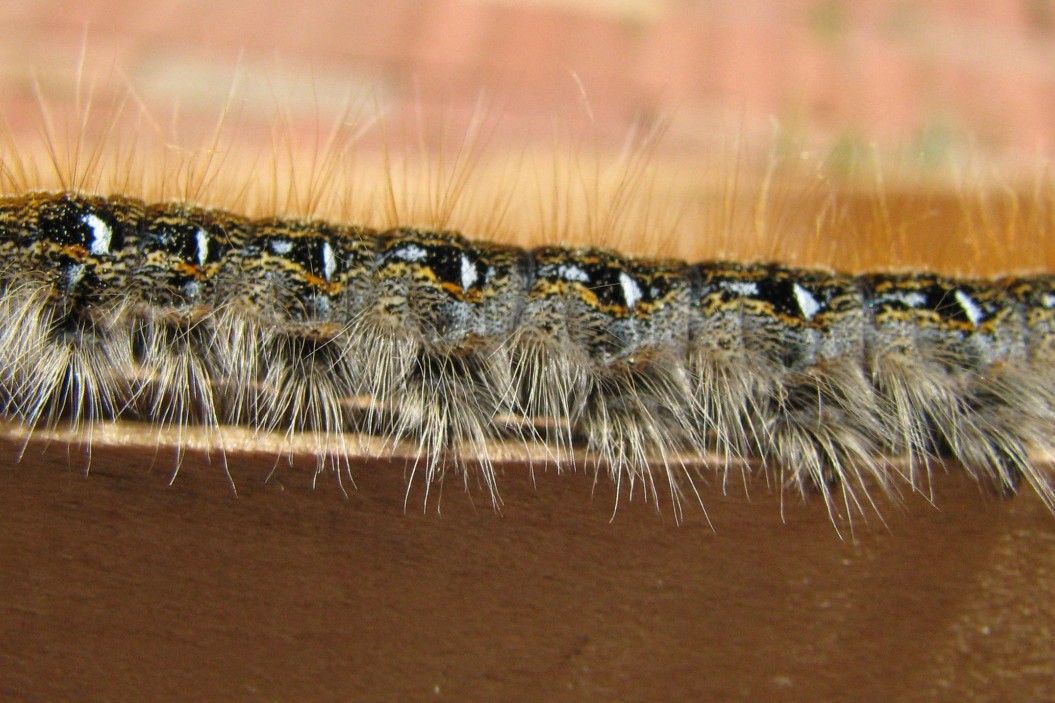
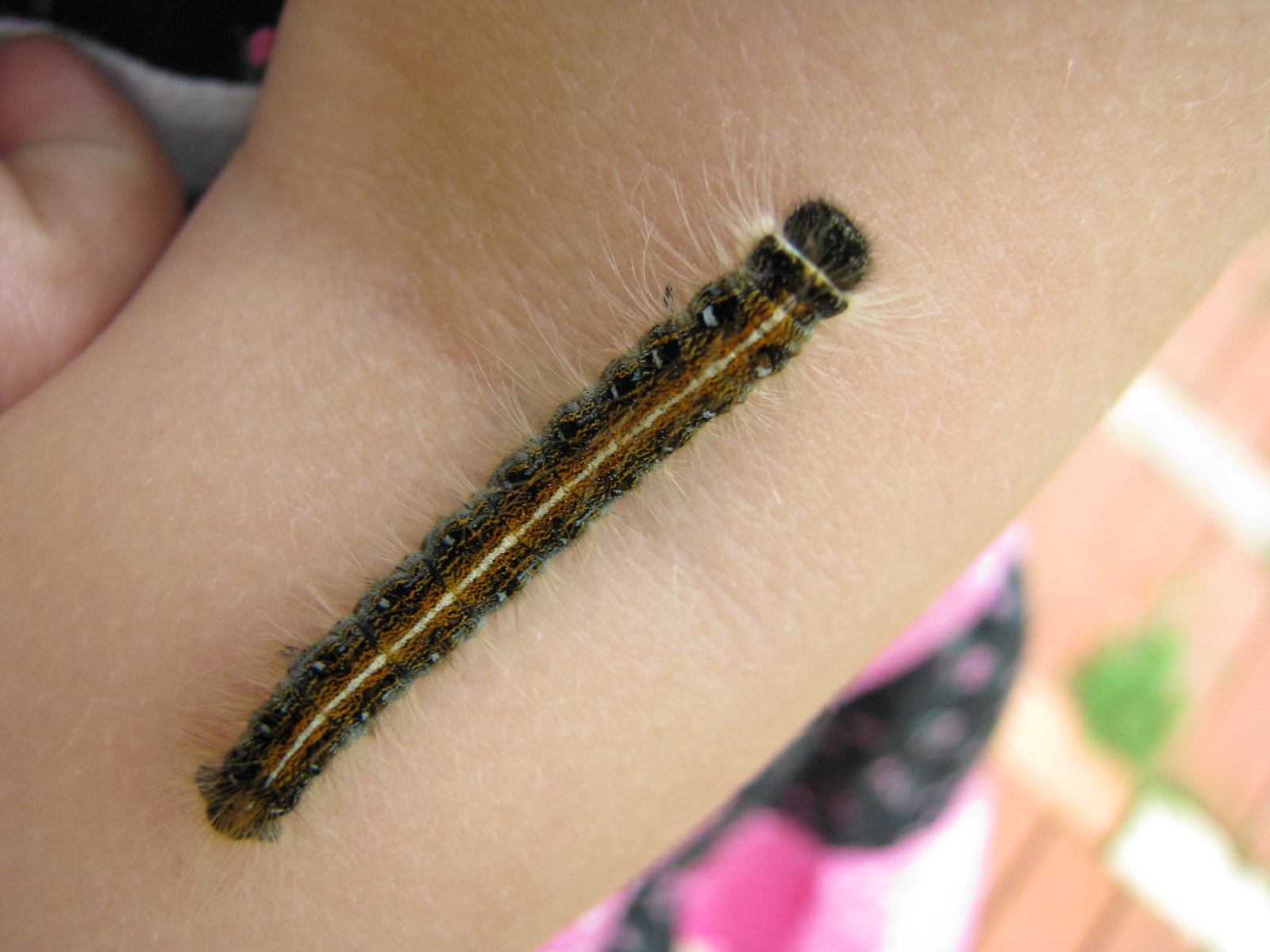
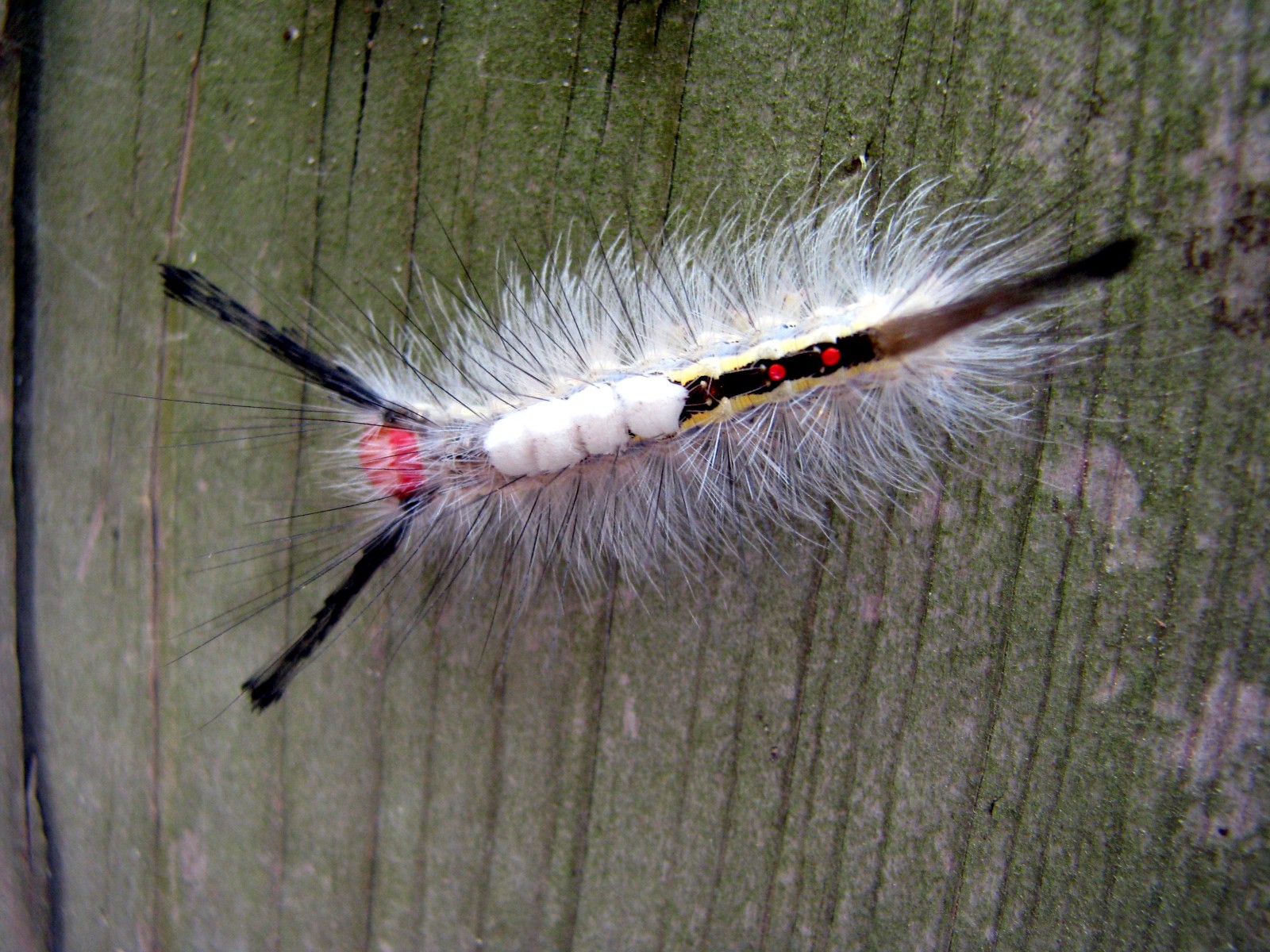
Anyway, I am proud to say that my own little ones are fairly fearless around invertebrates, and little Zoe carried around a poor tent caterpillar for days, calling it, “my little friend”.  Tent caterpillars, though somewhat destructive to some trees, have always intrigued me.  Honestly, they look like a crawling Oriental rug.  Their patterns are so complex and beautiful.  Here is one of Zoe’s ‘little friends’:

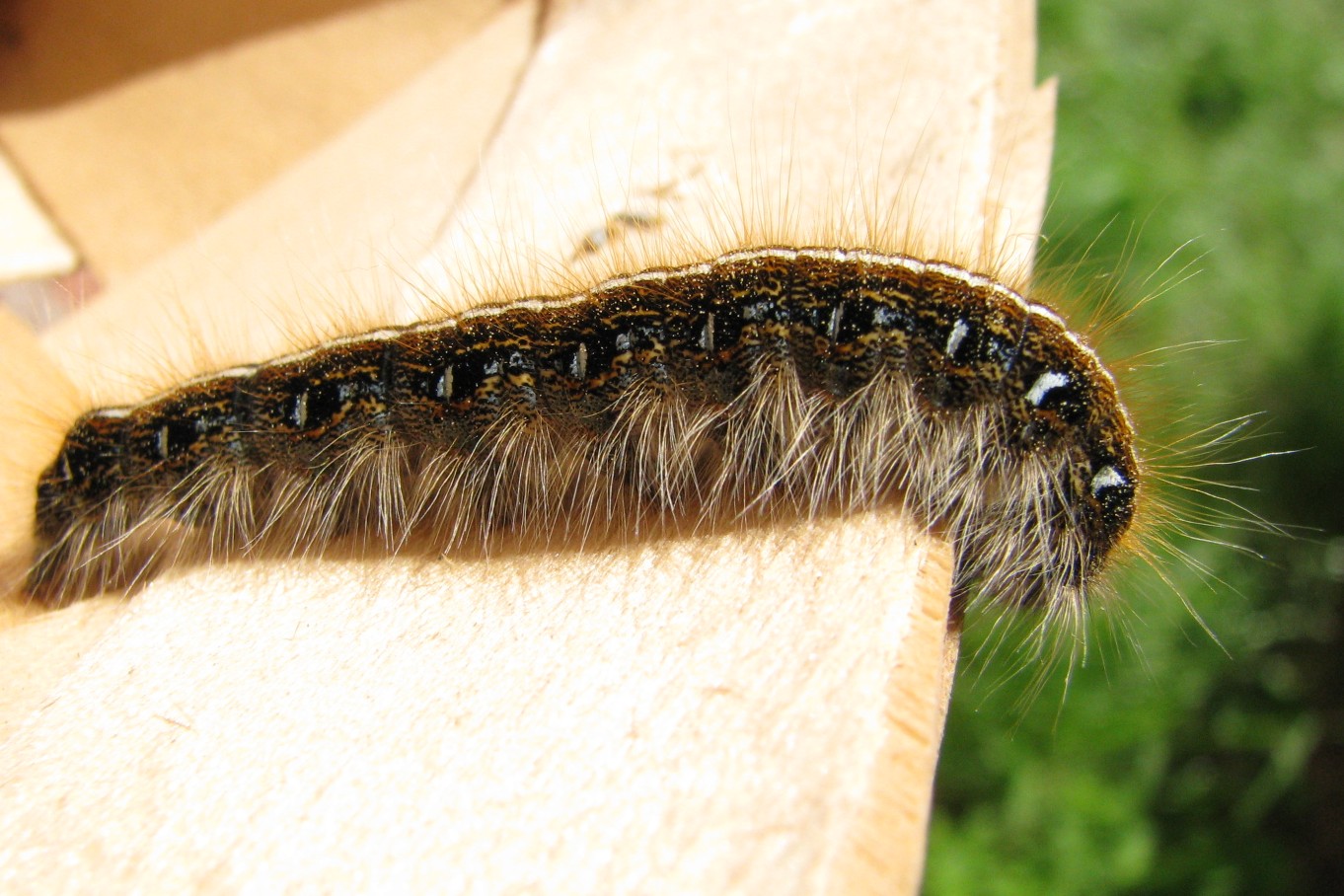
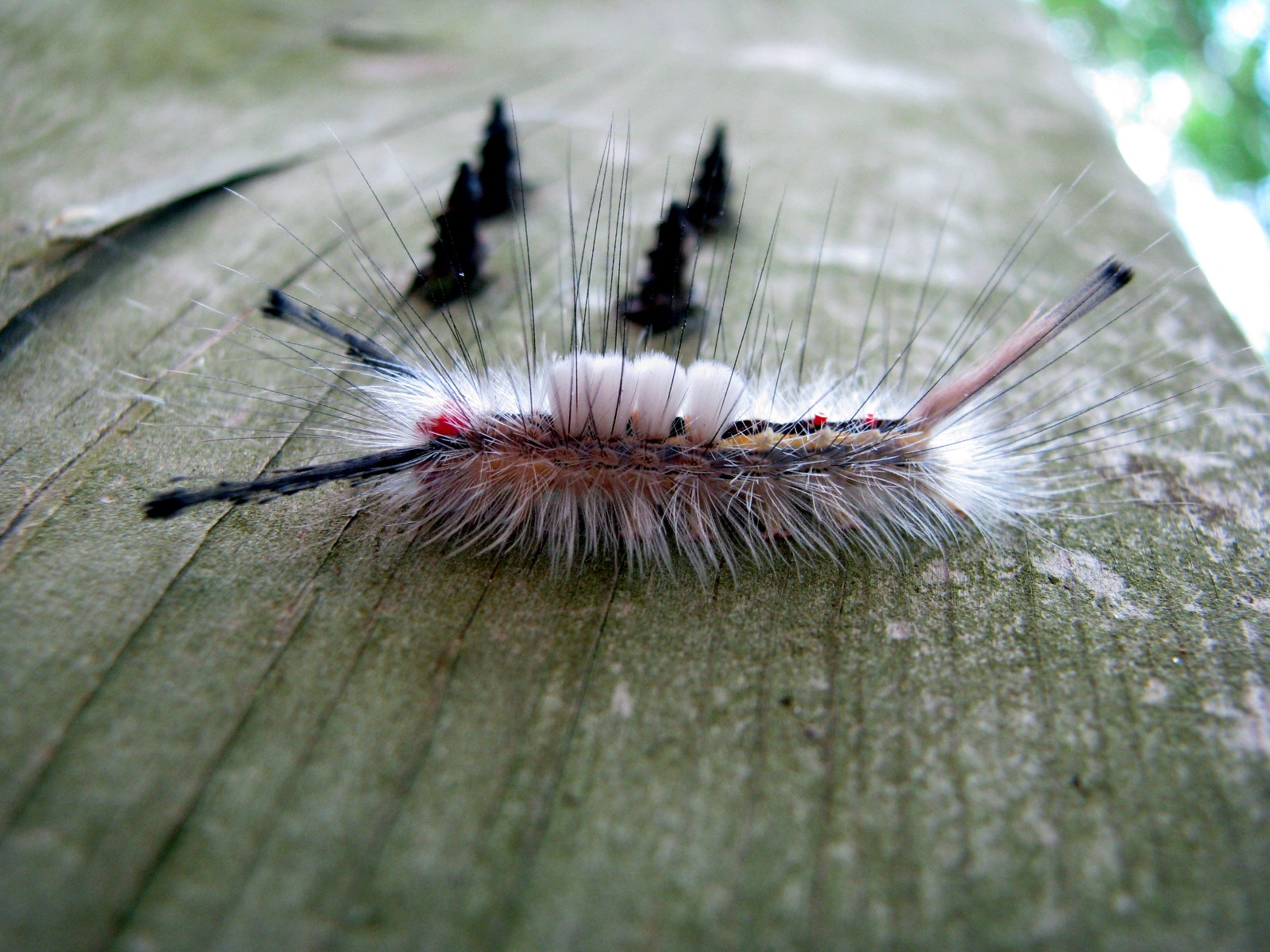
Of course, these little guys do not possess stinging hairs, however many caterpillars DO and some are extremely painful, so be sure you know what you’re picking up!  Here is another little guy  I found on one of our gates the other day. 


Generally, the more colorful the caterpillar, the best it is to NOT TOUCH. Not always true, though, as in the case of the potentially dangerous Puss caterpillar ,  which is what your grandparents call an ‘asp’.  I remember Mamaw nearly having a heart attack when I found a Wooly Bear larvae one day beside her house.  “Asp! Asp!  You stay away from that!” as my Papaw ground the poor little Wooly Bear into oblivion.  Naturally, I had to run into the house and grab my favorite book, my Reader’s Digest North American Wildlife identification book, only to discover that Wooly Bears are completely harmless.  Oh well.  You will often see Wooly Bears crossing the road in the fall.

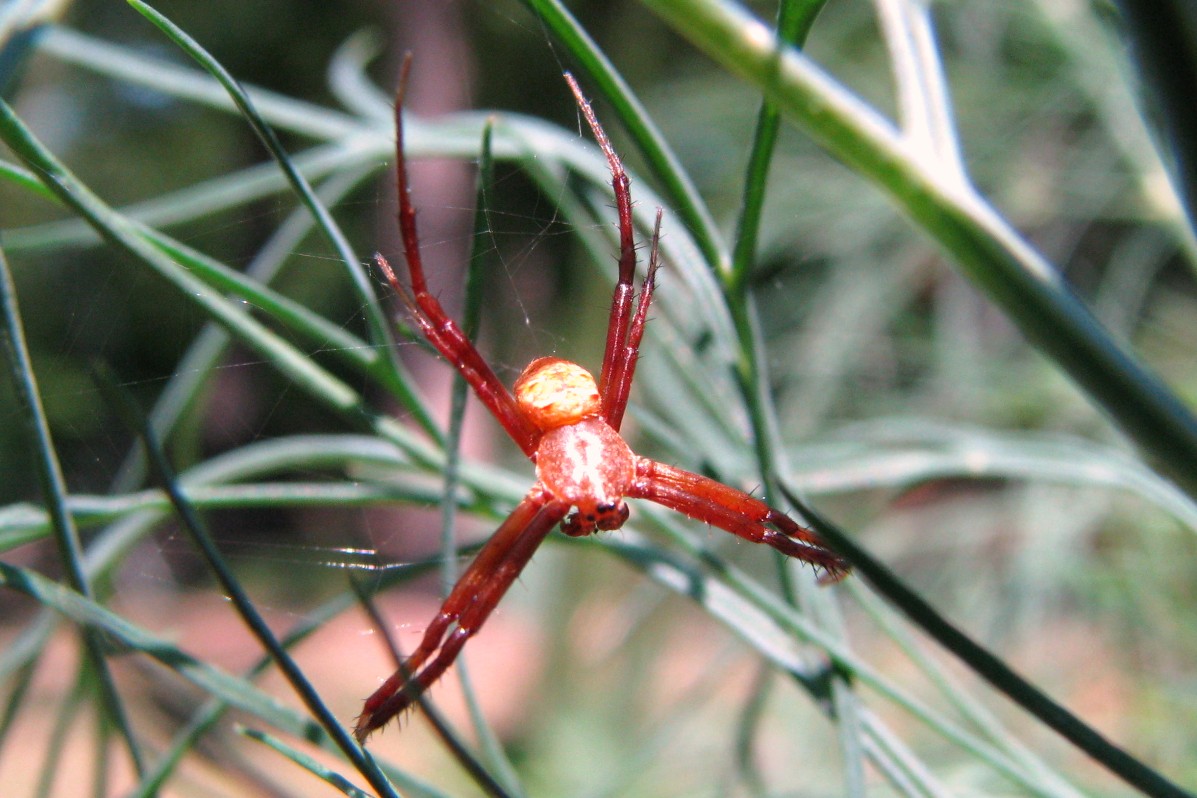
Anyway, here is a neat little spider I found today, hanging out on my dill:

They may be creepy and crawly, but they all really do serve a purpose!  Well, maybe except cockroaches.  I can do without the cockroaches!  But, seriously, I don’t use pesticides for the simple fact that they indiscriminately kill bugs, whether they are ‘pests’ or not.  When you kill one link in the chain of life, the chain can’t go on.

Goodbye Tom, hello sausage

As you may have read earlier in my blog, I butchered my first turkeys earlier this year.  I am going to give you a step by step on how I made some turkey breakfast sausage and some ground turkey.  Here we go!

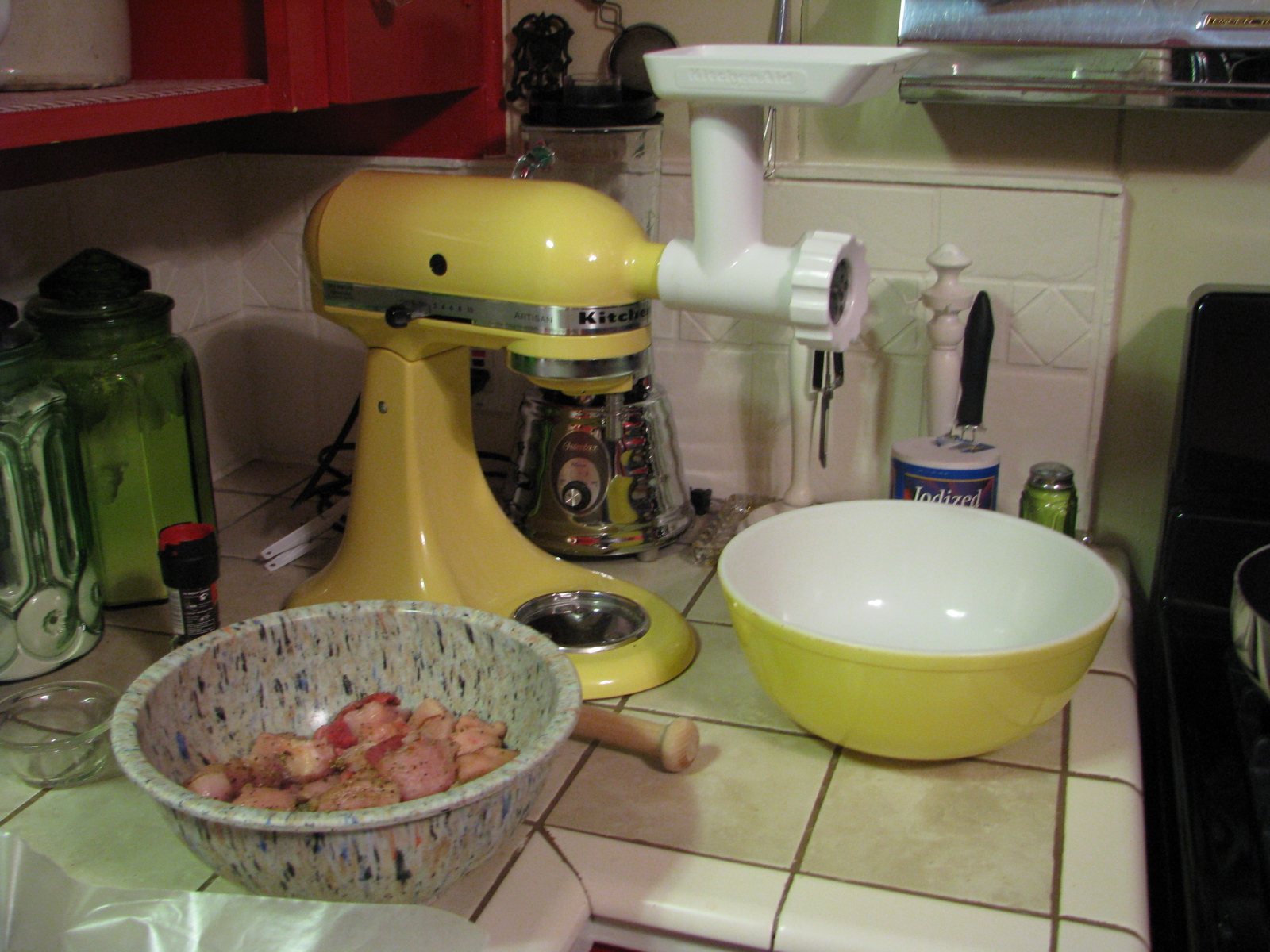
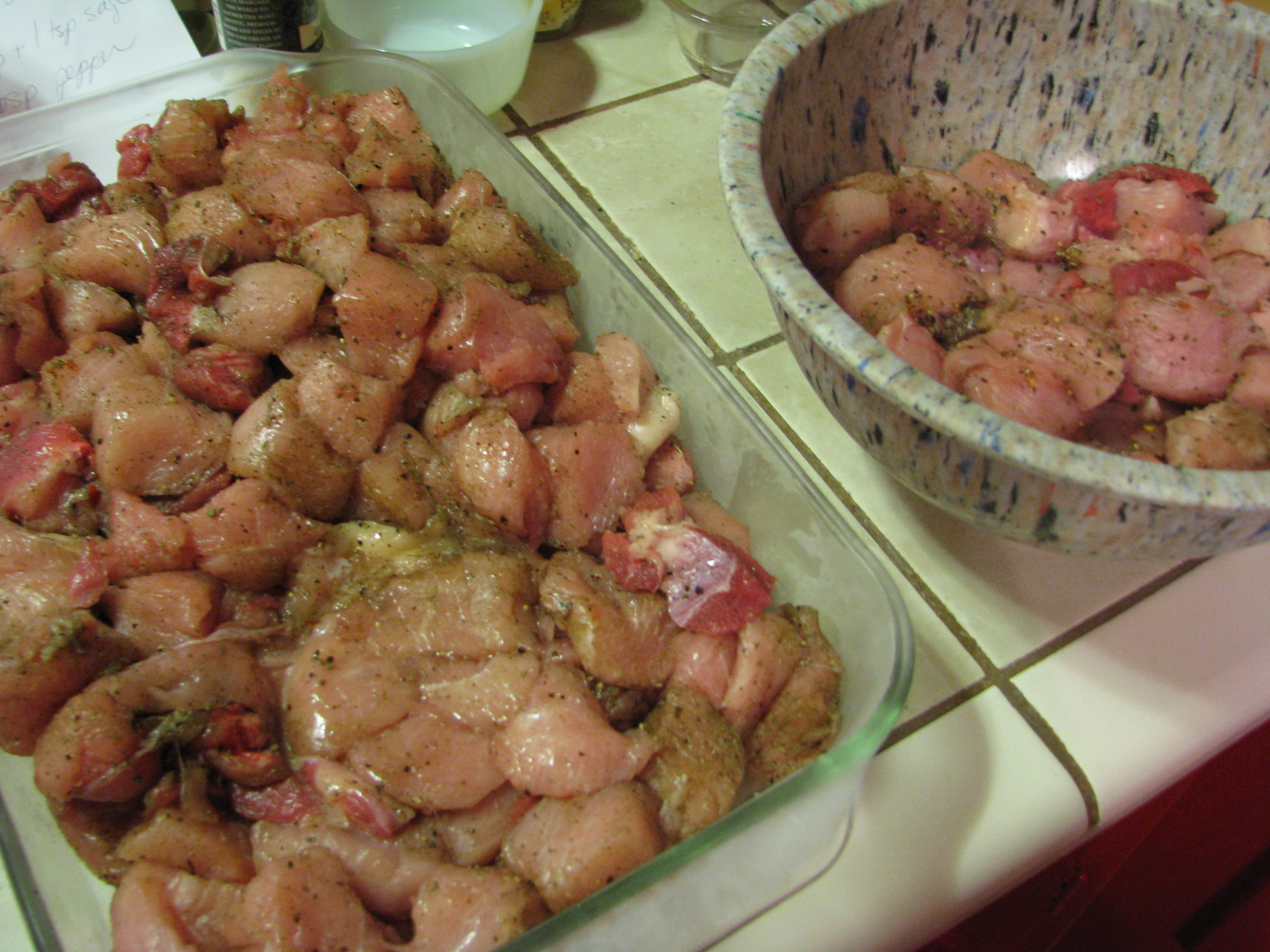
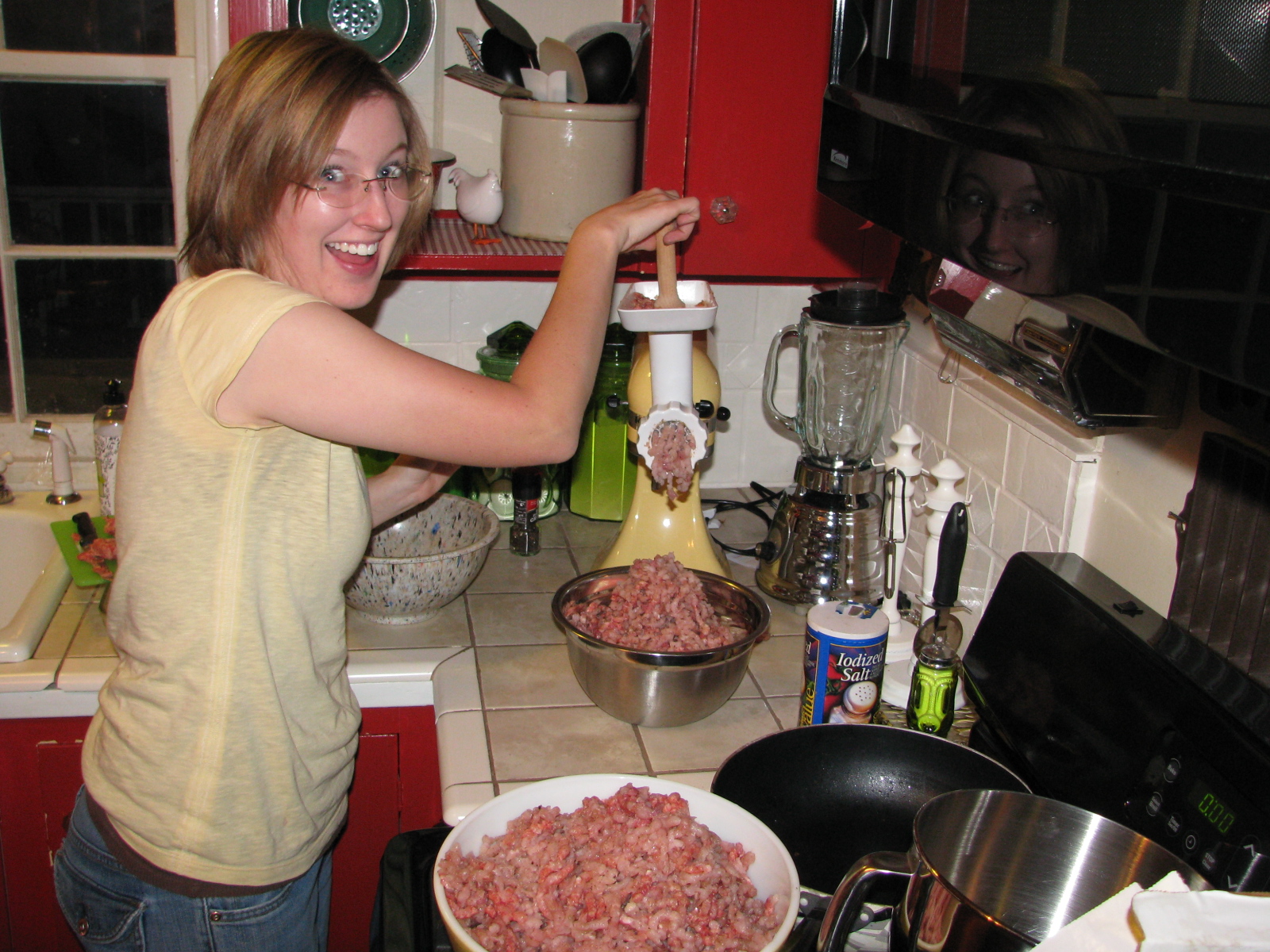
All you need for turkey sausage:  I used a meat grinder attachment for my KitchenAid, a big ol’ bowl of turkey chopped into 1.5″ pieces, a roll of pork sausage (they were out of plain ol’ fat), and another big bowl to catch the ground meat. 


 Most of the turkey was breast meat, but I did have some leg meat in there.  I chopped into 1-1.5 inch cubes to feed into the grinder, and I seasoned with a sausage recipe I found on Allrecipes.  Mostly, it was salt, pepper, poultry seasoning, and some red pepper.  I don’t remember the rest, but if you look up breakfast sausage on most any recipe site, you’ll find something that looks tasty.  You also need to stick your meat in the freezer for about 30 minutes prior to grinding.  It makes it a LOT easier to pass through the grinder.  The metal face plates should also be stuck in the freezer as well.

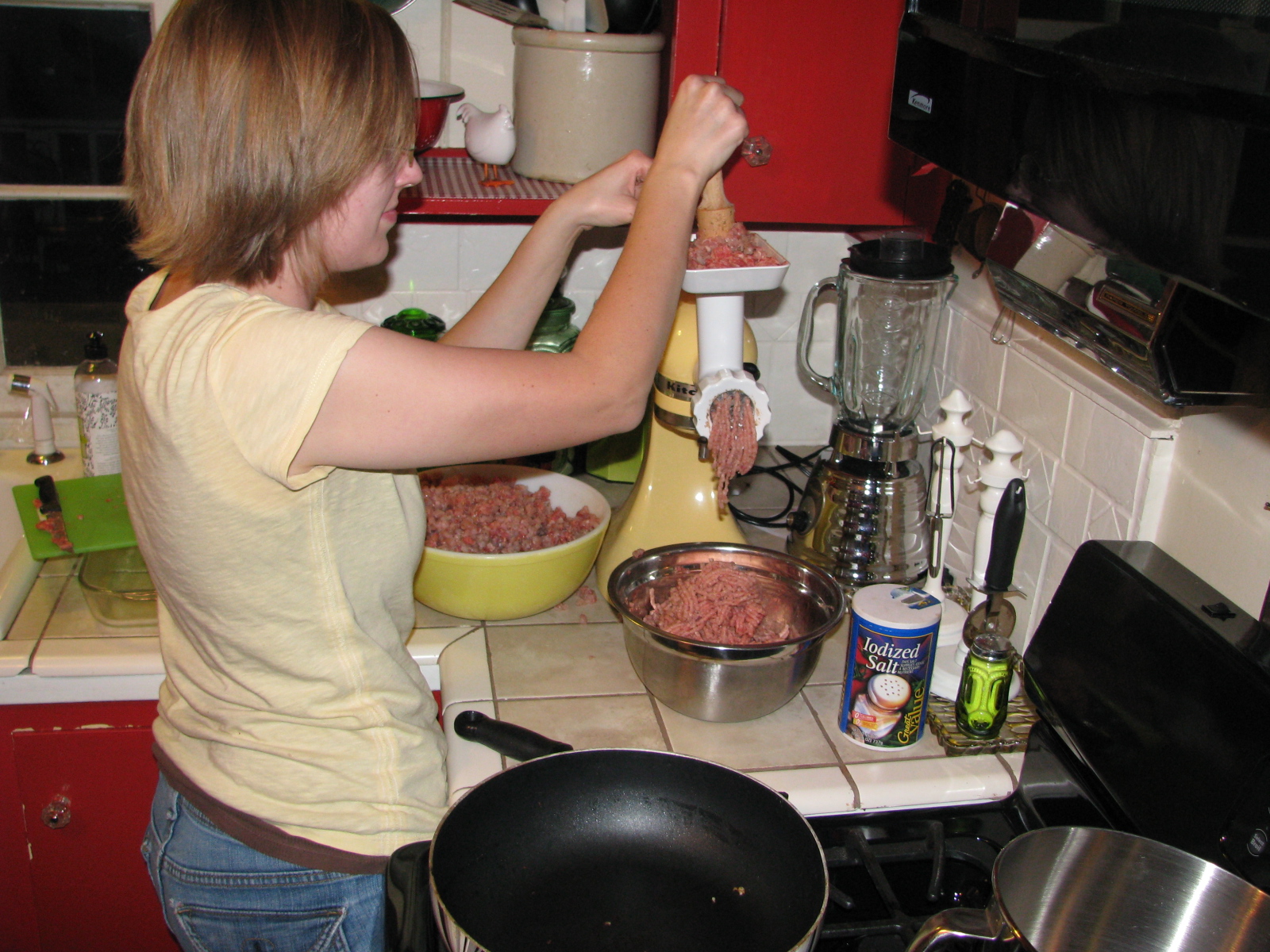
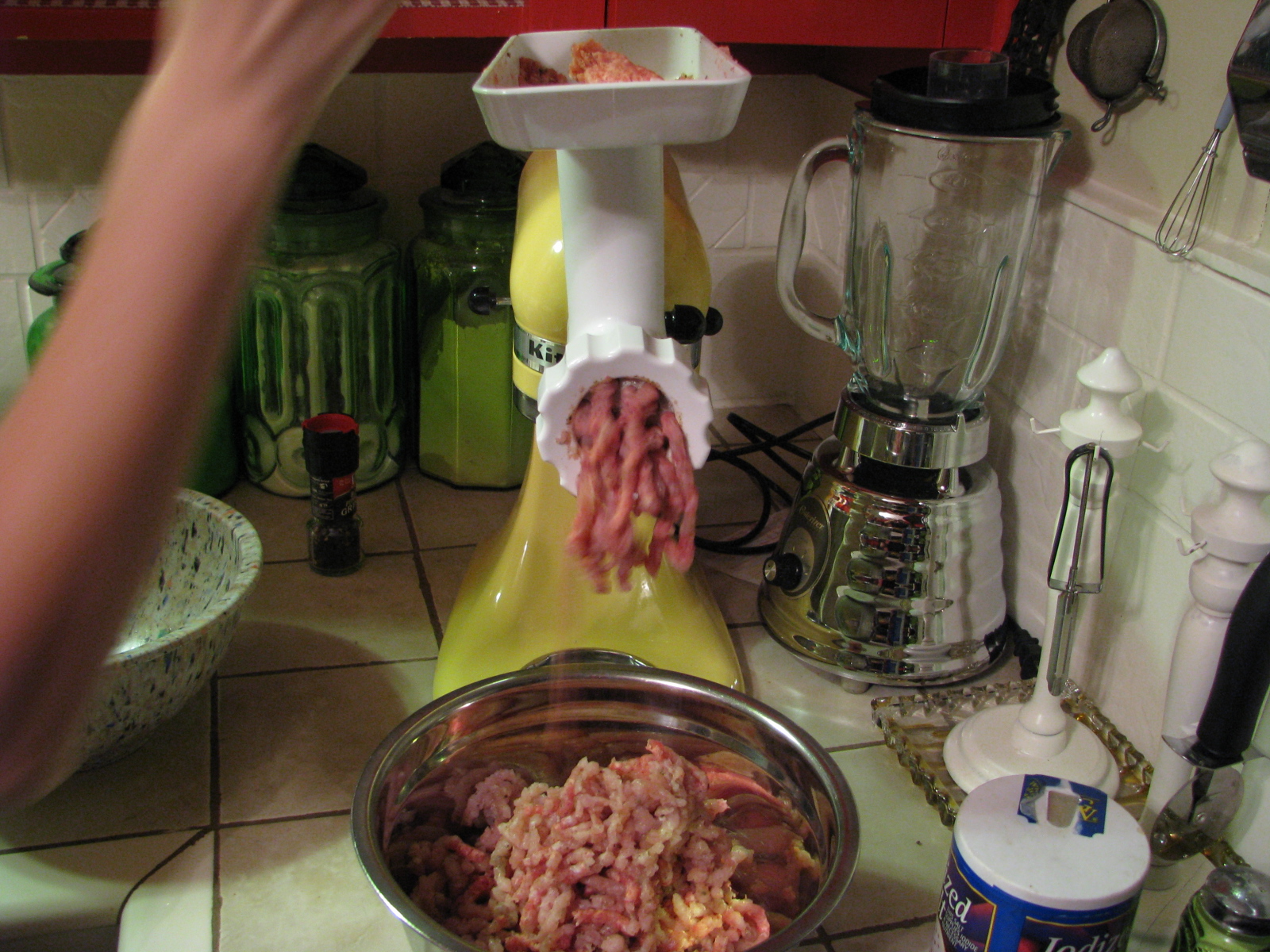
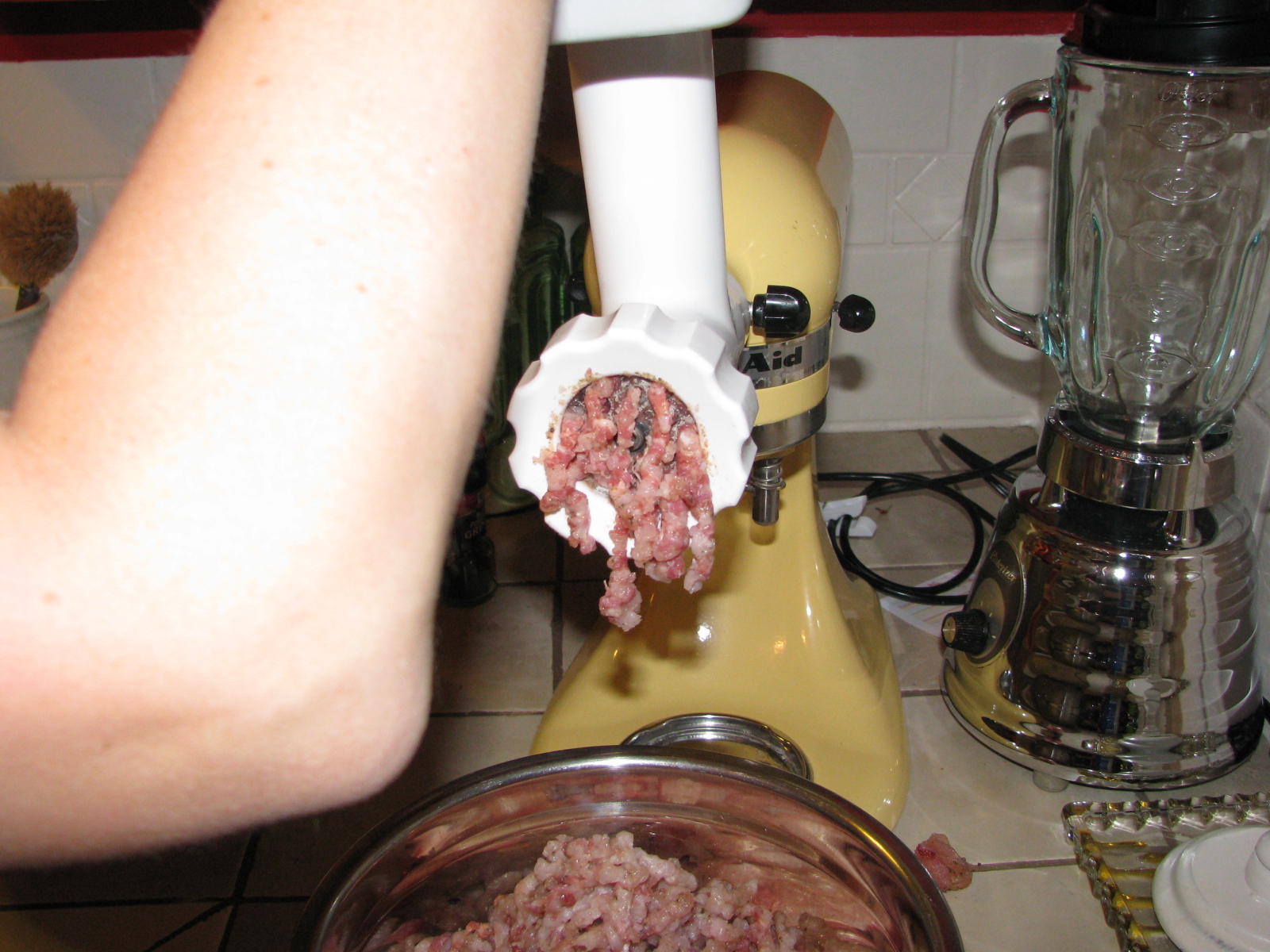
 Here I am feeding the meat into the grinder via a wooden plunger (tip: don’t use your fingers unless you really just don’t like them)  Anyway, first, you grind with a coarse grinding plate (which you have stuck in the freezer beforehand, and you will finish with a fine plate. For some grinds, you can just get by with the coarse plate, though.  The only difference is that the fine plate has smaller holes through which the meat passes.  Anyway, you just put the chunks in the feeder, plunge it down, and it comes out all nice and ground!  When I made the sausage, I did use some pre-made Jimmy Dean pork sausage, and as I ground, I just added it in here and there.  Turkey is very lean, so it needs a little fat to get that sausage just right.  You will also notice a skillet in this picture…when I was done with a ‘pass’ through the grinder the first time, we fried up a little to give it a taste test.  This way, you can correct your spices before you send it through the fine grind.

Coarse grind:

Fine grind:

So then I just made them into sausage patties, and stored them on waxed paper, stacked, in a freezer Ziploc.  For the plain ground turkey, we didn’t season at all, and rolled them into 1/2 pound balls, storing them also in freezer Ziplocs.  And that was all there was to that!   A lot easier than I thought. 

For the final picture, a word:

You know those vintage ads, where the woman always has this shocked, yet pleasantly surprised face?  As if the Good Lord himself came down and handed this woman a blender/coffee/toothpaste/oven/etc?  For whatever reason, I ‘do’ this face in photos.  Unfortunately, I turn my “vintage ad face” up WAAAAAAY too much and end up looking like a psychopathic version. I could darn near be grinding up my husband/dog/mother in law in this picture, judging by my face. Oh well.  Do enjoy.

Guineas and such….

I feel bad that I have not been putting many pictures on lately, and you poor readers just get to stare at a bunch of words.  I promise…next post, more pictures, OK?

Now, let me tell you about guinea fowl.  Last year I purchased 4 guinea chicks (called ‘keets’) from the feed store.  My friend, Rachel, was quick to inform me how much she couldn’t stand guineas.  So I thought, how bad could they really be?  Well, I found out.

At first, guineas are fairly quiet birds as they are maturing.  However, as they age, they begin to make a sound which only increases in decibels incrementally until it is the same decibel level as, oh, 30 jet engines being turned on simultaneously.  At first, they do not make the noise much, but as they age and get used to their environment, they will sound their alarm at….pretty much everything.

For those of you new to guineas, let me tell you what they do not like.  Guineas do not like things with wheels, children, dogs, cats, strangers, buzzards overhead, moving leaves, and falling pine needles.  They do not like it when you walk quickly, are carrying something in your hands, clouds, fences, shrubs, and I am pretty sure they don’t like the air, either.  You will know they are displeased when they all collectively shriek like a horde of banshees:  “ACKAKAKAKAKAAKAKAKAKAKAKAKAKAACCCCCK”!!!!!!!!!!

We had visitors this weekend, and since they drove up in a car (thing with wheels), brought children, and were strangers, the guineas immediately voiced their unhappiness with an hour long tirade of intermittent screaming and shrieking.  They are so loud (and I only had 4), that my guest covered her ears and said, “What IS that?”, to which I replied, “Something that will be going in the freezer tomorrow.”  Which was actually true. 

For a few weeks the guineas (who are unproductive and do not contribute to anything around the farm), had been mercilessly chasing my chickens.  Now, the chickens produce, the guineas do not.  Rule #1 of the Farm is that everyone must serve a purpose.  You can see where I’m going with this.  So, one day, the guineas got after our beautiful Silkie rooster and pulled out some tail feathers.  Jason happened to be watching with me, and when I turned around to say something, he was already in the coop.  He screamed at the guineas, “You’re not going to chase MY DAMN SILKIE!” I tried not to laugh.  I really did.  But the image of this six foot tall, linebacker of a man defending a 2 pound chicken that looks like a stack of pompoms was just too much.  I’m really considering making a T-shirt with Jason’s face and a Silkie, with his quote right above the pictures.

He snatched up the offending guinea, looked right in his eyes, and I wasn’t quite sure the guinea was going to make it out of that one alive.  SO!  We set a date for the end of the guineas. 

Thus, this past Sunday was designated Butchering Day.  It actually went extremely well. I have never butchered a whole bird before, so it was a whole new thing to me.  First, you kill them and ‘bleed them out’, that is, you hang them upside down and let the blood drain out (we beheaded them, actually).  Then I ran them over to a stockpot which was preheated with 150 degree water.  You have to add a little bit of dish soap to the water to break the surface tension, so that the feathers get wet.  Then you swish around the bird for about 10 seconds, and I took a little piece of pipe and ran it against the feathers on the leg.  When the feathers just fall right off, you must immediately snatch the bird out of the hot water (or it will burn off the skin), and dunk it in a bucket of ice water to stop the cooking process.  Then you just pluck the bird, and the feathers literally slide out just like magic.  SO easy.  Then comes evisceration (gutting) and that was actually really not too messy and wasn’t gross at all to me.  Surprisingly all of the innards, with exception of the lungs, come out in one easy motion.  It sure was an interesting experience!  I watched a video of Joel Salatin of Polyface Farms on YouTube to ‘see’ the whole process.  He can completely gut a chicken in 20 seconds!  So, now I have guinea in the freezer, and none in my yard.  From this day forward, this is how it shall always be. 

Oh, you’ll read articles which tell you how great guineas are at keeping away snakes and ticks.  The only thing my guineas managed to chase away was my sanity.  Give me a chicken or a duck any day of the week, thank you very much!

Cut that out!

If you have been reading my blog, you will know that this year is the first year I have started tomatoes from seed.  If you have never done it before, you cannot realize how much you get attached to a plant. 

When the seeds first broke the soil, I clapped my hands in excitement.  When they put out their first set of leaves, I gathered my family around to celebrate.  I somehow managed to keep them from being mutilated even though they are in a house with my husband, 2 kids, and 2 crazy dogs.  I babied them like I have never babied a plant before, making sure they only had organic fertilizer with rain water.  I talked to them and petted their leaves gently, and we talked about how many tomatoes they would give me in return for my diligent efforts (hey, what goes on in the greenhouse, STAYS in the greenhouse!). When the time came, on Easter, that they were to leave their pots forever, I think I had a tear in my eye as I lovingly patted them into their compost rich beds.

So, imagine my horror when the other day I was strolling through the garden, checking up on ‘everyone’, and one of my Snowberry tomato plants was….gone.  My mind was reeling and I felt nauseated.  I fell to my knees, sobbing, crying to God “Why, oh whyyyyyy????” (ok, not really) and there I saw the culprit.  A cutworm.  He was happily STILL MUNCHING on my precious, heirloom, spoiled Snowberry tomato plant.  He saw me coming and tried to duck back into the ground.  Nope, that just ain’t happening.  You do the crime, you’re gonna pay the time!  I ripped him out of the ground, calling him a very vulgar name which I will not repeat here (and, after all, I did feel a little bad about saying it… I mean, maybe cutworms DO know who their fathers are, after all?) and gave him an immediate conviction sans trial.  The punishment?  Death by chicken.  It was the worst possible thing I could think of.  While I would have loved to smear him into the grass, the thought of allowing a chicken to peck him to death, while throwing him several times in the air made me giddy. 

He in still in death row, sitting in a little glass bowl.  Execution will be today at high noon for those who wish to attend.  No funeral has been scheduled, however, in lieu of flowers/plants/casseroles, a donation may be made to the Tomatoes Cut Down In Their Prime fund.

Rethinking the Easter Bunny

Ok, so a few days ago, I was searching on Craigslist (dangerous for me!) and I came across an ad about “Easter Bunnies”.  So, anyway, the ad was one of the longest run-on sentences I have ever read, and essentially said this:  They had bought some rabbits for their child’s Easter pictures, snapped the pictures and now they were ‘done’ with the bunnies. 

Naturally, this bothered me on many levels.

Soooooo, you went out, bought two live animals, snapped some photos, and then after having them only about 24 hours, put them up for sale?  Sooooo, the bunnies were just living props for a photo op?  Wow. People never cease to amaze me.  So, I told Jason about it, and about how sorry I felt for the rabbits.  What if they were in a box thrown in the garage or something?  Did they even have food or water?  Jason came back to me a short time later and said, “You know, we really should get those rabbits.”

Coming from him, I know that was a difficult thing to say! After all, we already have a lot of animals.  But, being as we are interested in raising meat rabbits, and these are a breed of meat rabbit. Anyway, I called the number and sure enough, they still had the bunnies.  We head over there the next day.

Surprisingly, they are nice people.  I have to say I was pleasantly surprised about that.  Surprisingly, the rabbits do have a small cage and pellets.  For a very low price, we brought home the bunnies.  They appear to be really healthy, but I’m still keeping a close eye on them.  Oh, and of course, one is a boy (a buck) and one’s a girl (a doe). And, they were together.  Well, we all know that only rabbits can breed like rabbits, right???

 My point here is that I just do not understand how people can give so little thought to an animal to consider it disposable.  I cringe to think of all the Easter bunnies, chicks, and ducks that get thrown into a box or even worse, turned loose into the wild.  After all, they are living, breathing beings, too.  Don’t they deserve a little more than being used for some holiday and then tossed away like a gum wrapper? Sigh. I’ll file this one under ‘Soap Box’.

I LOVE EGGS (and chickens, too)!

Get ready for a passionate post.  I LOVE EGGS!!!  One of my favorite farm subjects!  I have been collecting pictures for you for months now to show off farm eggs.  But first, let’s get a little political here.

I am going to first state that I am not an animal rights activist.  I AM, however, all for animal welfare.  There is a big difference, but I’ll let you do the research on that.  If you buy your eggs from a grocery store, I want you to know something very, very important.  Please first read this little article:  Factory Farming: Eggs, and then come back.  (Note that animalsanctuary.org is an animal rights group, therefore, they do not support the slaughter of any animal, and are vegan.  While this is not my own position, we do agree that the current condition of so-called ‘factory farms’ are appalling)

Finished?  Now I want you to see the visuals:  Egg Farming Photos

How do those cheap grocery store eggs look now?  This is the reality of buying from a supermarket.  Don’t be fooled by the phrase ‘cage free’ eggs either. This just means that they aren’t in the battery cages, but crammed in a building.  You do not have to allow access to the outdoors to be labeled ‘cage free’.  The terms ‘farm fresh’ and ‘natural’ don’t mean anything at all.  The chickens in those photos can be labeled as such.  Most people have a vision in their minds of happy, plump chickens running around the farm (with a red barn, of course), eating bugs and grass and soaking up the sunshine.  The reality is that there are tens of thousands of birds literally crammed into 16″ or so cages (several to a cage) so tightly that they never have the chance to even spread their wings. 

And THIS is called progress?

I am passionate that I educate you about this.  As more people moved from the country to the city beginning in the 1950s, they stopped raising their own food.  So, companies came up with an answer: industrial farming.  “Farming” (I use that term VERY loosely here) animals and crops to meet the demands of the consumers.  But somewhere along the way, we got lost, ethically speaking.  I always think of these lyrics by Pink Floyd when I think about this :

“And did they get you to trade your heroes for ghosts?  Hot ashes for trees?
Hot air for a cool breeze? Cold comfort for change?
And did you exchange a walk on part in the war for a lead role in a cage?”

I’m pretty sure Pink Floyd wasn’t singing about egg farming, but I hope you get the parallel here.  What are we willing to trade off for convenience?

Now, I will step down from the soap box, but I want to open your eyes to the truth.  Factory farming doesn’t stop at eggs either.  I hope you will research more about where our food REALLY comes from.  I hope this will inspire you to source out local food, or better yet, produce your own!  I’ll help you out.

ON TO THE EGGS!!!

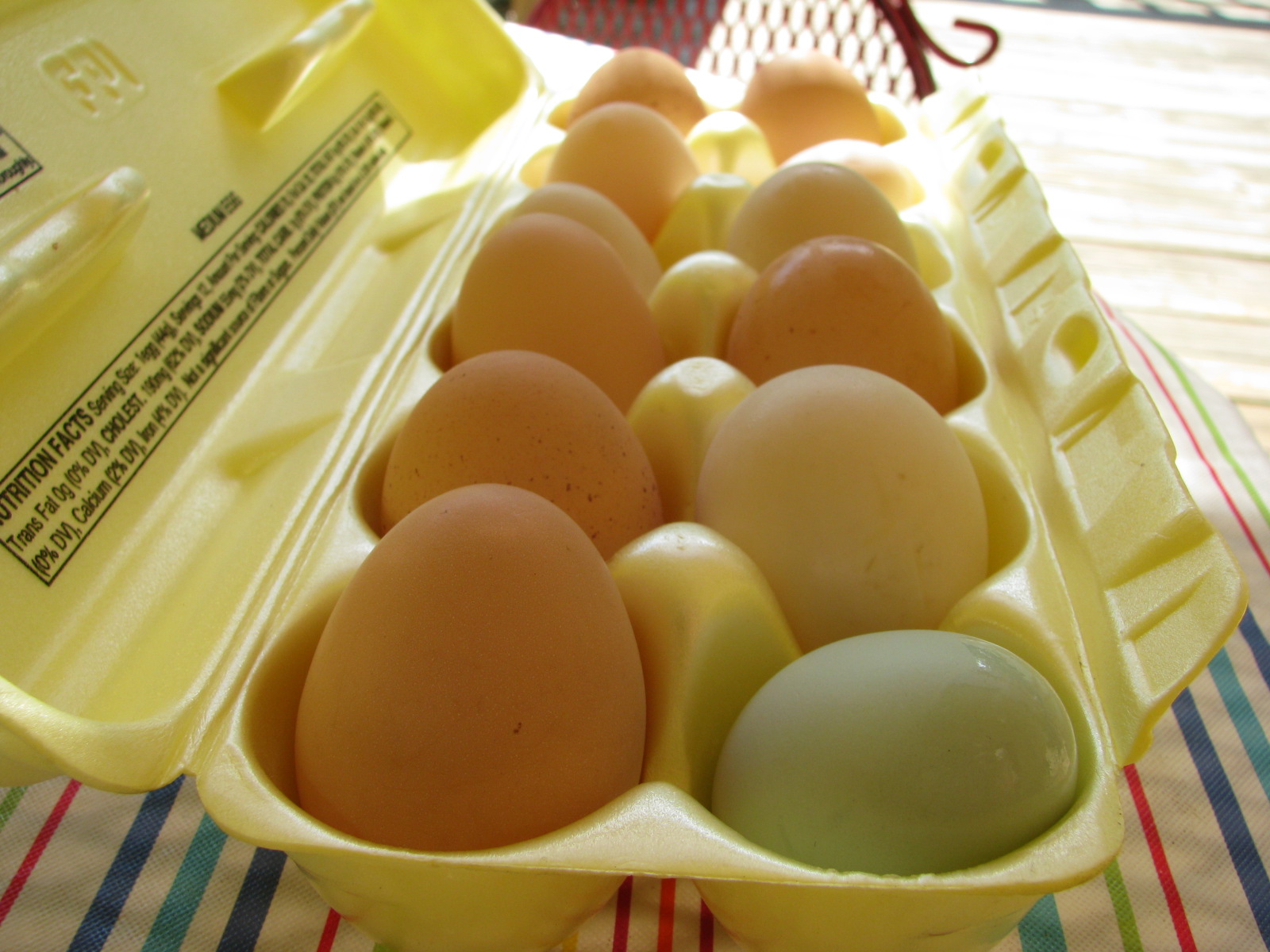
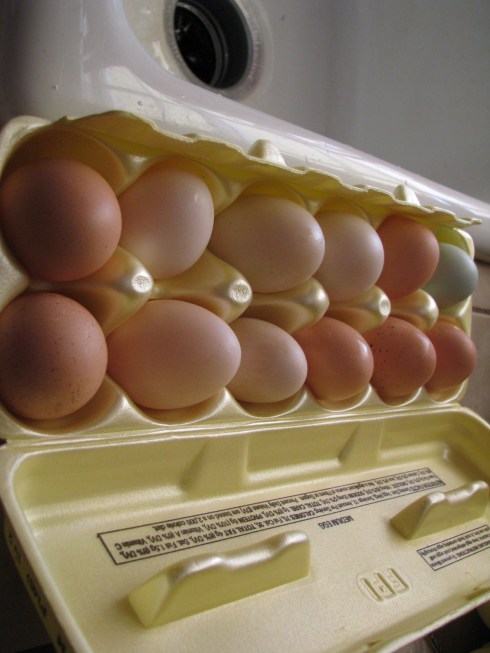
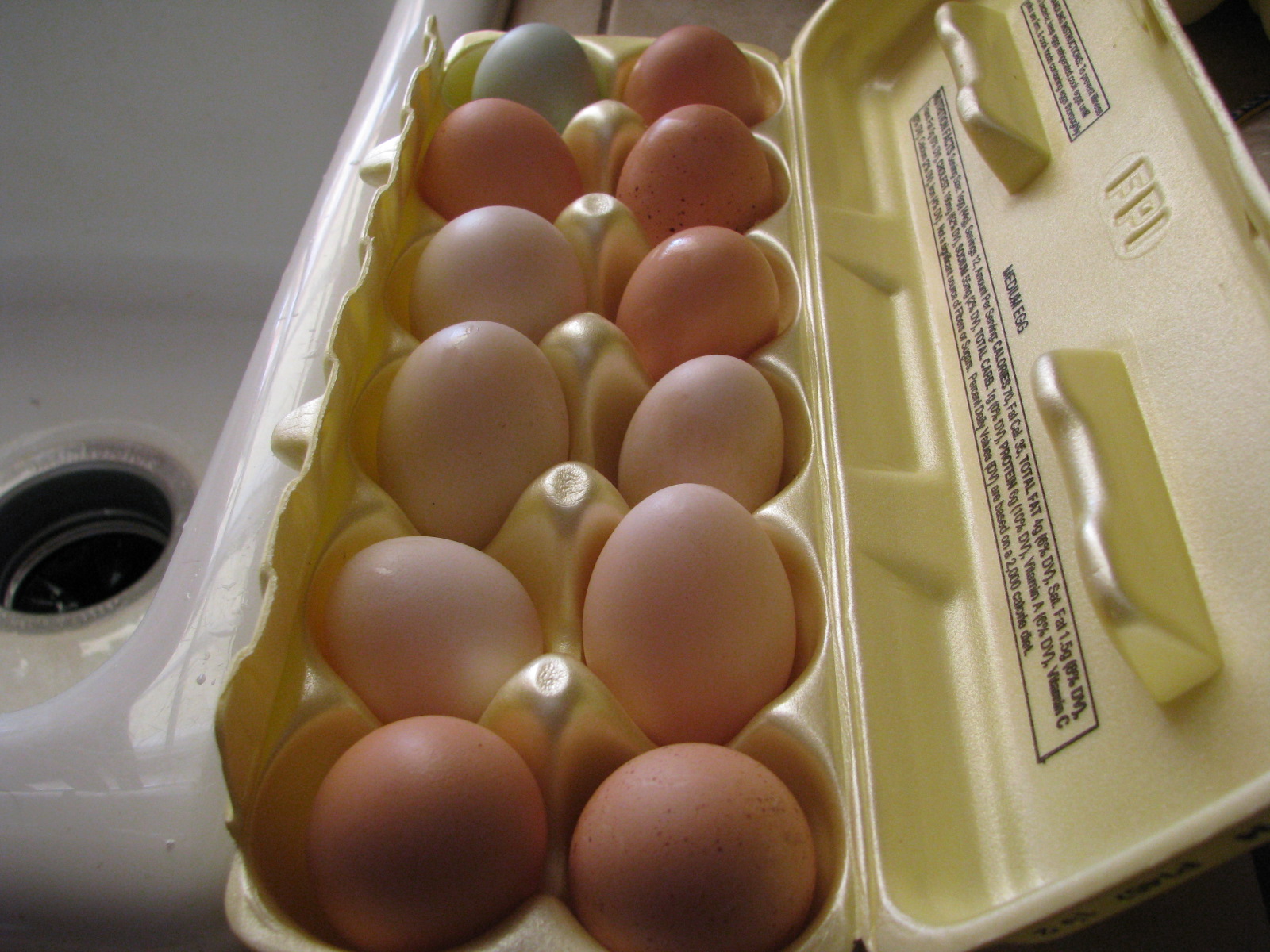
Some of the first eggs I collected on the farm.  A mix of Cochin, Plymouth Rock, and Ameraucana eggs.  Ameraucanas lay tinted eggs in shades of blue or green.

Fun Egg Facts:

A hen does NOT need a rooster to lay an egg.

It takes a chicken approximately 24-26 hours to produce an egg, start to finish.

Yolk color depends on what the chicken is eating.  Chickens who are allowed free range and who are allowed to eat insects and plants will produce an egg with a much darker yolk (and better tasting, too!)

Fresh eggs can be stored in the refrigerator at least 3 weeks before you will notice a decline in quality.  The air cell in the egg will enlarge and eventually the egg will dry up on the inside.

When you hardboil an egg, don’t use a fresh (meaning real farm fresh, not supermarket fresh) egg.  Fresh eggs are extremely hard to peel!

An eggshell contains thousands of pores, mostly on the larger end.  This is to allow the exchange of carbon dioxide and moisture to occur for a baby chick.  (So the shell ‘breathes’….weird, huh?”)

There are approximately 280 million laying hens in the US, and we produce about 75 billion eggs a year.  The majority of these eggs are produced in ‘factory farms’.

A chicken egg takes 21 days to hatch. 

Fertile vs. Unfertile

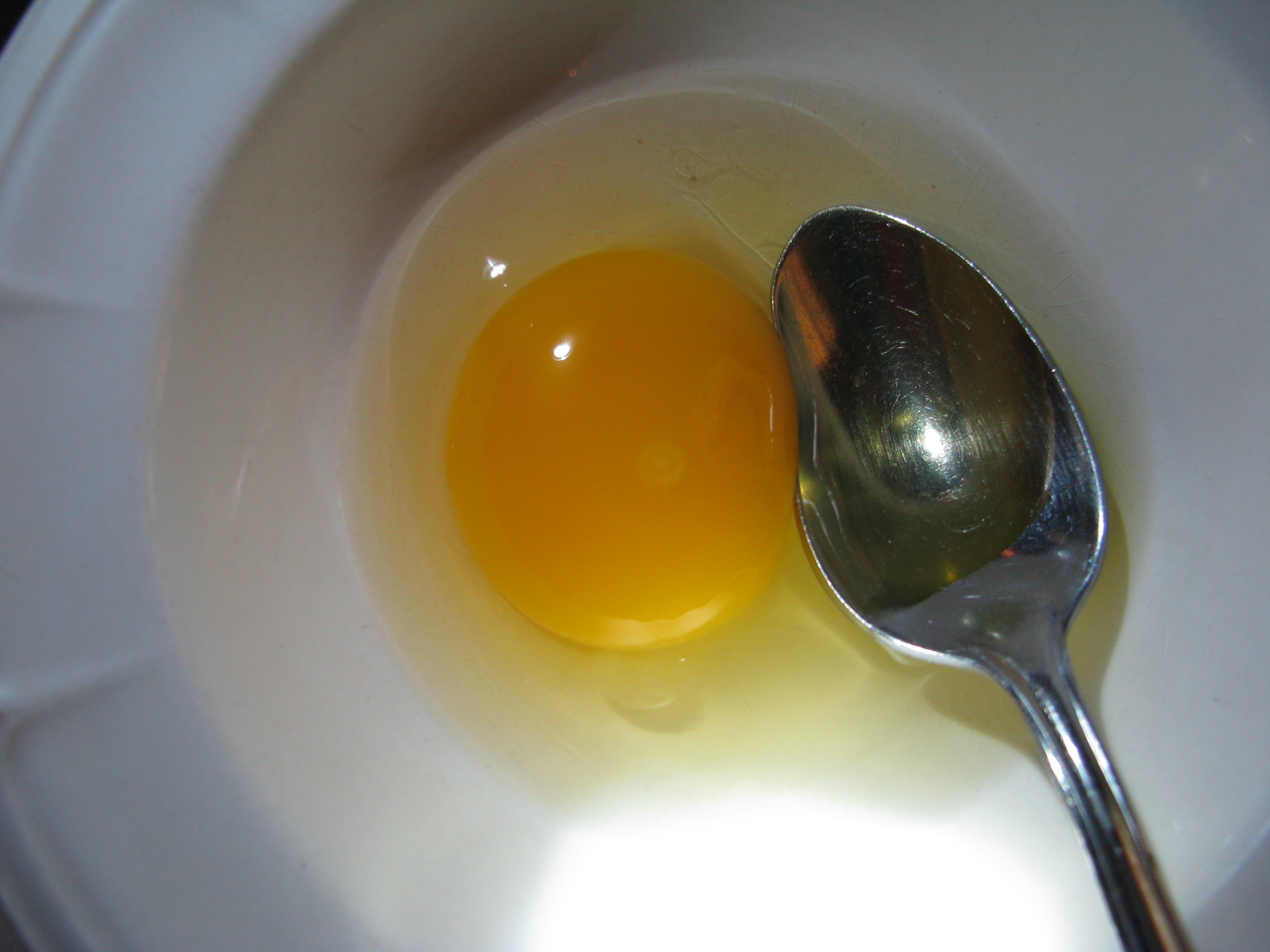
How do you tell if an egg is fertile?  Well, do you have a ‘dot’ or a ‘donut’?  Huh?  In the above picture, look closely at the yolk.  In the center, you will see a very light ‘bullseye’ or ‘donut’.  This indicates that this egg is fertile.  An unfertile egg will only have a small white dot, not a ‘donut’.  A fertile egg tastes no different that an unfertile egg.  Development of the baby chick ONLY happens when the egg is kept very warm (about 99 degrees or so) and under the right conditions.  This is what a fresh, fertile egg looks like!  You aren’t going to open up an egg and find a chicken (unless you pulled an egg from a setting hen!).  It takes several days of incubation for blood vessels/tissues to develop.

Ew!!!  What’s that spot in my egg!!!  I thought these were fresh….

Let me address something here.  Fresh farm eggs vs. Industrial Farmed eggs.  When you get eggs fresh from the farm, there is a slight chance you will come across an egg with a ‘blood spot’, which is typically a small speck of blood/tissue inside the egg.  This typically happens in hens who have just begun to lay or older hens.  They are caused by the rupture of a blood vessel on the yolk surface during the formation of the egg or sometimes by a similar occurence in the wall of the oviduct.  They are NOT the beginnings of a chicken (again, UNLESS the egg has been incubated for several days! But, if you collect eggs daily you will not have that problem.)

But why don’t I see these in grocery store eggs?

Simple.  Because industrial egg farmers use electronic ‘eyes’ to ‘see’ the spots in the eggs before they make it to a carton.  Small producers don’t have that kind of luxury, so you will sometimes find these spots.  There is no need to throw away the whole egg.  It is very easy to remove a spot with a bit of shell.  It does not affect the egg in any way. In fact, many years ago it was commonly recommended to first break an egg into a separate bowl before adding it to a recipe for this very reason.  So, in conclusion: Blood spots are a little gross looking, but do not affect the egg.

Difference between real farm fresh and industrially produced eggs

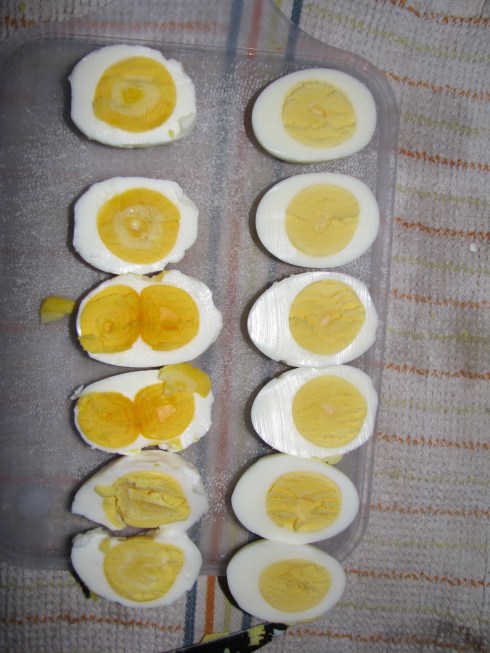
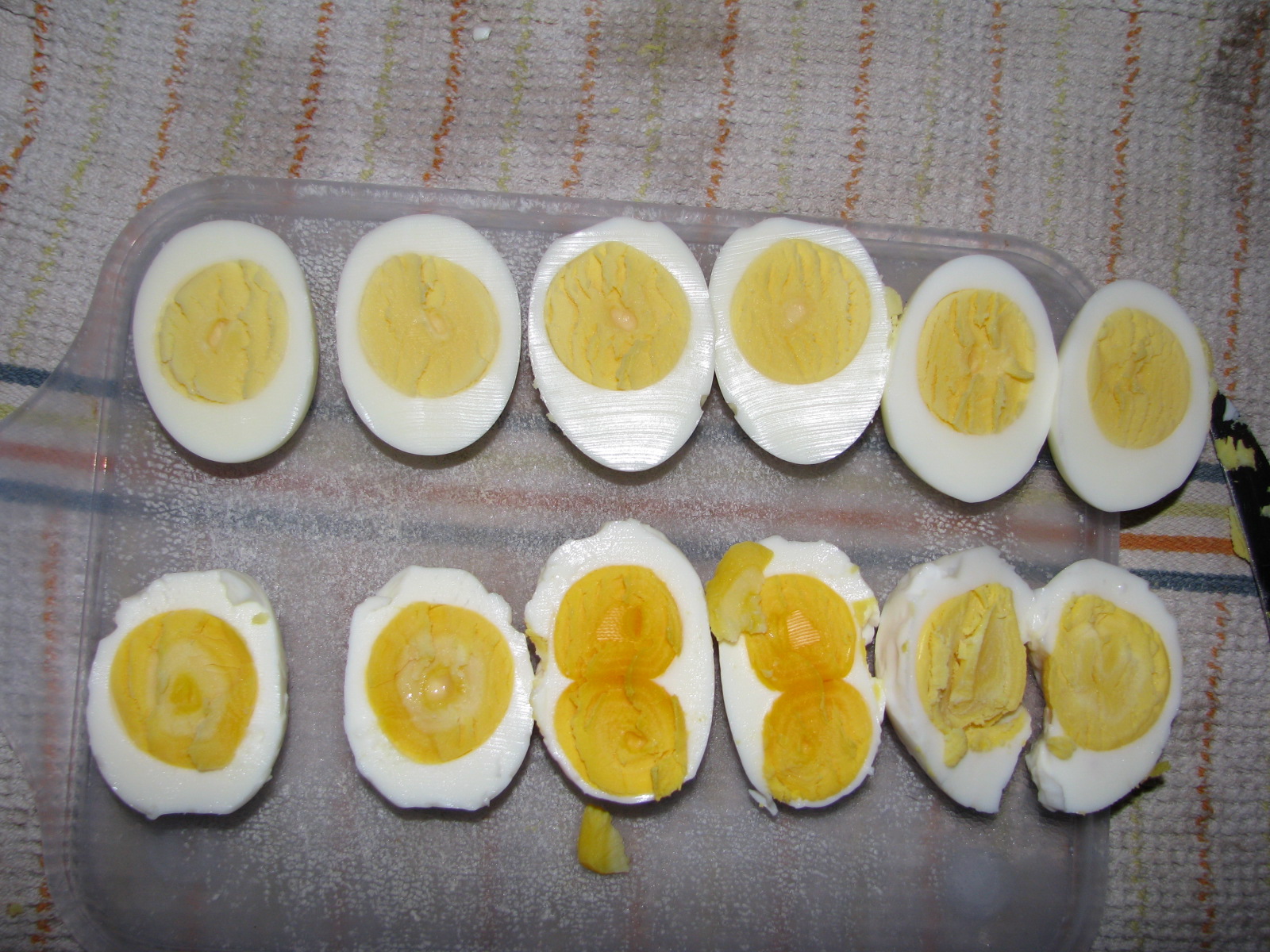
In the picture, I have set grocery store eggs on top, and my eggs on the bottom.  In the grocery store eggs you will clearly notice a paler yolk and fairly uniform appearance.  You will also see that my farm eggs are definitely different and there’s even a ‘double yolker’ in the group. (yes, chickens can produce twins!)

Factory farm eggs are produced almost exclusively by one breed: The White Leghorn chicken.  It is a small chicken that makes a big white egg.  They are very productive and very efficient as far as feed to production ratio.  My eggs come from several different breeds, which are becoming more endangered with time, due to the fact that factory farms only use one breed for white eggs and most people only eat factory farm eggs.  Another picture:

My egg on top, factory egg on bottom.  Yolk color is determined by yellow-orange plant pigments known as xanthophylls.  My hens are allowed to eat fresh weeds, thus the darker color. 

Is there a difference in taste in fresh farm eggs and factory eggs?

I can personally vouch for this.  YES, YES, a million times YES.  Now that I am spoiled to eating extremely fresh eggs, I can honestly tell the difference in the two.  Fresh farm eggs where chickens are allowed natural foods have a richness to them, almost like they are creamy when compared to factory eggs.  Quite honestly, factory eggs taste ‘eggy’ (if that makes sense) and almost have a plastic quality to them. 


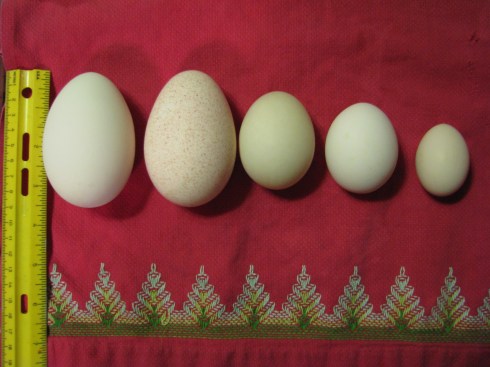
 Difference in egg sizes: From L to R: African Goose egg, Turkey egg (double yolker, twice the normal size), Cayuga duck egg, White Leghorn egg, Bantam egg

What do other eggs taste like?

My favorite eggs actually aren’t even chicken eggs!  Actually, my favorite would have to go to the duck egg.  Before you cringe, let’s discuss.  An egg is an egg is an egg.  Chicken eggs are no cleaner than duck eggs and the other way ’round.  In fact, it surprises me that we mostly eat chicken eggs since ducks are extremely economical as far as feeding goes (they eats lots of juicy bugs and weeds, and little grain), and the eggs are so much richer.  You will hear people say that duck eggs are great for baking, but the truth is that they are great for anything you do with chicken eggs.  And talk about rich!  Duck eggs have a thinner white, but a much richer yolk.  One night Jason scrambled some eggs and I really thought he had added cheese to them, but no, they were just duck eggs.  That is how rich they taste.  The flavor is absolutely the same, no difference.  It is always possible for eggs to get ‘off’ flavors depending on what they eat, so ducks who eat out of a pond may produce stronger flavored eggs, but my ducks stay here at the house and eat what the chickens eat.  Goose and turkey eggs are also delicious.  I think that they are also richer than chicken eggs, in my own opinion.  An egg is an egg is an egg.  Repeat this 5 times.

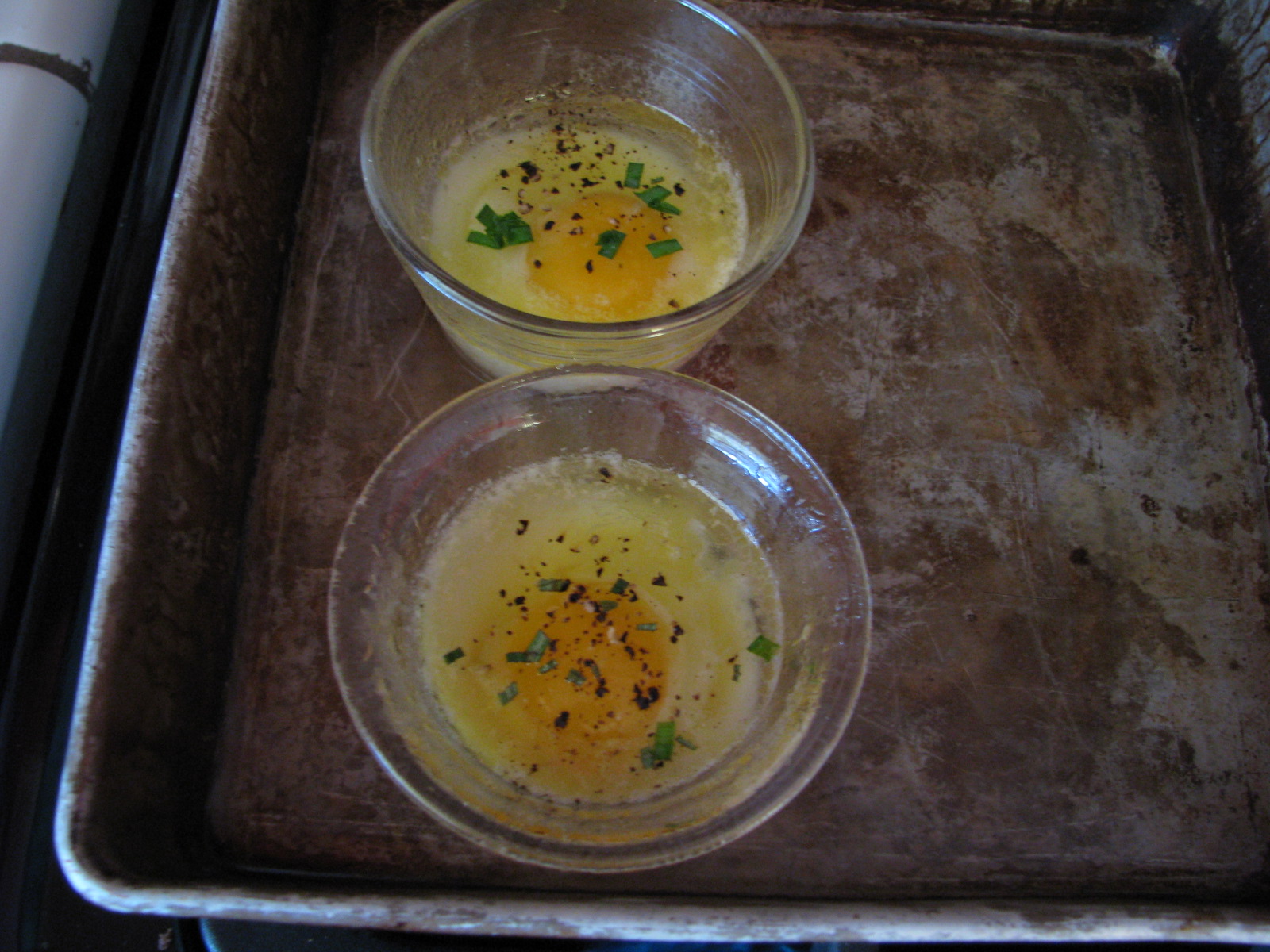
 Julia Child’s recipe for baked eggs.  Set ramekins in a pan of boiling water.  Add a small amount of oil to the ramekin.  Crack a fresh egg into the ramekin, and season with your choice of spices (I use salt and fresh cracked black pepper and fresh chopped herbs).  Add a small amount of cheese to the top, such as provolone, Havarti, or Swiss.  When egg white begins to turn white, place pan, ramekins and all, in a 350 degree oven for about 7 minutes.  Do not overcook!  (I still manage to over/under cook them, but they’re great anyway).