Caterpillar Village

(Note: I began this post in 2021. For some reason, I never finished it. Well, caterpillar season is almost here, so I thought it would be a great time to get this thing published. -A., March 2024)

Today was a banner day for finding caterpillars. It was overcast all day today so the ‘pillars were easy to spot and also pretty darn active.

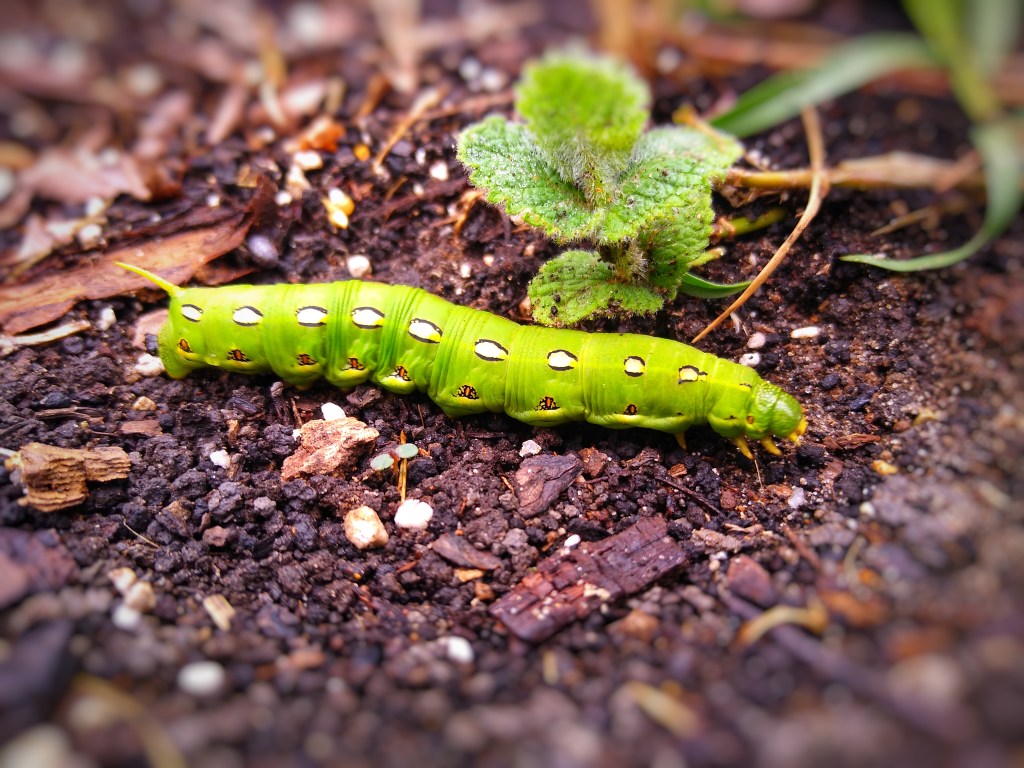
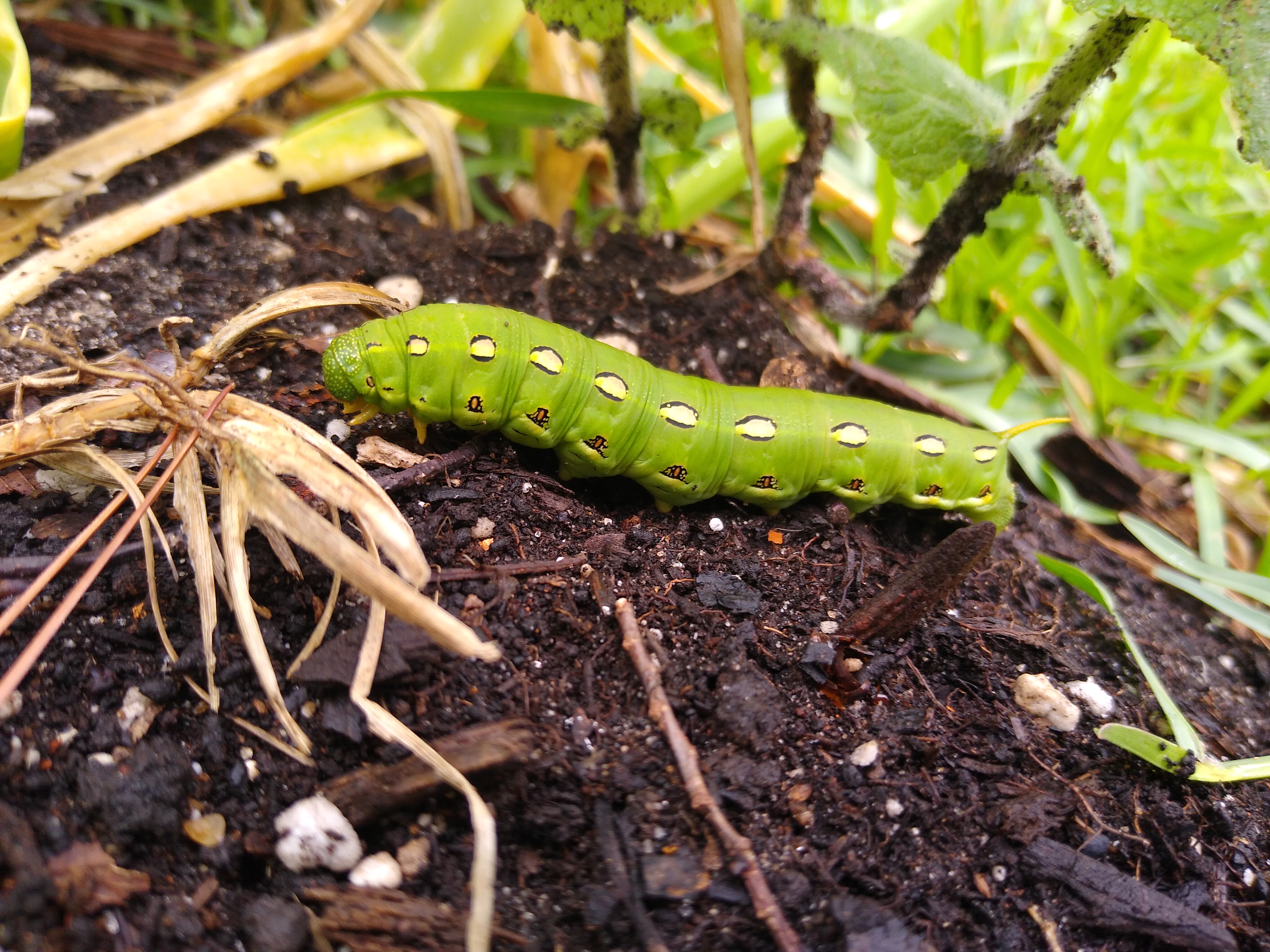
The first one I saw was big! It was over three inches long. After looking online, I believe it’s the caterpillar of the White Lined Sphinx moth, Hyles lineata. At this size, they are ready to burrow underground to pupate. Interestingly, there are many different color morphs of these caterpillars, so my caterpillar may not look like yours at all, colorwise. They can also be quite black.
The next caterpillar was found on my toadflax plants. They are wildflowers here and one year I discovered that there were all of these little caterpillars munching away on them. I had to identify them and found they the Common Buckeye, Junonia coenia, a truly beautiful butterfly.

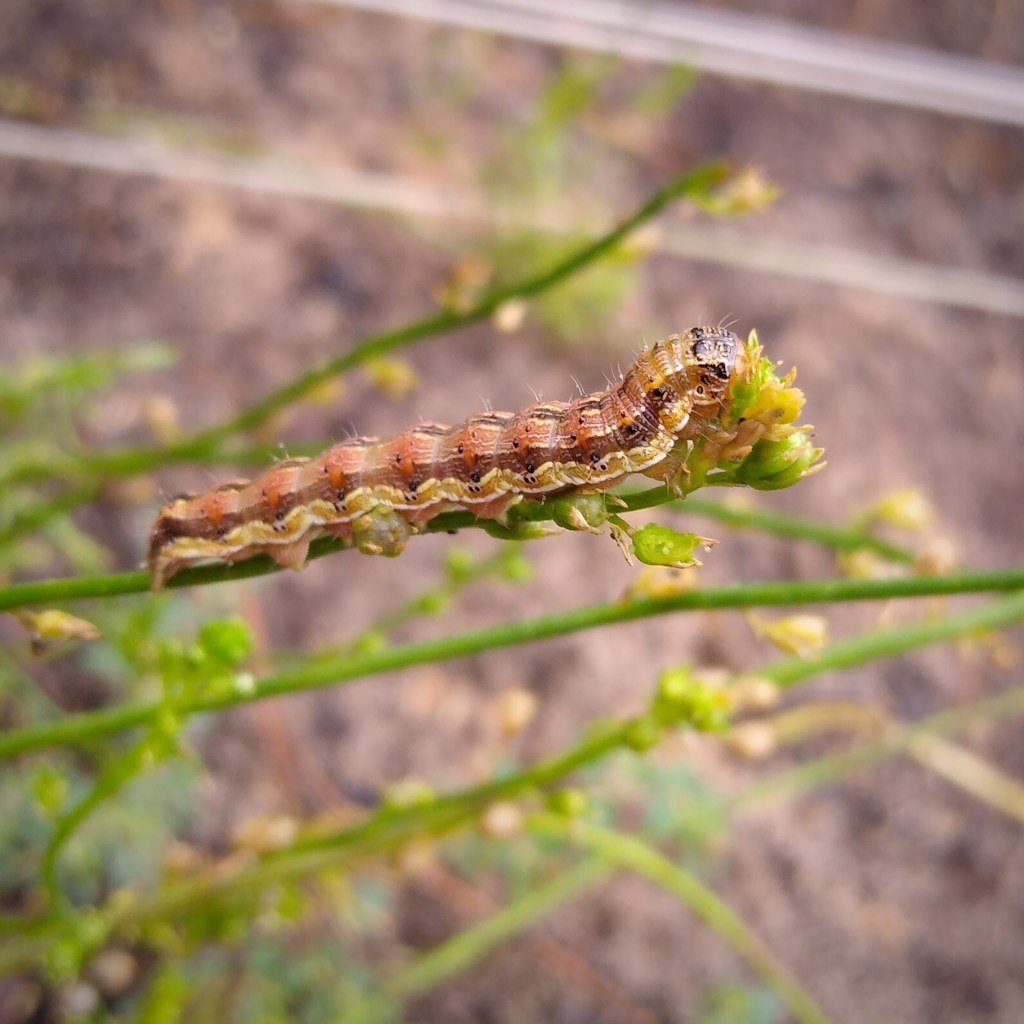
As I was looking at the Buckeyes, I found another caterpillar I hadn’t seen before. This was a Tobacco Budworm, Heliothis virescens. True to its name, it was eating the buds of a toadflax. I think I’ll go pick him off later. I don’t need anything eating my buds or flowers. At least not this one. These caterpillars tend to take on the color of the plant they are eating on, so again, this one may look different from one you find.
Next we move onto some more annoying agricultural pests. These feed on cole crops, like broccoli, cabbage, kale, bok choi, etc. First up, the Cabbage Looper, Trichoplusia ni . Ugh. They have tiny little heads but eat like they are the size of an elephant. Gahhhhhh, these drive me crazy. Please note the tiny, wasp-like thing. I have no idea what it is but 3 years after taking this picture, I just now noticed it!

Now let’s go to my other enemy, the Cross-Striped Cabbageworm, Evergestis rimosalis…This one is just as destructive and there are usually far more of them found together than the Looper. They are the worst! However, I use a Bt (Bacillus thuringiensis) spray by Monterey that works wonders. You can also use a spray containing spinosad, but I haven’t tried this. The absolute SECOND you see holes in your crops, spray it down! You’ll be able to keep things like kale even throughout our horrible Texas summers if you do (unless the drought gets them of course. At least it won’t be caterpillars!).

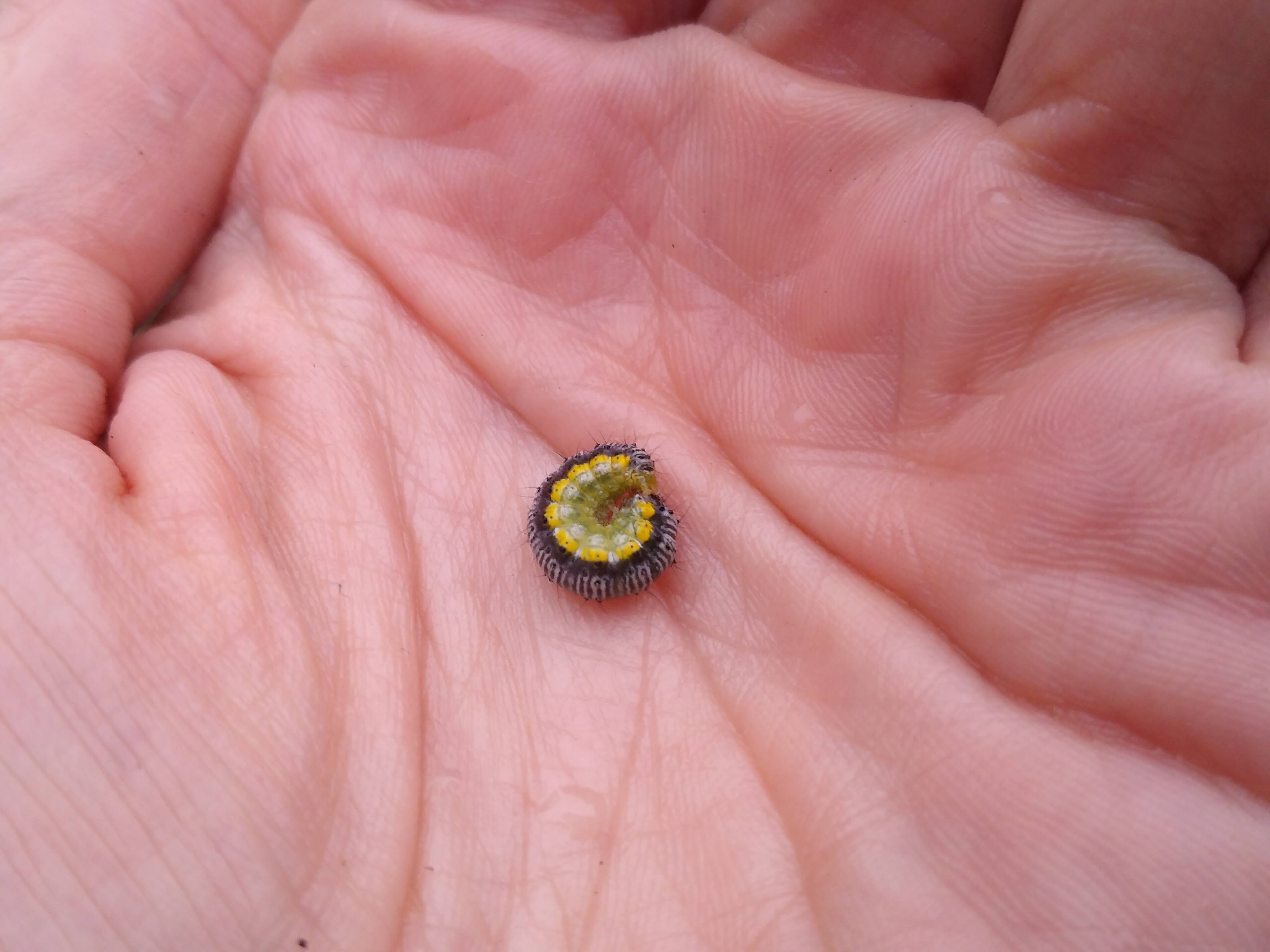
Now the next one is what I’m pretty sure is a Saltmarsh moth (Estigmene acrea) but I’m not positive. That year, we have a ton of them crawling all over the roads. They come in just about every color, so it makes it harder for me to identify.

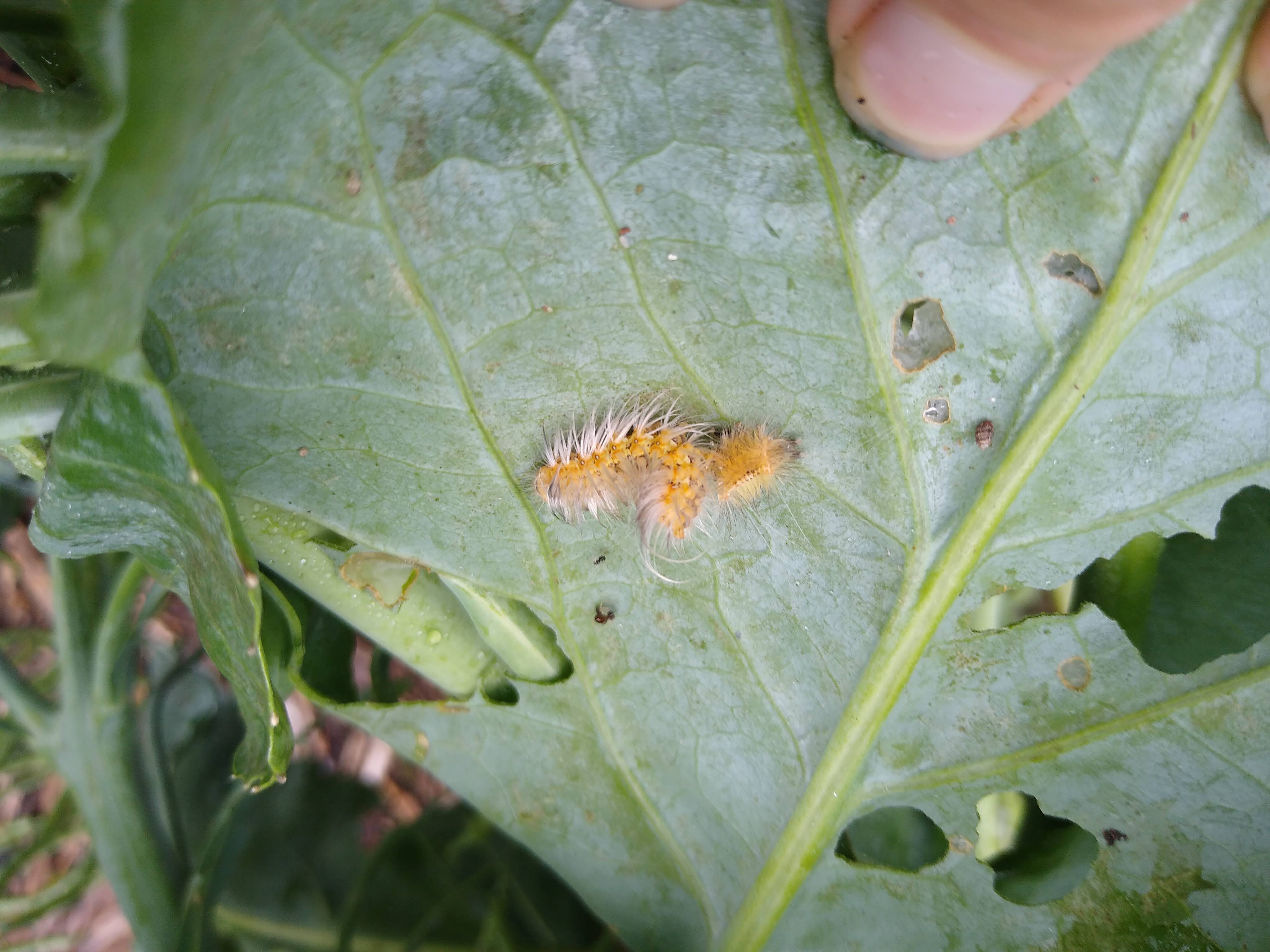
Last of all, we have a freshly molted mystery caterpillar. I think it may be a Yellow Bear AKA Virginian Tiger Moth (Spilosoma virginica). What do you think?
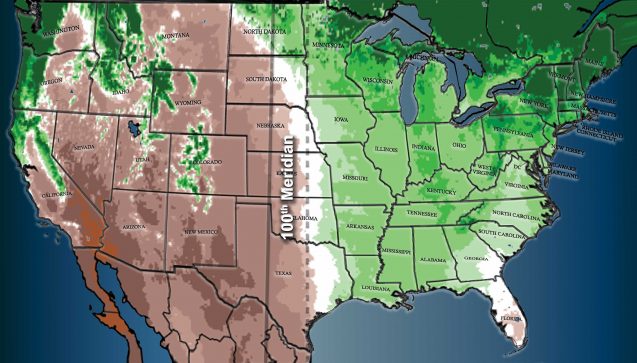
Thanks for taking the 2021 tour of the Caterpillar Village with me! I hope it helps you to identify some of your caterpillars this year. If you are a book-a-holic like me and you need more caterpillar ID in your life, I can’t recommend the book Caterpillars of Eastern North America by David L. Wagner enough. I use this guide every single year. It is for species east of the 100th meridian (see below):
Otherwise, I use Google Lens through my camera app on my phone, but it’s iffy in some cases so I just go home and refer to my book. That’s Gen X for ya!

Now to see what the 2024 ‘pillar season will bring!
I’m still here!

Well, despite the threat of my last post, I am still here in Texas. This past summer was far worse than the last, with some days getting well above 100 degrees and no rain. It was like living in an oven for three months. While winter is a common time for people to develop seasonal depression, I think summer is worse for me.

Extreme heat, wet-blanket humidity, a plethora of stinging (and flying) insects, no rain, and watching your entire yard collapse into a brown crisp (formerly known as a garden) is depressing to me. I love to be outside and Texas summers are just brutal. But despite the searing heat and no rain, some things survived and even thrived in the garden. And if they weren’t thriving in August, they were resuscitated with some late September rains. So who were the superstars of the drought?

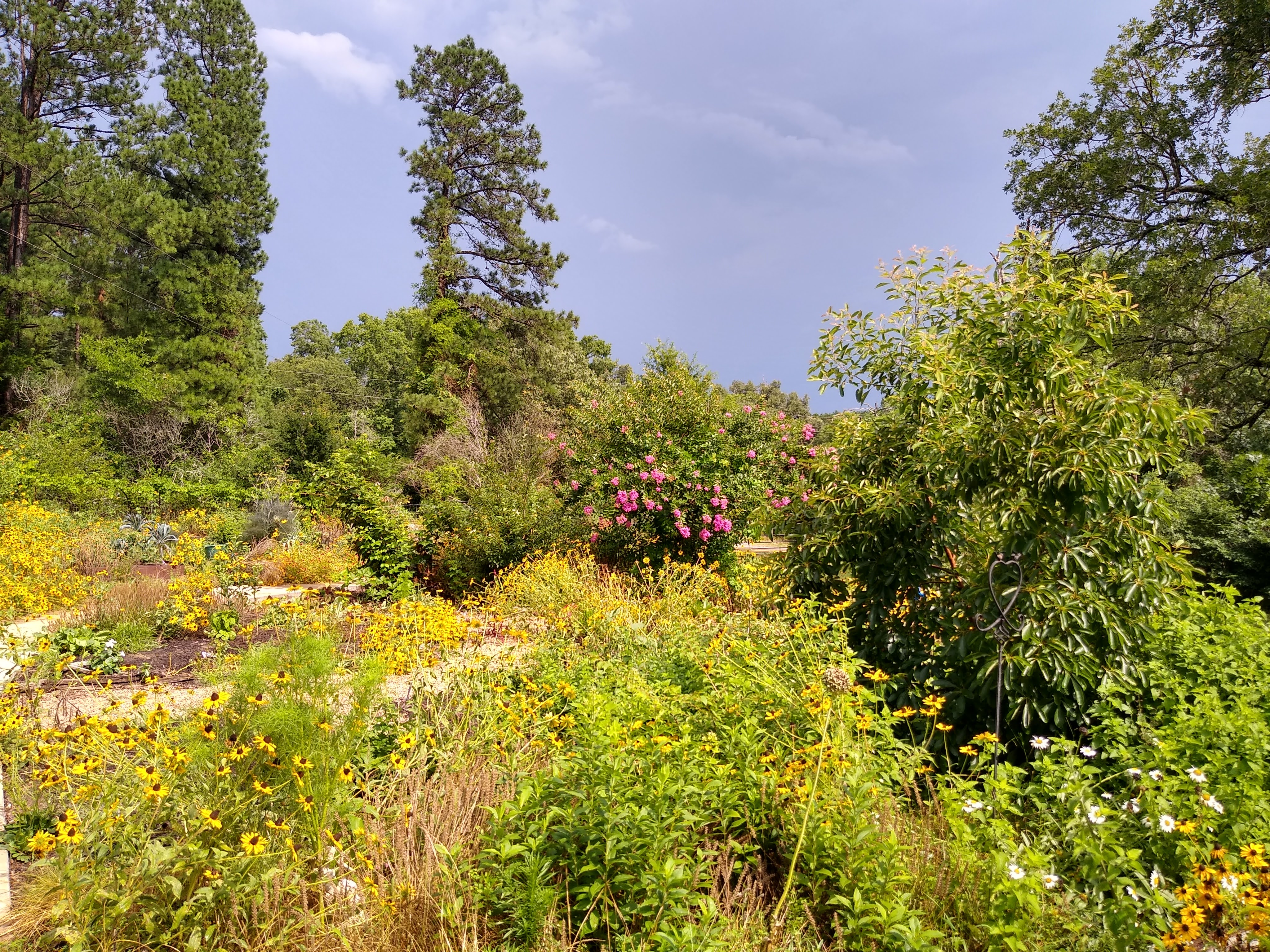
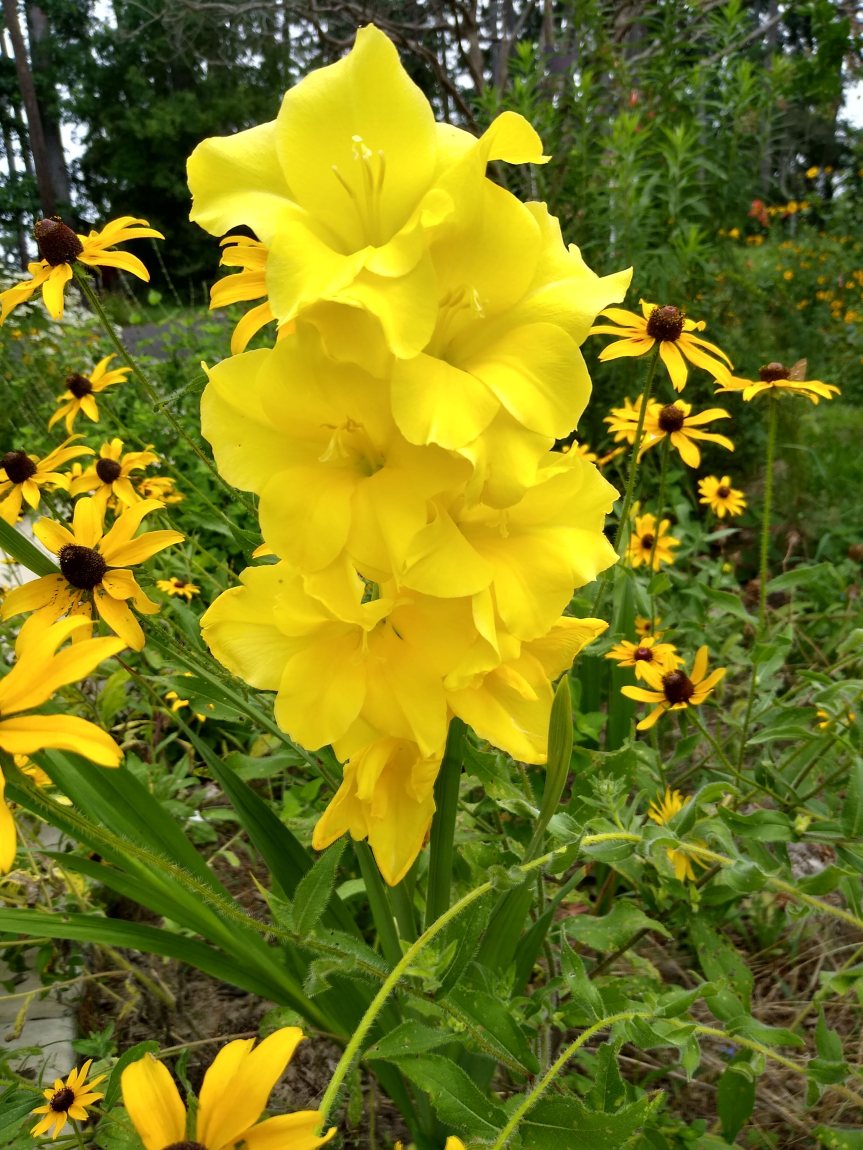
A friend gave me some gladiolus corms this spring, and here they are in June, alongside some Rudbeckia. They were the cheery greeters of the early summer this year. I hope the corms survived! We still had some rain in June, but the last measurable rainfall was June 26th for our summer. 😦

The garden two days before our last rainfall on June 26th:

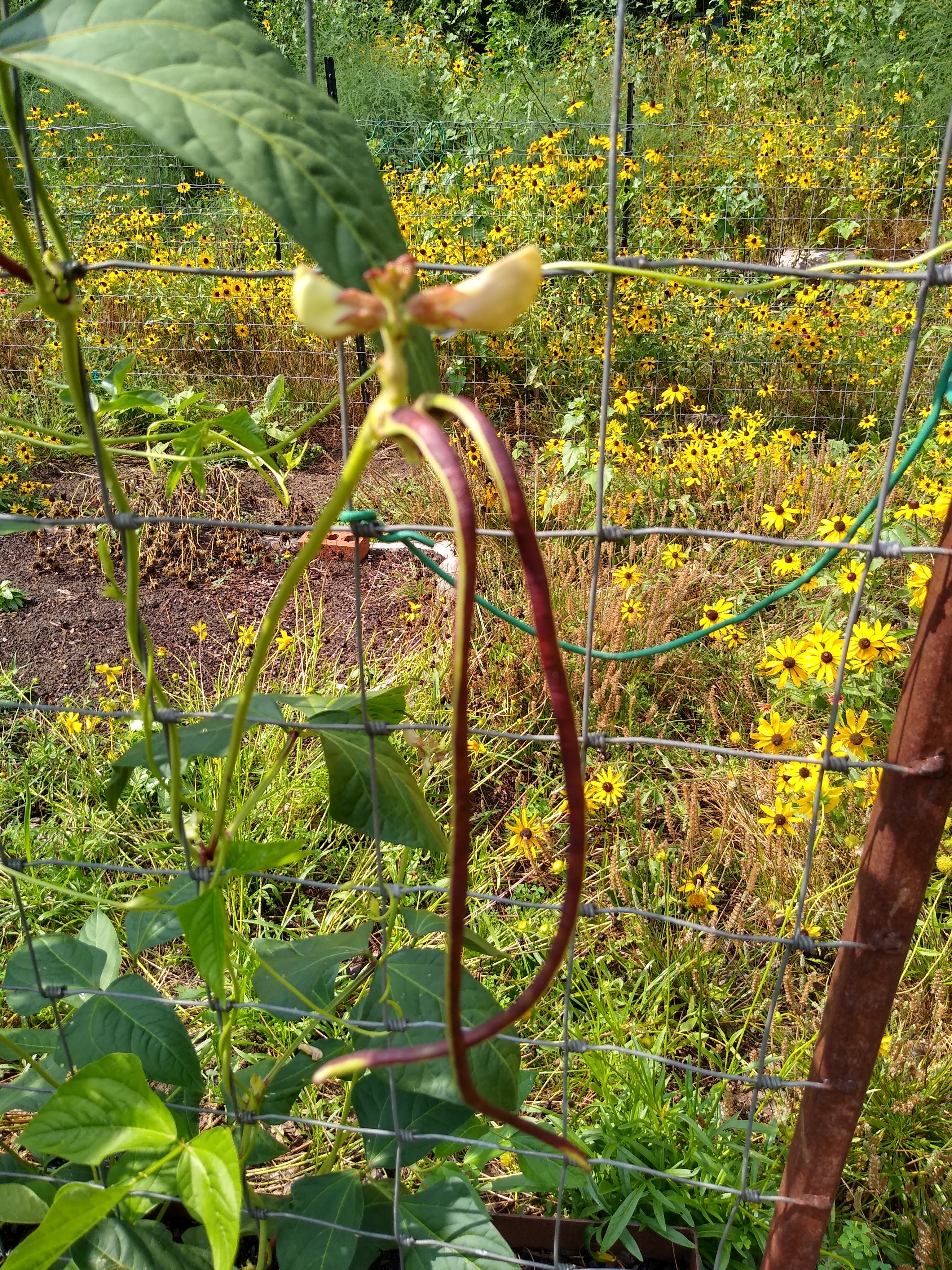
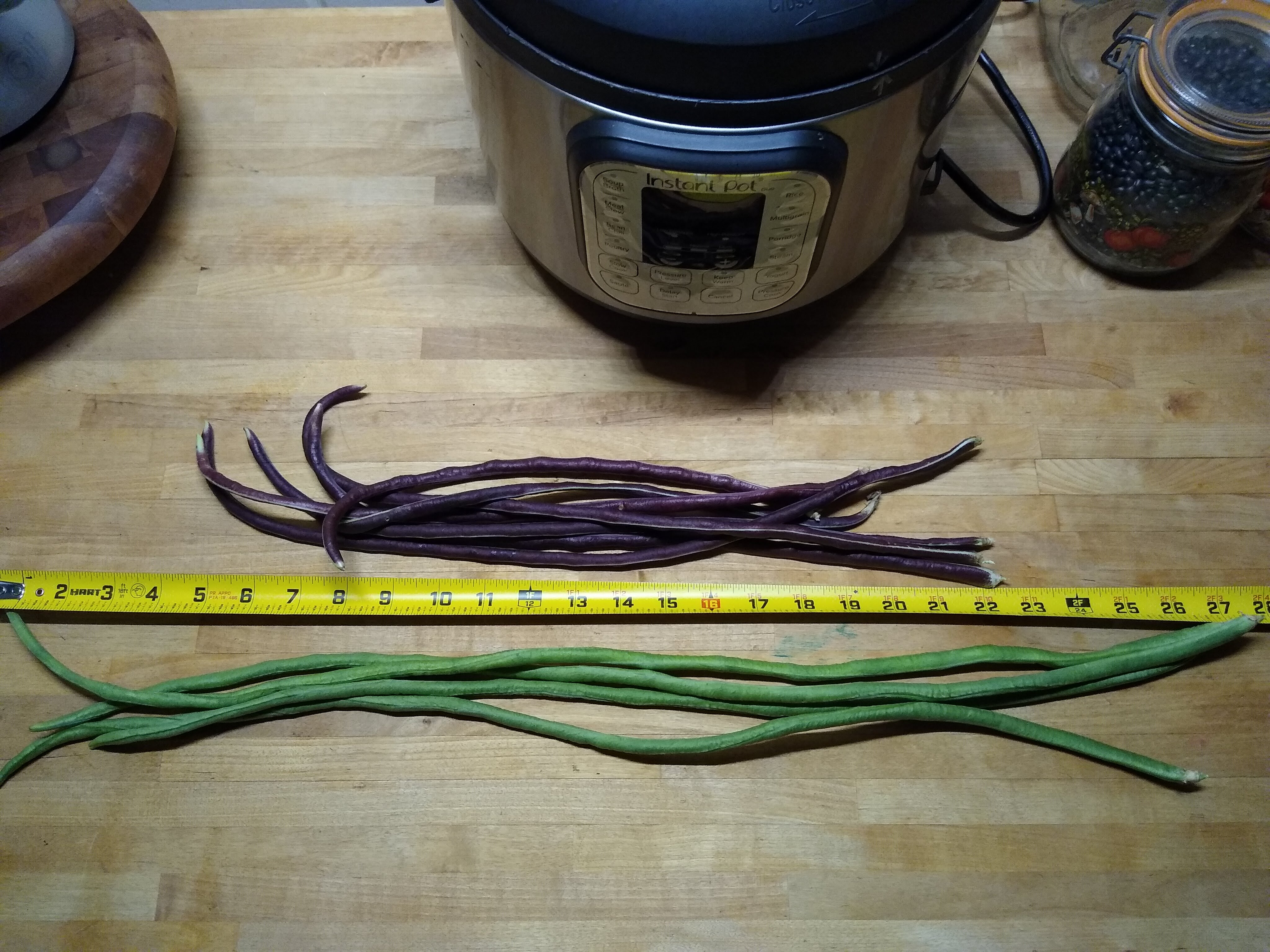
The veggie winner would have been the yard long beans this year. Even in the heat and sparse rain, they put out new beans constantly. I took several pictures of the almost mature beans, only to discover later they are all grossly out of focus. Oh well. You get the idea. As for taste, they are delicious! I steamed some and roasted others. They are extremely mild and crispy.

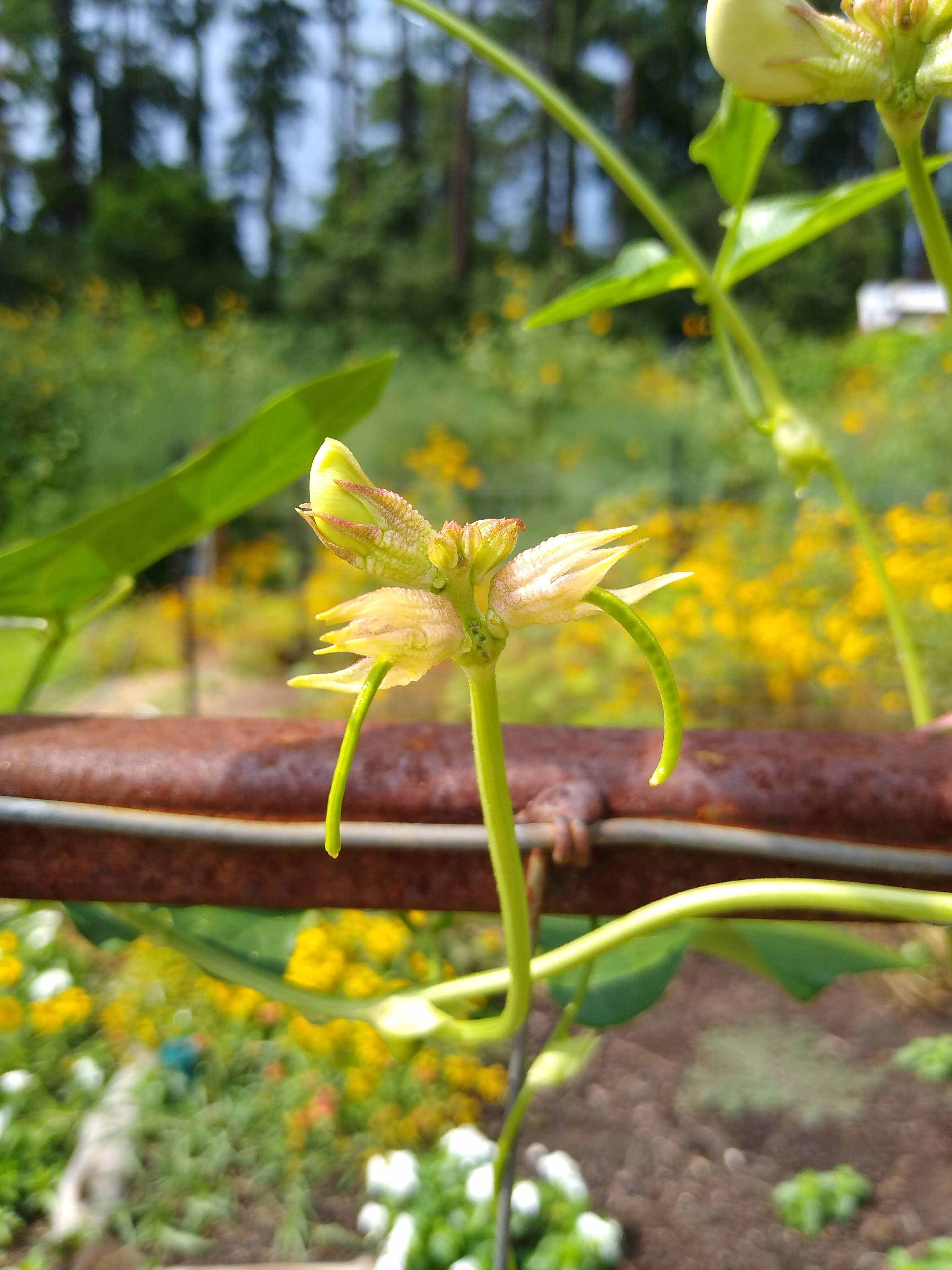
Baby yard long beans:

There were some very close contenders to the 36″ mark!!!

For flowers, there were two big winners this year: Celosia and gomphrena. I cannot imagine not having these in my future gardens from here on out! They laughed at the drought and while they did flag a little by August, when the rain came again in September, they put out blooms full force! I had several types of celosia, but the most impressive was a giant fuchsia cockscomb type that came up right by our side door:

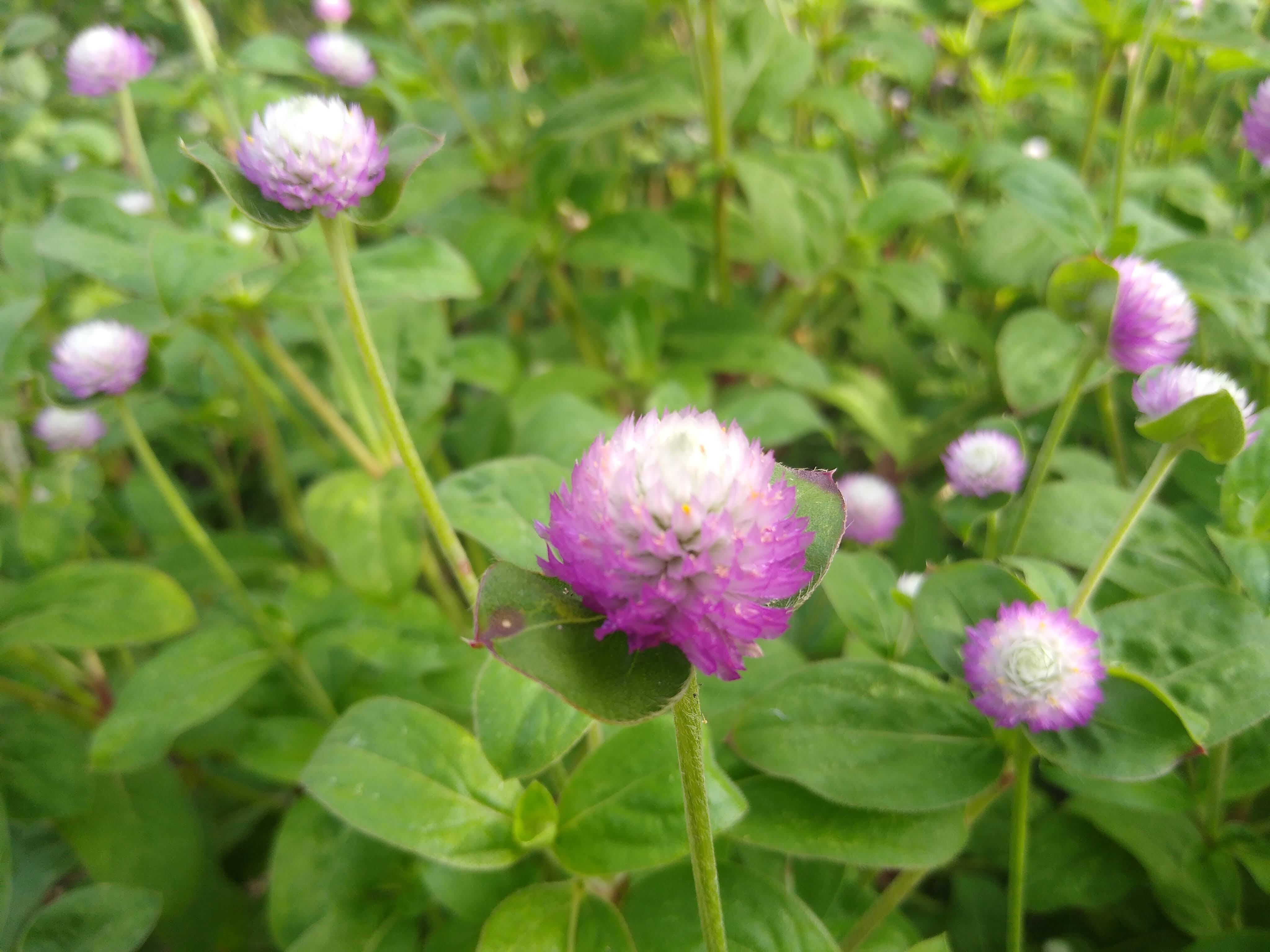
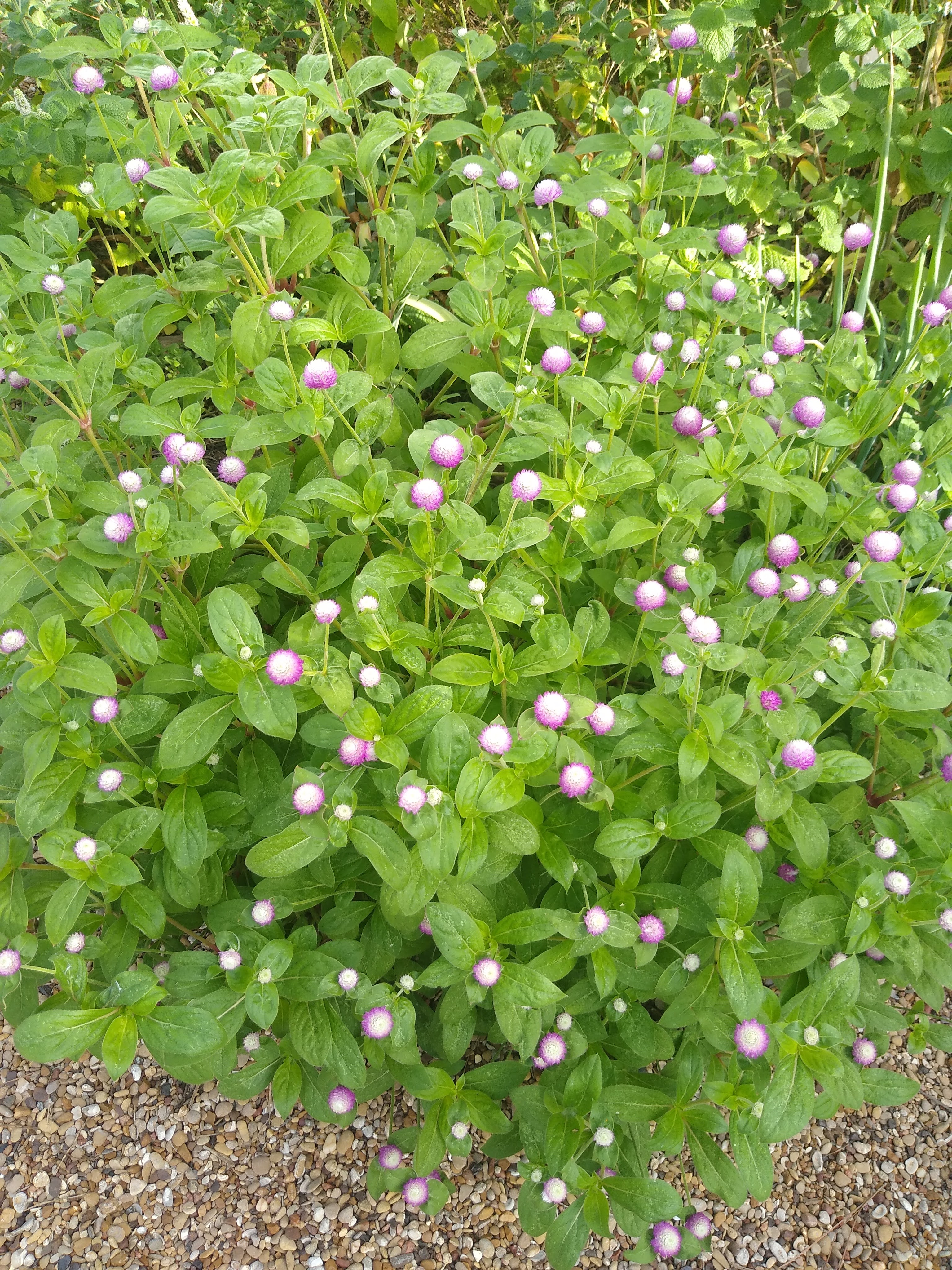
And the gomphrena was out of control. This is a variety called Atomic Purple from rareseeds.com:

I had two other varieties; one was a light lilac and the other was white. Such a fun flower!

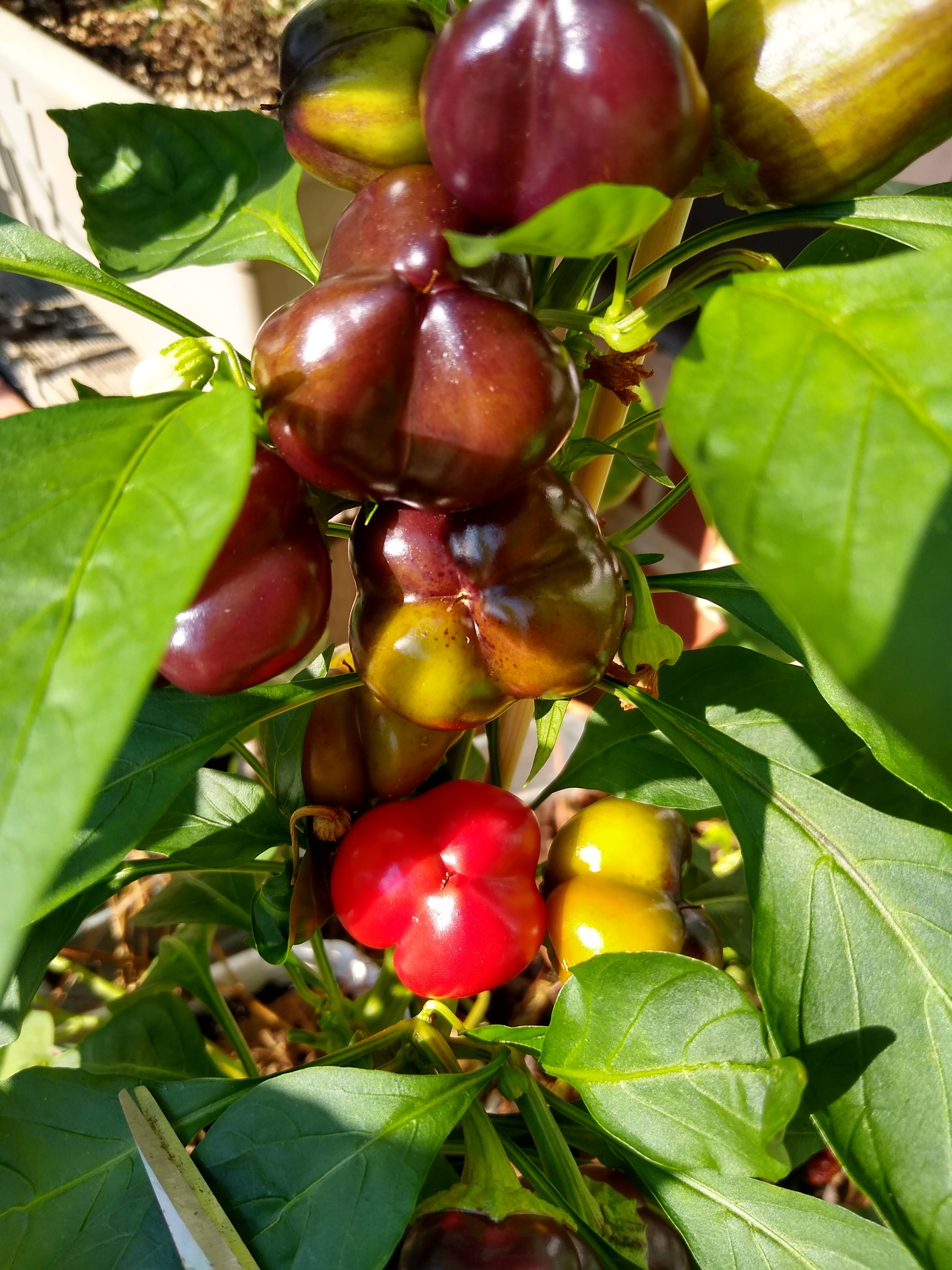
The other veggie winner was this cool pepper. I have no idea what variety it is; I actually planted it in spring of 2022 as a seed and ended up not planting it. Feeling bad for it, I overwintered it and planted it spring of 2023. It has rewarded us with tons of small purple and red peppers. There are so many different colors on the same plant.

Once again, the watermelons took over and the Ozark Razorback cowpeas went bonkers. Those are definitely surefire winners if you are facing a drought! I also had my Senator zucchini make a comeback as well as lemon squash and some Japanese eggplants.

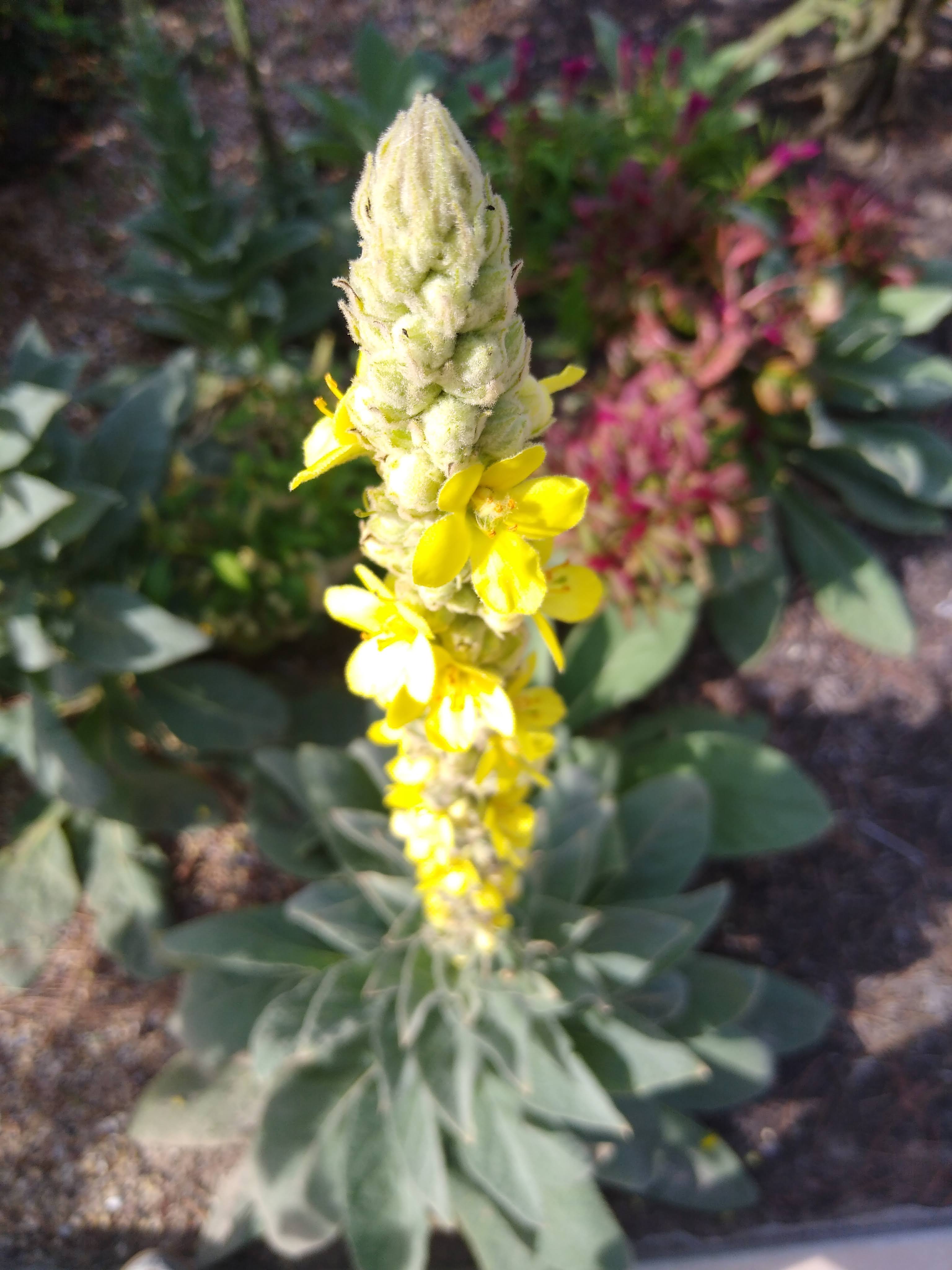
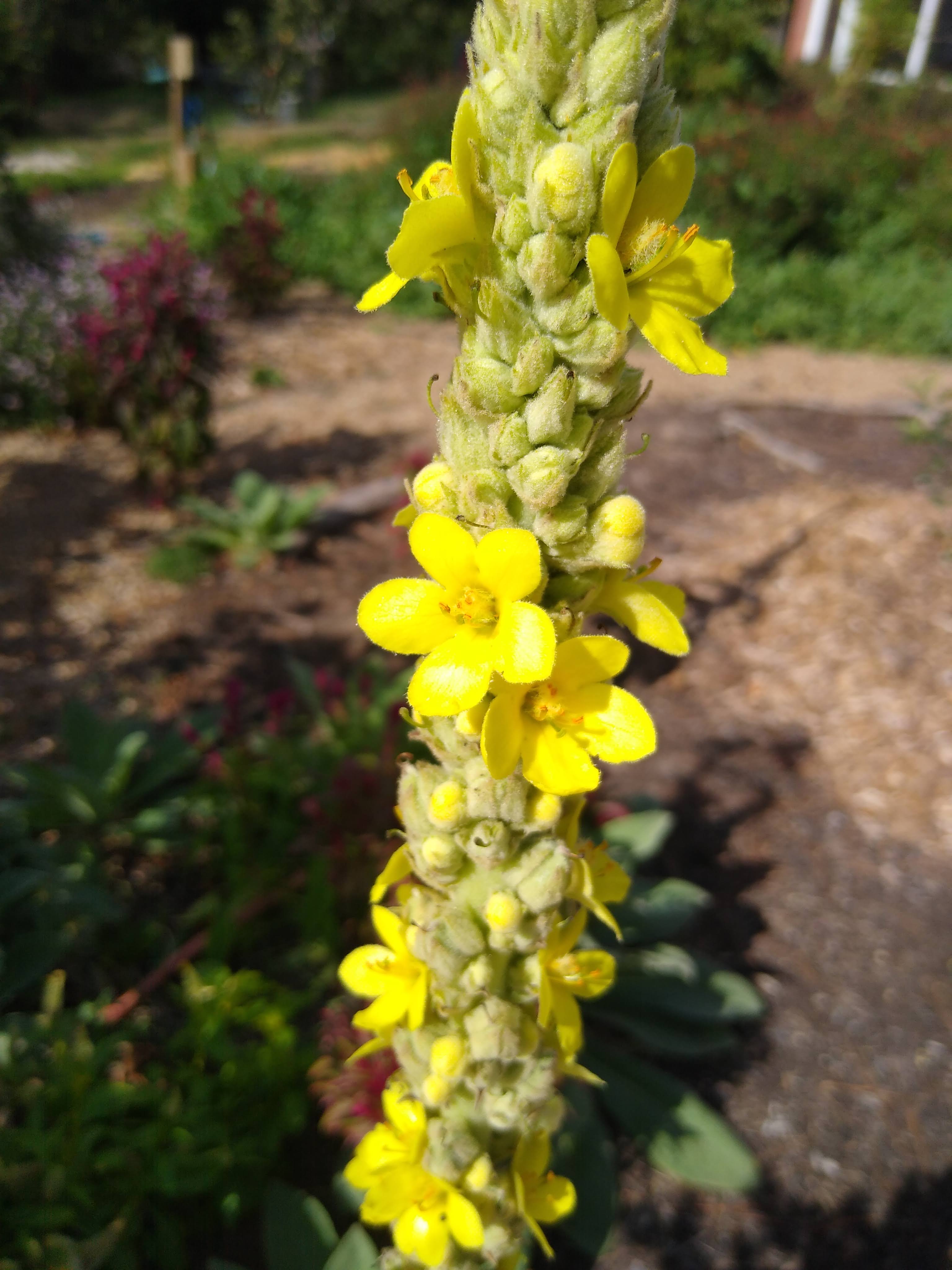
Here’s a mullein that popped up. They have been reseeding themselves in the garden since we have lived here. I always enjoy seeing them!

So here’s to the 2024 gardening season. May we receive a lot of rain and may the summer temperatures be mild! My biggest challenge is figuring out a good watering set-up. I really need a drip system but since my garden is very “here and there and everywhere” it’s going to be a chore to run the lines the way I need them to run. Still….better than hand watering! That’s my most dreaded chore in the dead heat of June-Sept.

Are you planning a garden next year? Do you have a fall/winter garden this year?

Another drought & I’m out.

I told Jason after 2011 that if we ever go through that again, I am leaving Texas.

Well, here we are eleven years on and it’s looking pretty 2011-ish. While we did have a few heavy rain events this spring, it wasn’t enough overall. We are only considered “abnormally dry” according to the U.S. drought monitor, but everyone in Texas knows when June hits, the tap turns off unless you get a hurricane or tropical storm. And to add insult to injury, our temps have already hit 100 and remain in the high 90s, so I am calling this month Jaugust. And I’m sure next month will be Juaugust, then August, then Saugust.

So that’s why I am going to go back in time to our winter/early spring garden, in far less crispy times. I think we had a nice fall/winter garden and I hope you will enjoy the mini-tour.

I find that fall and winter gardens are easy to do for our area, with the occasional annoyance of having to cover your plants during freezing temps.

January/February tend to be our coldest months. It would be best to plant in mid to late September, but as I said before that’s the month I call Saugust and my least favorite because it’s still hot and soooooo dry. Honestly, who wants to plant in hot dust? Not I. So I usually end up waiting until mid-October when we get some rain.

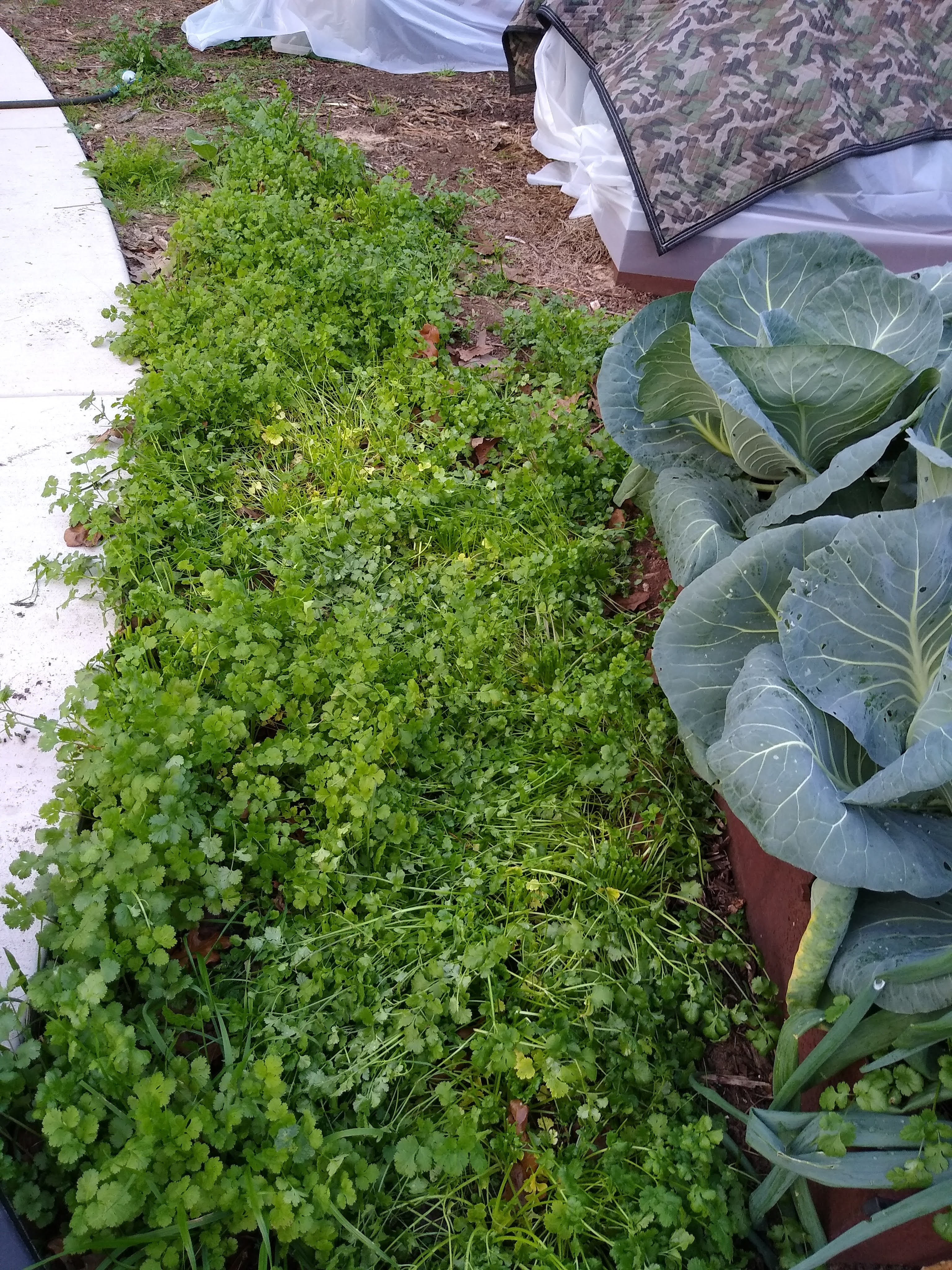
So below is a pic from December, when I had my beds wrapped and Team Cilantro was in full force. It reseeds itself yearly, so I let it do its thing. The cabbages are Bonnie’s Best hybrid that were transplants. You can see that some cabbage worms made small holes, but these are quickly taken care of with a Bt spray. I use the Monterey brand and I had the RTU (ready-to-use) kind. I won’t be without this spray! It kept my kale happy and worm-free from spring through the next spring.

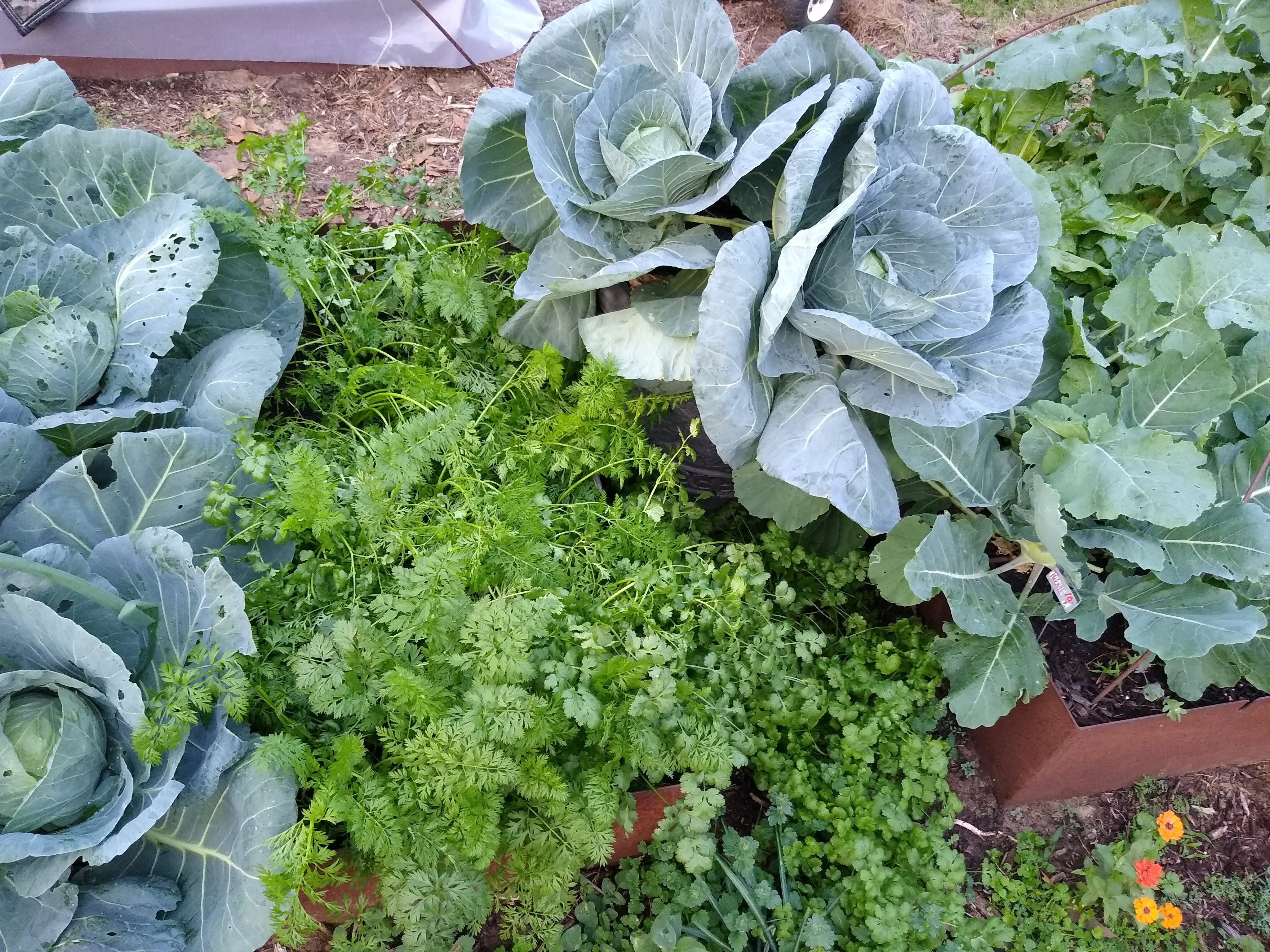
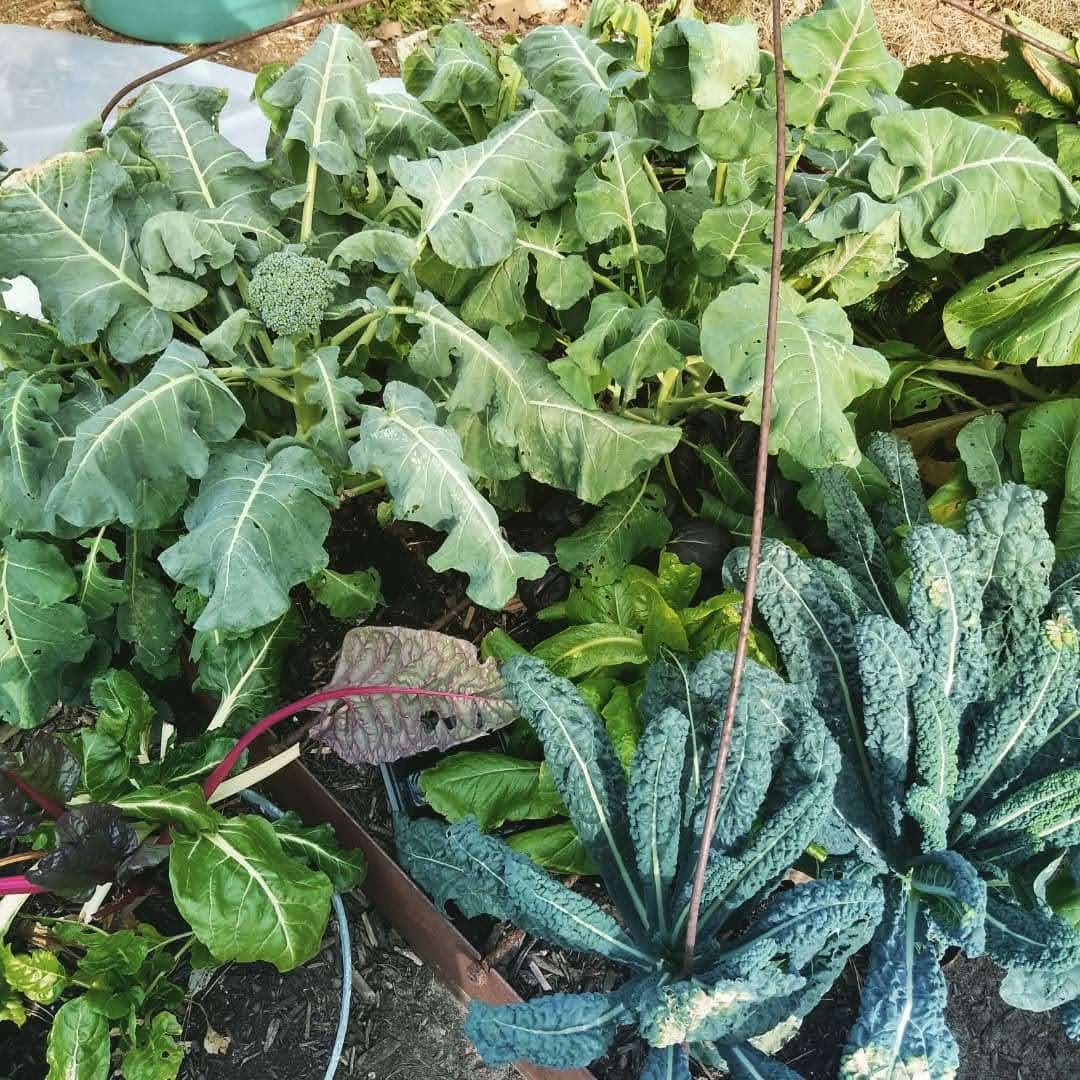
The next pic is of some more cabbages, carrots, and one of our very favorites: kohlrabi. If you like broccoli and cabbage, you will love kohlrabi. Even if you don’t like broccoli or cabbage, give it a try. It is milder that either of those two and is SO GOOD just steamed until tender. I don’t even add salt. But definitely peel it unless you enjoy chewing on twigs/shoe leather.

Cabbages, carrots, kohlrabi

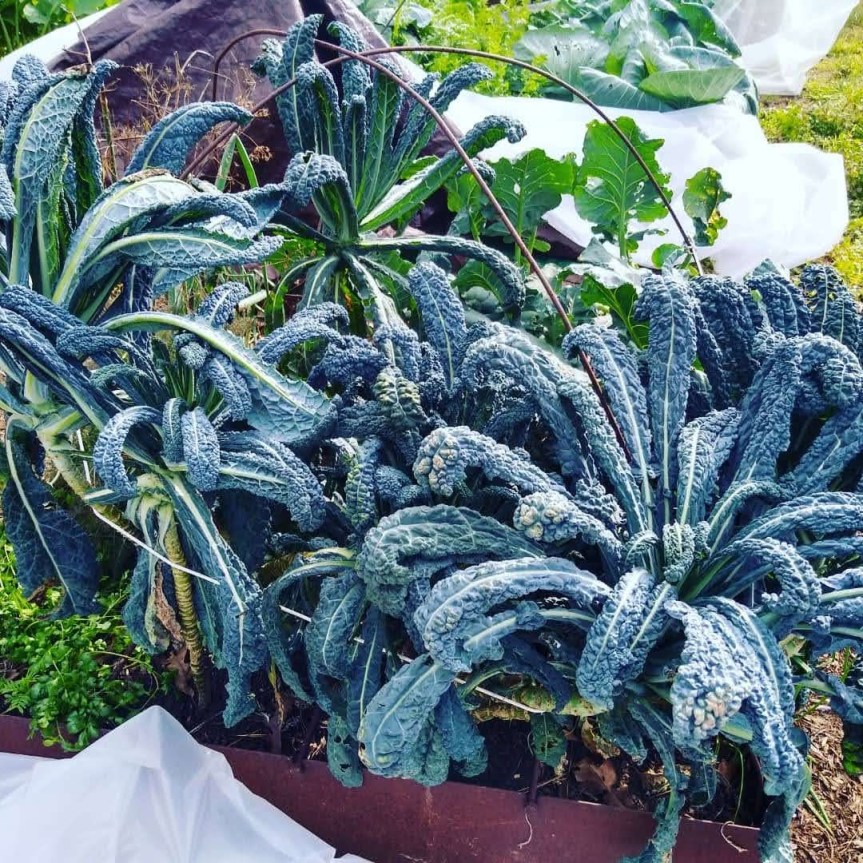
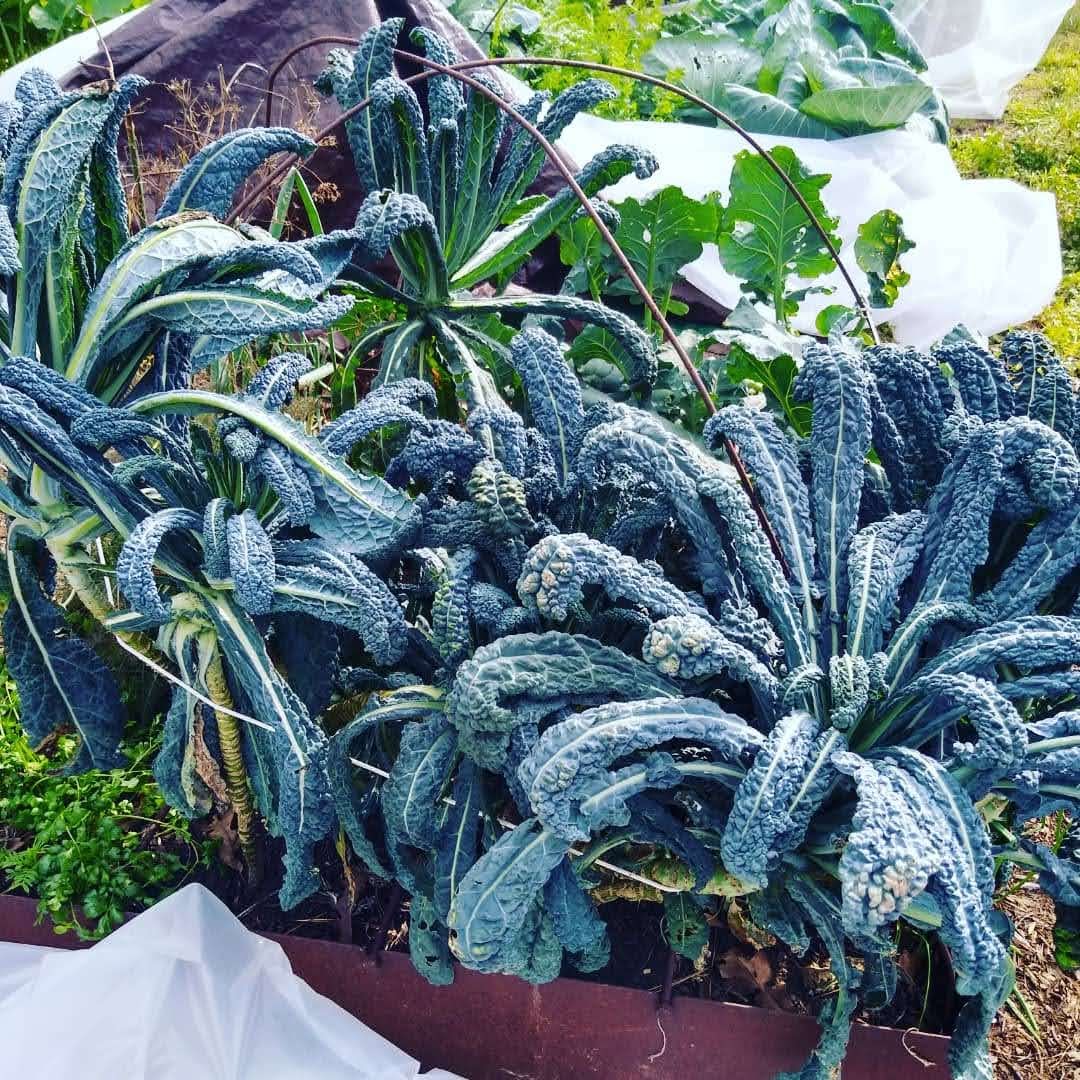
Now I love this kale! It is called Black Magic. It just produced seed this month (June; and it’s in its second year now) and it tastes great! I use it in soups, casseroles, stir-fries, salads, smoothies…anywhere you can stick it. Just cut out the rib and slice it thin to use. Trust me, it hides easily in everything and has a great taste. We also roast it sometimes, and yes, it makes great kale chips, too, if you enjoy those.

Broccoli! We love it. This broccoli is looking a little sad and wilted because it had been covered and when I took off the cover, the humidity it was used to dropped rapidly. I ended up re-covering it slightly to help it. I got these as transplants and I think it’s Lieutenant. I used to use Packman and they did away with that. Then Green Magic and they switched again. I also had Artwork, but I haven’t found that in a couple of years. This is why it’s so important to know how to grow your own! Growers aren’t always going to have what you want.

Admittedly, I am proud of the following cabbage. It’s some of the first I have grown from seed. This is an heirloom called Red Acre. The heads ended up being nice and dense and very tasty.

Snow peas….I babied these peas. I planted them too late in October, and they grew and grew and grew and I covered, uncovered, and re-covered about 10 times. You can see I even added some Christmas lights/party lights to keep them warmer while under cover. They survived all of the frosts and cold, but ultimately died due to a fungal infection in mid-spring. I did get some pea pods, but it wasn’t worth the hassle. So this fall, I’ll plant earlier and hope for a late fall harvest.

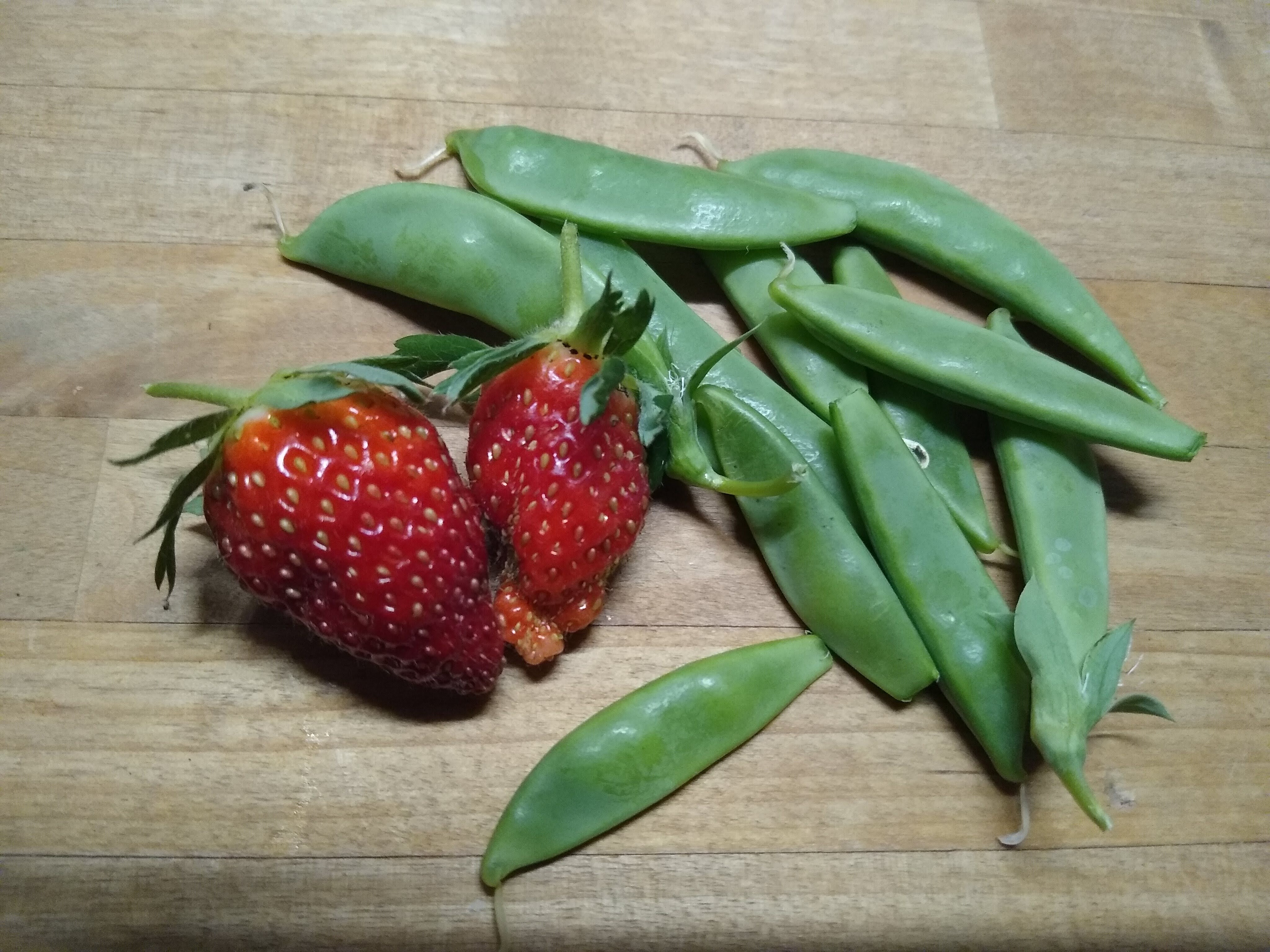
Peas n’ Strawberries. My strawberries got very confused with the very mild winter and produced like crazy. The bad part is that they were mealy and weren’t good over the winter months. If they did this again, I will definitely pinch off all blooms and let the roots/plant grow instead. By this spring, they were tasty. Here in East Texas, you really are supposed to plant your June-bearing strawbs in fall. But good luck finding plants! I had these overwinter and reproduce like mad, so I planted the babies EVERYWHERE. And this year I found a variety that tastes way better: Seascape. Now we are only supposed to plant June bearing strawbs, but these are considered “everbearing”. Whatever. I am going with this to see how it turns out. The berries are bigger and far tastier than these other ones, which I THINK are Allstar.

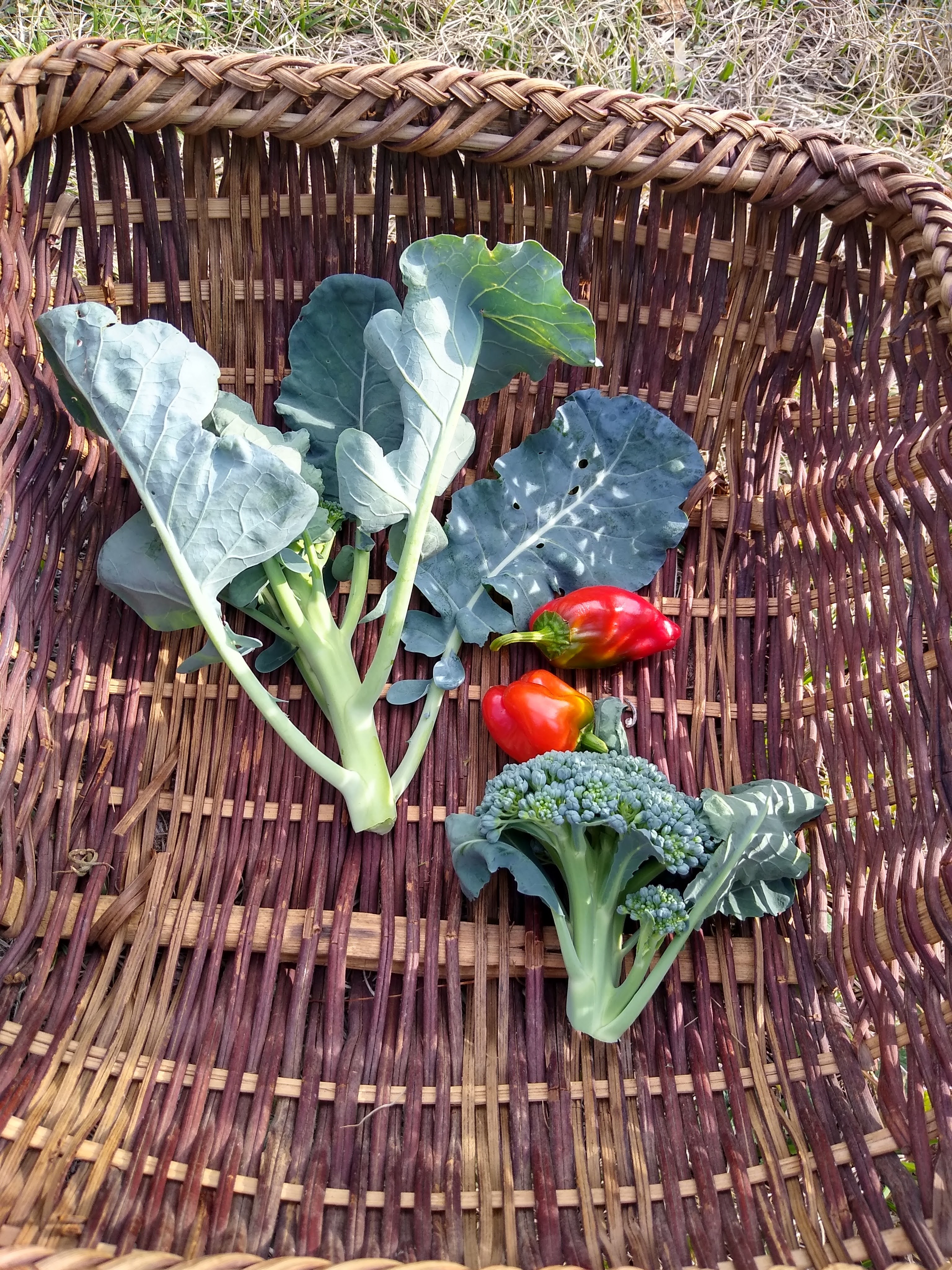
A December harvest: It’s scant, but it’s food. We enjoy eating the leaves of broccoli as well as the stalks; just peel ’em! No reason to let either go to waste. Throw the thinly cut leaves into a stir-fry or a soup. Also, you do know that broccoli as we know it is the unopened flowers of the plant, right?

Thanks for taking a little detour with me today! Now it’s back to reality and back to dreaming of a well or a cistern for the garden…