Rethinking the Easter Bunny

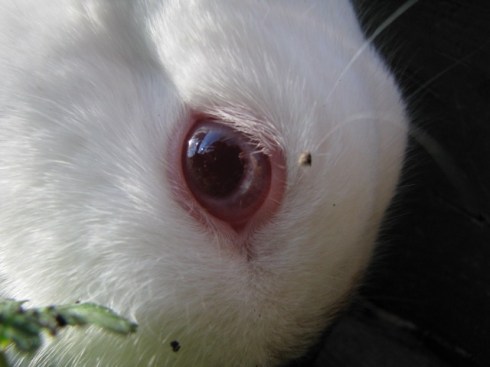
Ok, so a few days ago, I was searching on Craigslist (dangerous for me!) and I came across an ad about “Easter Bunnies”.  So, anyway, the ad was one of the longest run-on sentences I have ever read, and essentially said this:  They had bought some rabbits for their child’s Easter pictures, snapped the pictures and now they were ‘done’ with the bunnies. 

Naturally, this bothered me on many levels.

Soooooo, you went out, bought two live animals, snapped some photos, and then after having them only about 24 hours, put them up for sale?  Sooooo, the bunnies were just living props for a photo op?  Wow. People never cease to amaze me.  So, I told Jason about it, and about how sorry I felt for the rabbits.  What if they were in a box thrown in the garage or something?  Did they even have food or water?  Jason came back to me a short time later and said, “You know, we really should get those rabbits.”

Coming from him, I know that was a difficult thing to say! After all, we already have a lot of animals.  But, being as we are interested in raising meat rabbits, and these are a breed of meat rabbit. Anyway, I called the number and sure enough, they still had the bunnies.  We head over there the next day.

Surprisingly, they are nice people.  I have to say I was pleasantly surprised about that.  Surprisingly, the rabbits do have a small cage and pellets.  For a very low price, we brought home the bunnies.  They appear to be really healthy, but I’m still keeping a close eye on them.  Oh, and of course, one is a boy (a buck) and one’s a girl (a doe). And, they were together.  Well, we all know that only rabbits can breed like rabbits, right???

 My point here is that I just do not understand how people can give so little thought to an animal to consider it disposable.  I cringe to think of all the Easter bunnies, chicks, and ducks that get thrown into a box or even worse, turned loose into the wild.  After all, they are living, breathing beings, too.  Don’t they deserve a little more than being used for some holiday and then tossed away like a gum wrapper? Sigh. I’ll file this one under ‘Soap Box’.

I LOVE EGGS (and chickens, too)!

Get ready for a passionate post.  I LOVE EGGS!!!  One of my favorite farm subjects!  I have been collecting pictures for you for months now to show off farm eggs.  But first, let’s get a little political here.

I am going to first state that I am not an animal rights activist.  I AM, however, all for animal welfare.  There is a big difference, but I’ll let you do the research on that.  If you buy your eggs from a grocery store, I want you to know something very, very important.  Please first read this little article:  Factory Farming: Eggs, and then come back.  (Note that animalsanctuary.org is an animal rights group, therefore, they do not support the slaughter of any animal, and are vegan.  While this is not my own position, we do agree that the current condition of so-called ‘factory farms’ are appalling)

Finished?  Now I want you to see the visuals:  Egg Farming Photos

How do those cheap grocery store eggs look now?  This is the reality of buying from a supermarket.  Don’t be fooled by the phrase ‘cage free’ eggs either. This just means that they aren’t in the battery cages, but crammed in a building.  You do not have to allow access to the outdoors to be labeled ‘cage free’.  The terms ‘farm fresh’ and ‘natural’ don’t mean anything at all.  The chickens in those photos can be labeled as such.  Most people have a vision in their minds of happy, plump chickens running around the farm (with a red barn, of course), eating bugs and grass and soaking up the sunshine.  The reality is that there are tens of thousands of birds literally crammed into 16″ or so cages (several to a cage) so tightly that they never have the chance to even spread their wings. 

And THIS is called progress?

I am passionate that I educate you about this.  As more people moved from the country to the city beginning in the 1950s, they stopped raising their own food.  So, companies came up with an answer: industrial farming.  “Farming” (I use that term VERY loosely here) animals and crops to meet the demands of the consumers.  But somewhere along the way, we got lost, ethically speaking.  I always think of these lyrics by Pink Floyd when I think about this :

“And did they get you to trade your heroes for ghosts?  Hot ashes for trees?
Hot air for a cool breeze? Cold comfort for change?
And did you exchange a walk on part in the war for a lead role in a cage?”

I’m pretty sure Pink Floyd wasn’t singing about egg farming, but I hope you get the parallel here.  What are we willing to trade off for convenience?

Now, I will step down from the soap box, but I want to open your eyes to the truth.  Factory farming doesn’t stop at eggs either.  I hope you will research more about where our food REALLY comes from.  I hope this will inspire you to source out local food, or better yet, produce your own!  I’ll help you out.

ON TO THE EGGS!!!
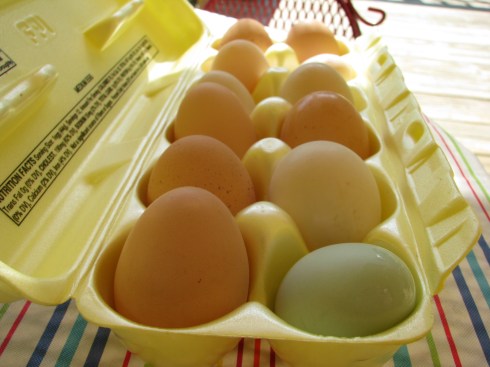
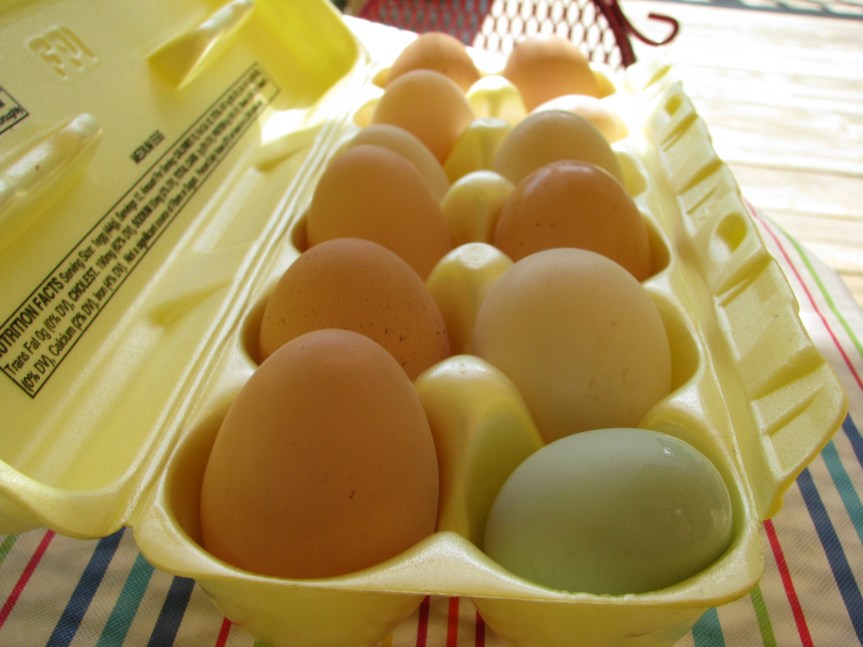
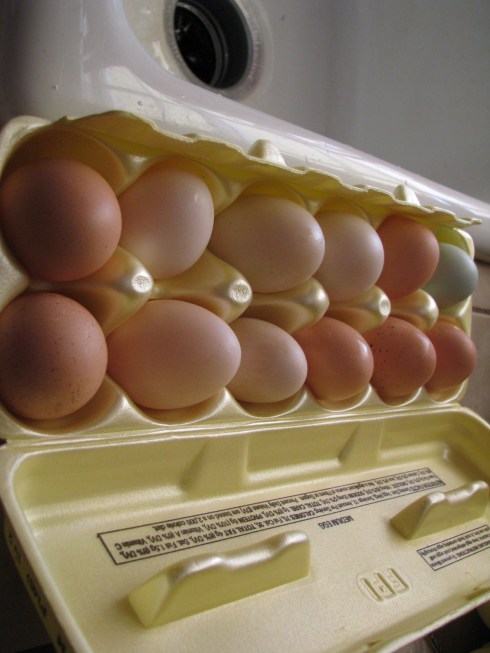
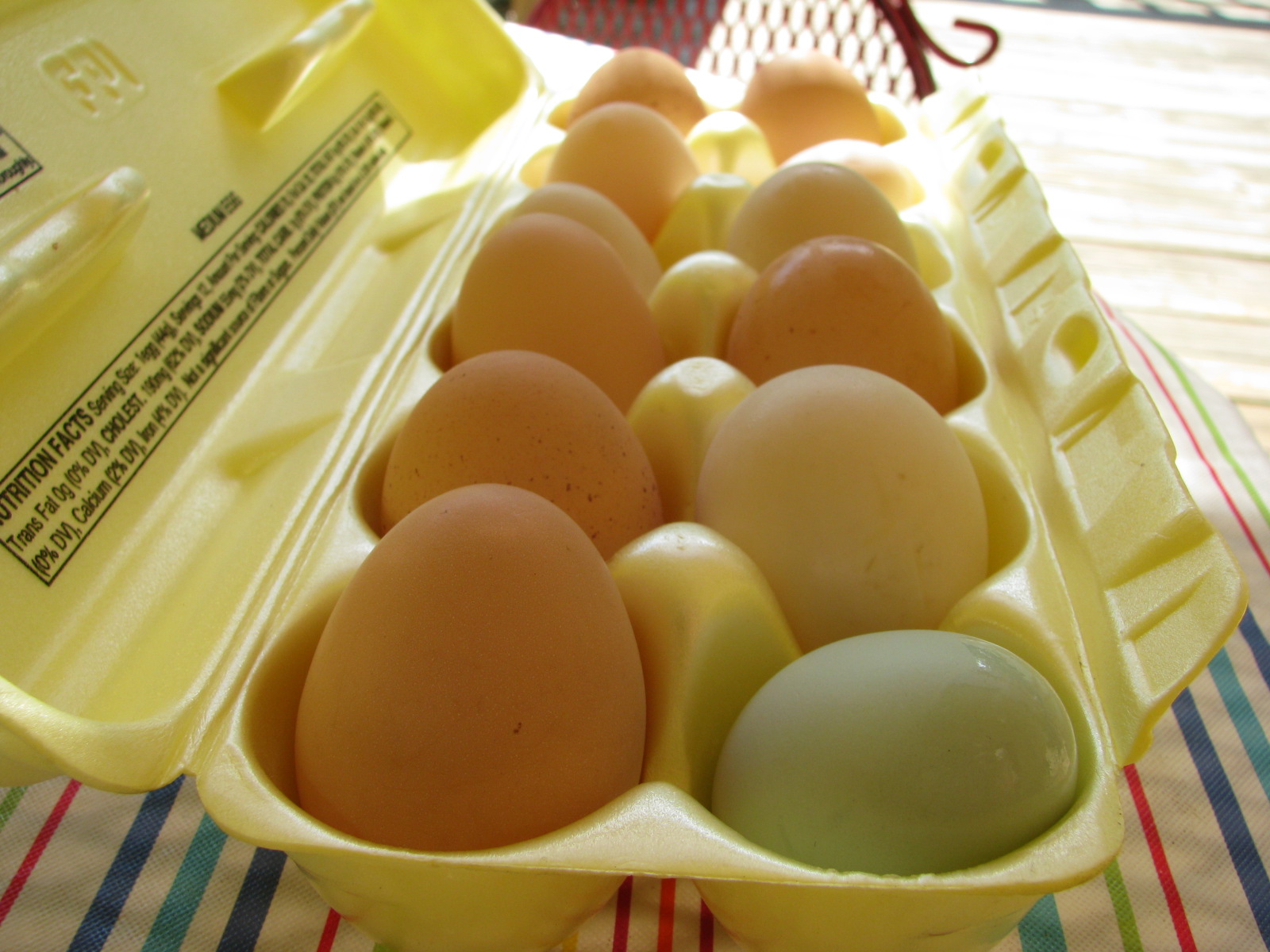
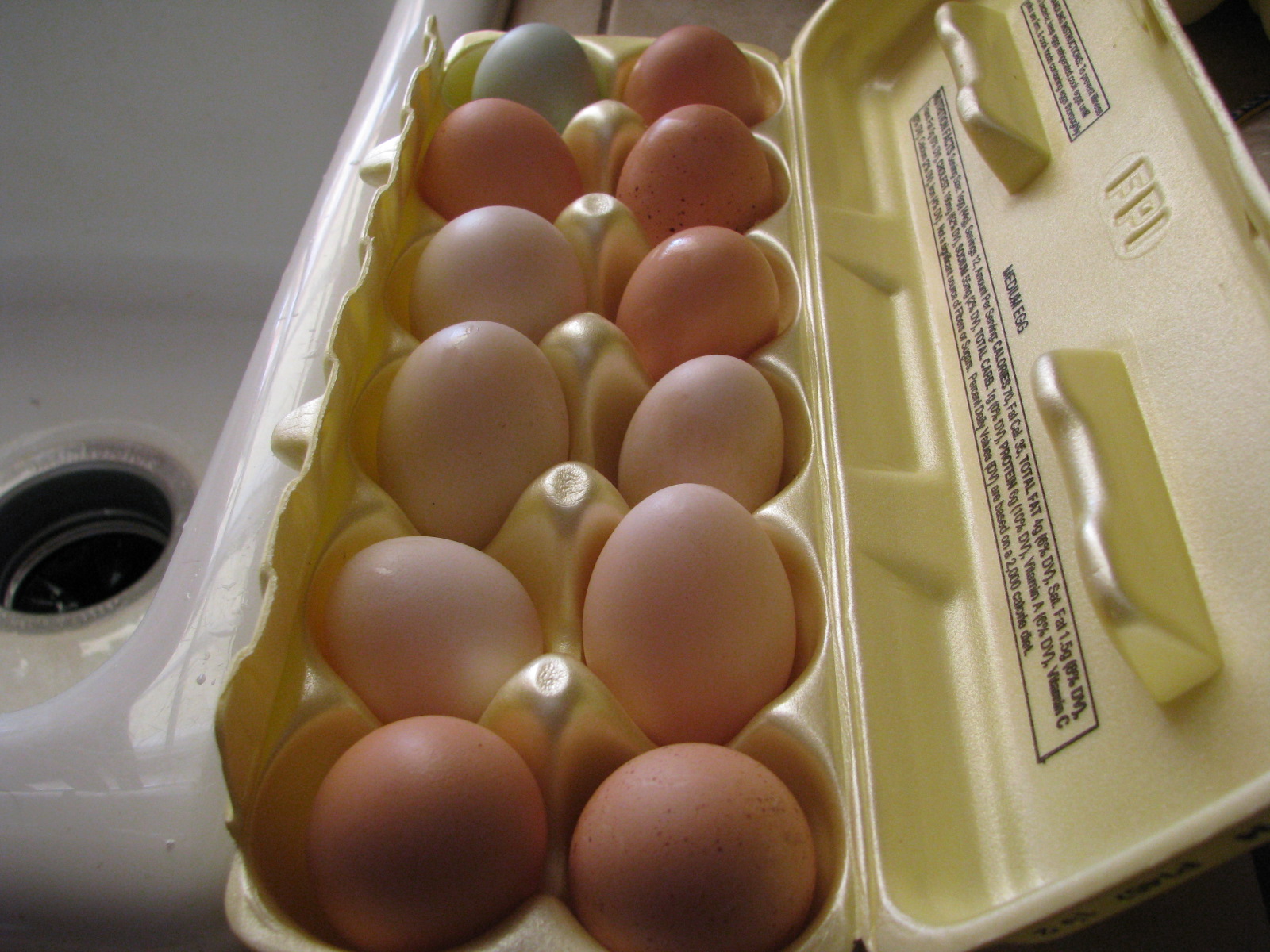
Some of the first eggs I collected on the farm.  A mix of Cochin, Plymouth Rock, and Ameraucana eggs.  Ameraucanas lay tinted eggs in shades of blue or green.

Fun Egg Facts:

A hen does NOT need a rooster to lay an egg.

It takes a chicken approximately 24-26 hours to produce an egg, start to finish.

Yolk color depends on what the chicken is eating.  Chickens who are allowed free range and who are allowed to eat insects and plants will produce an egg with a much darker yolk (and better tasting, too!)

Fresh eggs can be stored in the refrigerator at least 3 weeks before you will notice a decline in quality.  The air cell in the egg will enlarge and eventually the egg will dry up on the inside.

When you hardboil an egg, don’t use a fresh (meaning real farm fresh, not supermarket fresh) egg.  Fresh eggs are extremely hard to peel!

An eggshell contains thousands of pores, mostly on the larger end.  This is to allow the exchange of carbon dioxide and moisture to occur for a baby chick.  (So the shell ‘breathes’….weird, huh?”)

There are approximately 280 million laying hens in the US, and we produce about 75 billion eggs a year.  The majority of these eggs are produced in ‘factory farms’.

A chicken egg takes 21 days to hatch. 
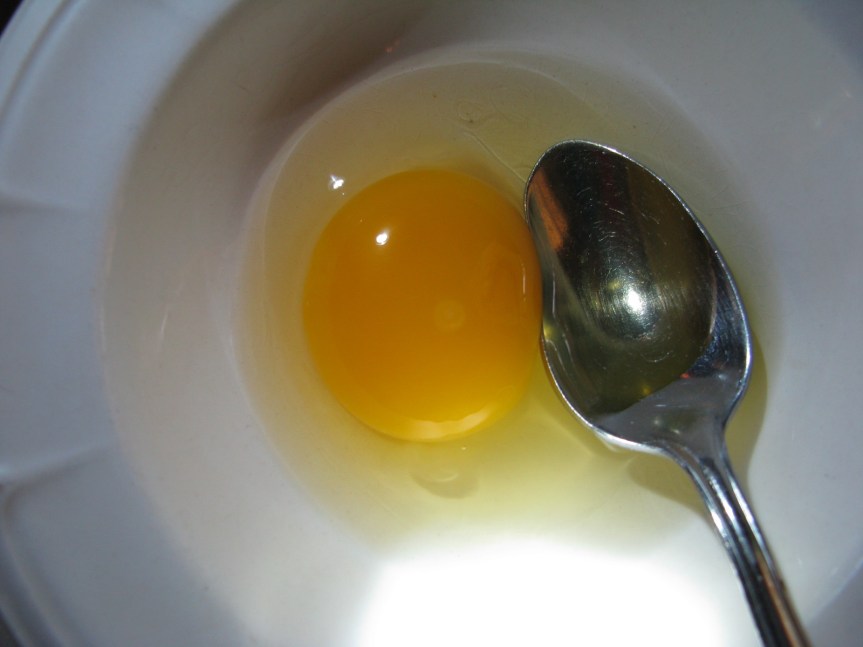
Fertile vs. Unfertile

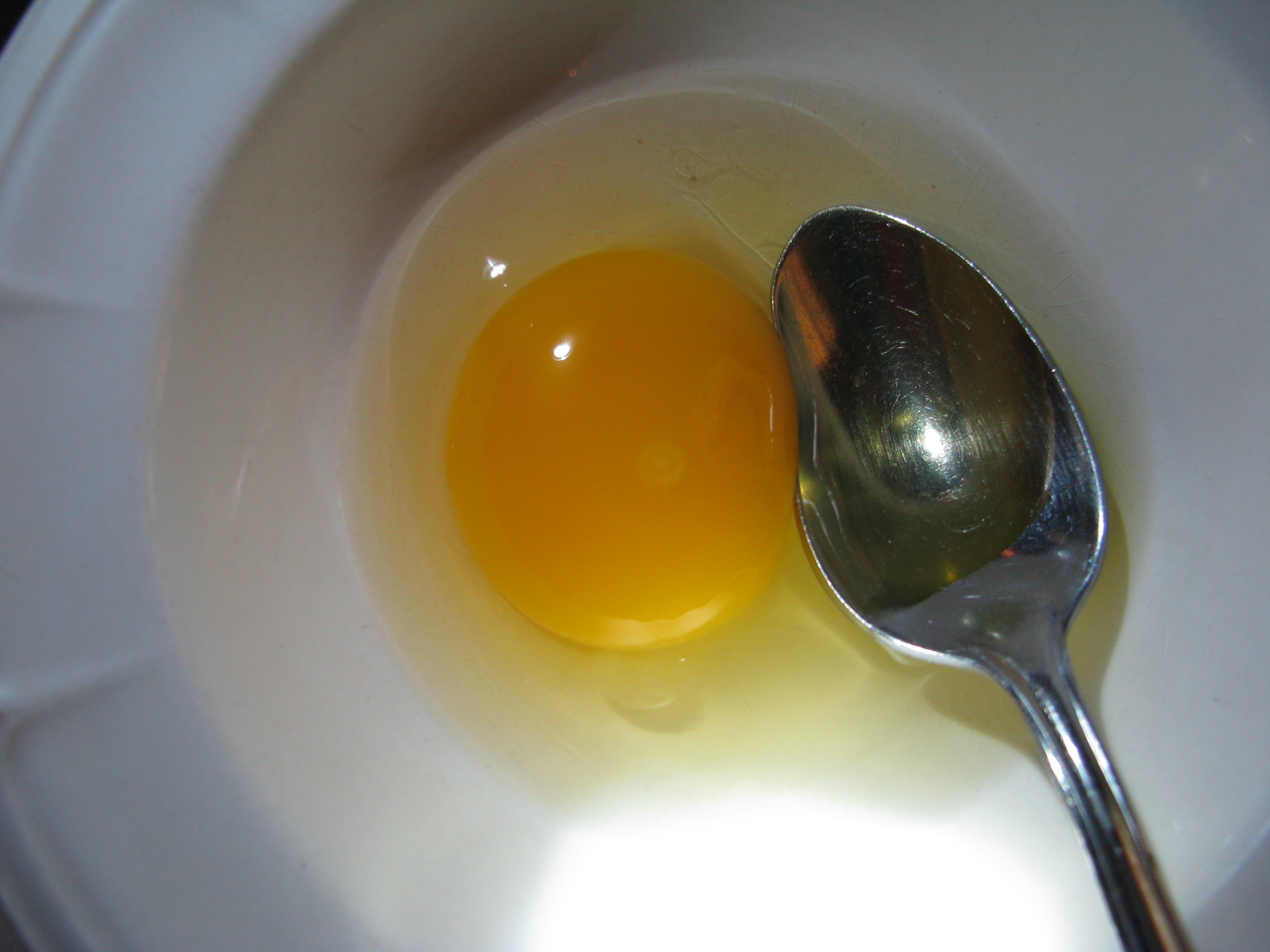
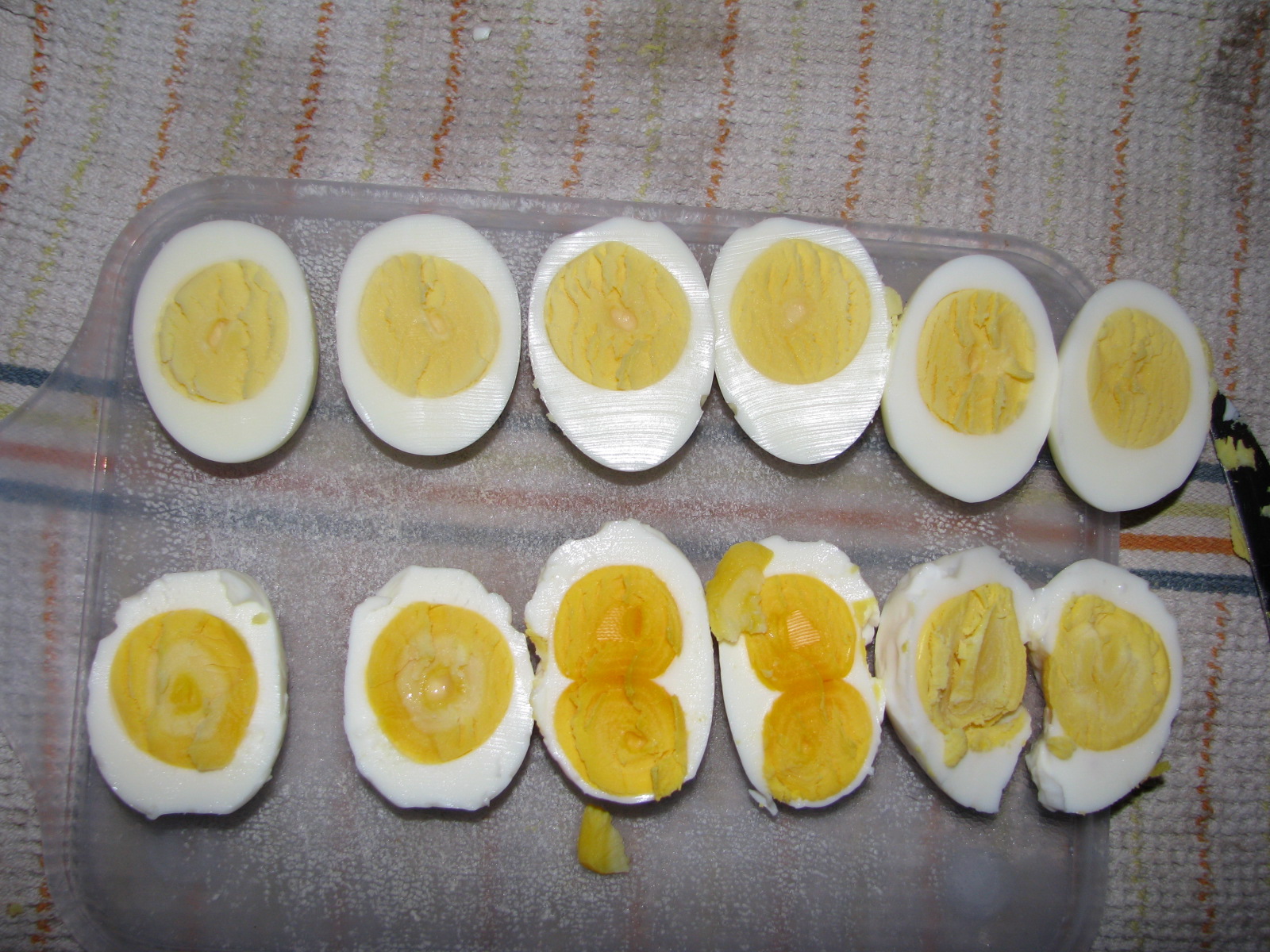
How do you tell if an egg is fertile?  Well, do you have a ‘dot’ or a ‘donut’?  Huh?  In the above picture, look closely at the yolk.  In the center, you will see a very light ‘bullseye’ or ‘donut’.  This indicates that this egg is fertile.  An unfertile egg will only have a small white dot, not a ‘donut’.  A fertile egg tastes no different that an unfertile egg.  Development of the baby chick ONLY happens when the egg is kept very warm (about 99 degrees or so) and under the right conditions.  This is what a fresh, fertile egg looks like!  You aren’t going to open up an egg and find a chicken (unless you pulled an egg from a setting hen!).  It takes several days of incubation for blood vessels/tissues to develop.

Ew!!!  What’s that spot in my egg!!!  I thought these were fresh….

Let me address something here.  Fresh farm eggs vs. Industrial Farmed eggs.  When you get eggs fresh from the farm, there is a slight chance you will come across an egg with a ‘blood spot’, which is typically a small speck of blood/tissue inside the egg.  This typically happens in hens who have just begun to lay or older hens.  They are caused by the rupture of a blood vessel on the yolk surface during the formation of the egg or sometimes by a similar occurence in the wall of the oviduct.  They are NOT the beginnings of a chicken (again, UNLESS the egg has been incubated for several days! But, if you collect eggs daily you will not have that problem.)

But why don’t I see these in grocery store eggs?

Simple.  Because industrial egg farmers use electronic ‘eyes’ to ‘see’ the spots in the eggs before they make it to a carton.  Small producers don’t have that kind of luxury, so you will sometimes find these spots.  There is no need to throw away the whole egg.  It is very easy to remove a spot with a bit of shell.  It does not affect the egg in any way. In fact, many years ago it was commonly recommended to first break an egg into a separate bowl before adding it to a recipe for this very reason.  So, in conclusion: Blood spots are a little gross looking, but do not affect the egg.
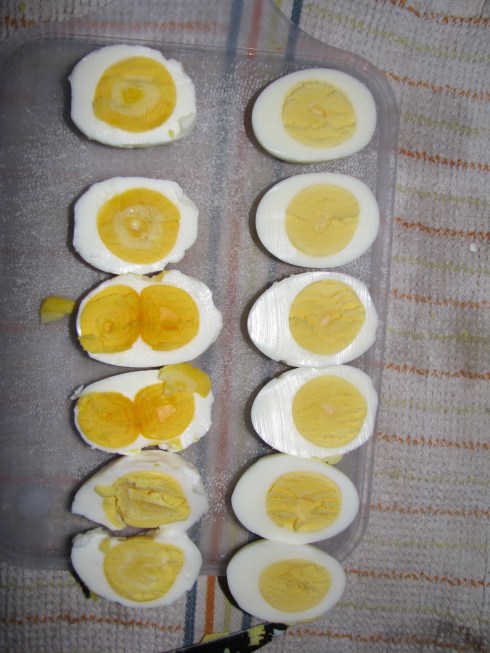
Difference between real farm fresh and industrially produced eggs

In the picture, I have set grocery store eggs on top, and my eggs on the bottom.  In the grocery store eggs you will clearly notice a paler yolk and fairly uniform appearance.  You will also see that my farm eggs are definitely different and there’s even a ‘double yolker’ in the group. (yes, chickens can produce twins!)

Factory farm eggs are produced almost exclusively by one breed: The White Leghorn chicken.  It is a small chicken that makes a big white egg.  They are very productive and very efficient as far as feed to production ratio.  My eggs come from several different breeds, which are becoming more endangered with time, due to the fact that factory farms only use one breed for white eggs and most people only eat factory farm eggs.  Another picture:
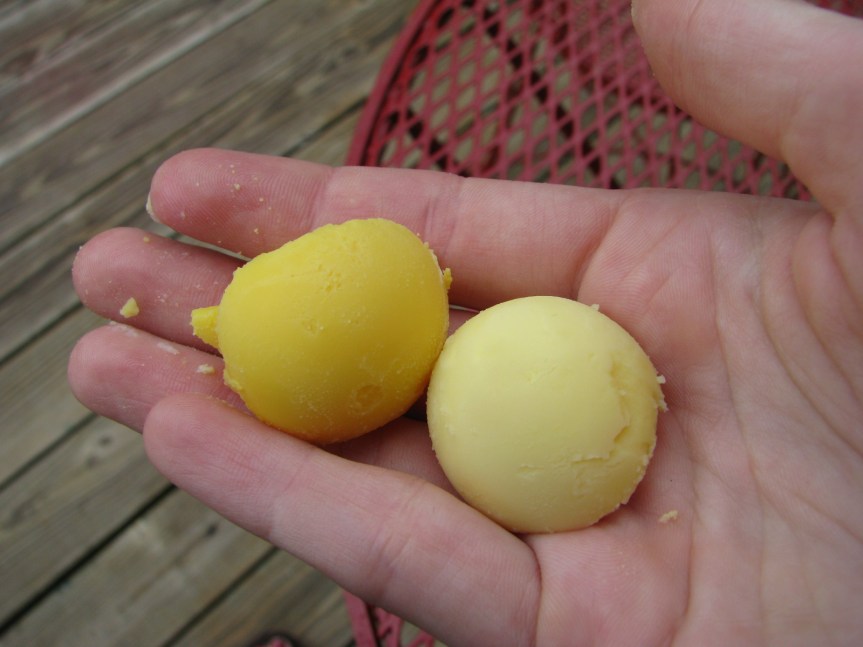
My egg on top, factory egg on bottom.  Yolk color is determined by yellow-orange plant pigments known as xanthophylls.  My hens are allowed to eat fresh weeds, thus the darker color. 

Is there a difference in taste in fresh farm eggs and factory eggs?

I can personally vouch for this.  YES, YES, a million times YES.  Now that I am spoiled to eating extremely fresh eggs, I can honestly tell the difference in the two.  Fresh farm eggs where chickens are allowed natural foods have a richness to them, almost like they are creamy when compared to factory eggs.  Quite honestly, factory eggs taste ‘eggy’ (if that makes sense) and almost have a plastic quality to them. 
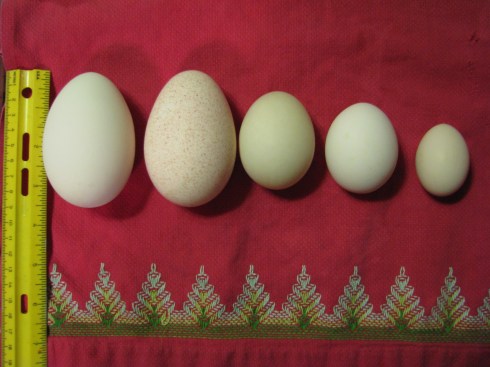
 

 Difference in egg sizes: From L to R: African Goose egg, Turkey egg (double yolker, twice the normal size), Cayuga duck egg, White Leghorn egg, Bantam egg

What do other eggs taste like?

My favorite eggs actually aren’t even chicken eggs!  Actually, my favorite would have to go to the duck egg.  Before you cringe, let’s discuss.  An egg is an egg is an egg.  Chicken eggs are no cleaner than duck eggs and the other way ’round.  In fact, it surprises me that we mostly eat chicken eggs since ducks are extremely economical as far as feeding goes (they eats lots of juicy bugs and weeds, and little grain), and the eggs are so much richer.  You will hear people say that duck eggs are great for baking, but the truth is that they are great for anything you do with chicken eggs.  And talk about rich!  Duck eggs have a thinner white, but a much richer yolk.  One night Jason scrambled some eggs and I really thought he had added cheese to them, but no, they were just duck eggs.  That is how rich they taste.  The flavor is absolutely the same, no difference.  It is always possible for eggs to get ‘off’ flavors depending on what they eat, so ducks who eat out of a pond may produce stronger flavored eggs, but my ducks stay here at the house and eat what the chickens eat.  Goose and turkey eggs are also delicious.  I think that they are also richer than chicken eggs, in my own opinion.  An egg is an egg is an egg.  Repeat this 5 times.
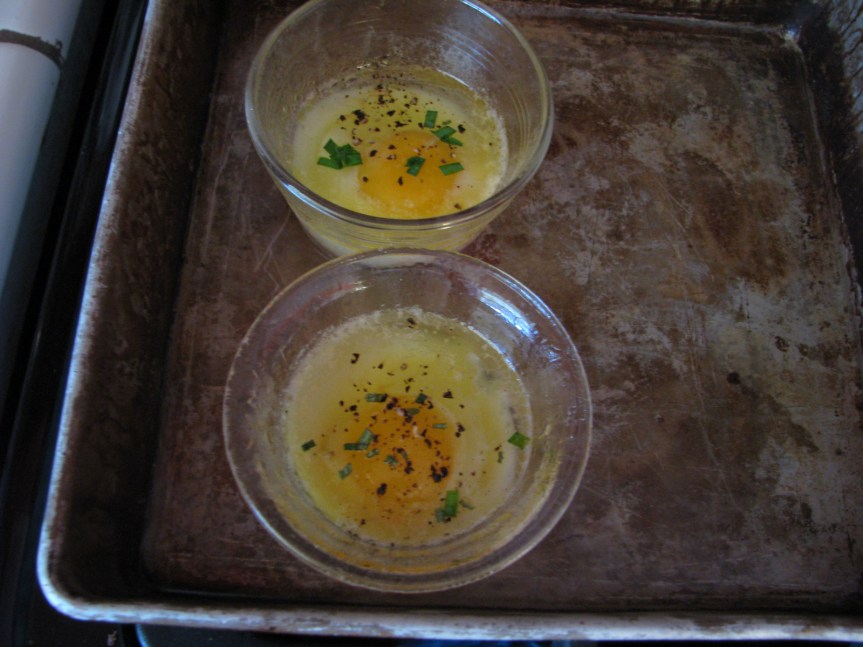
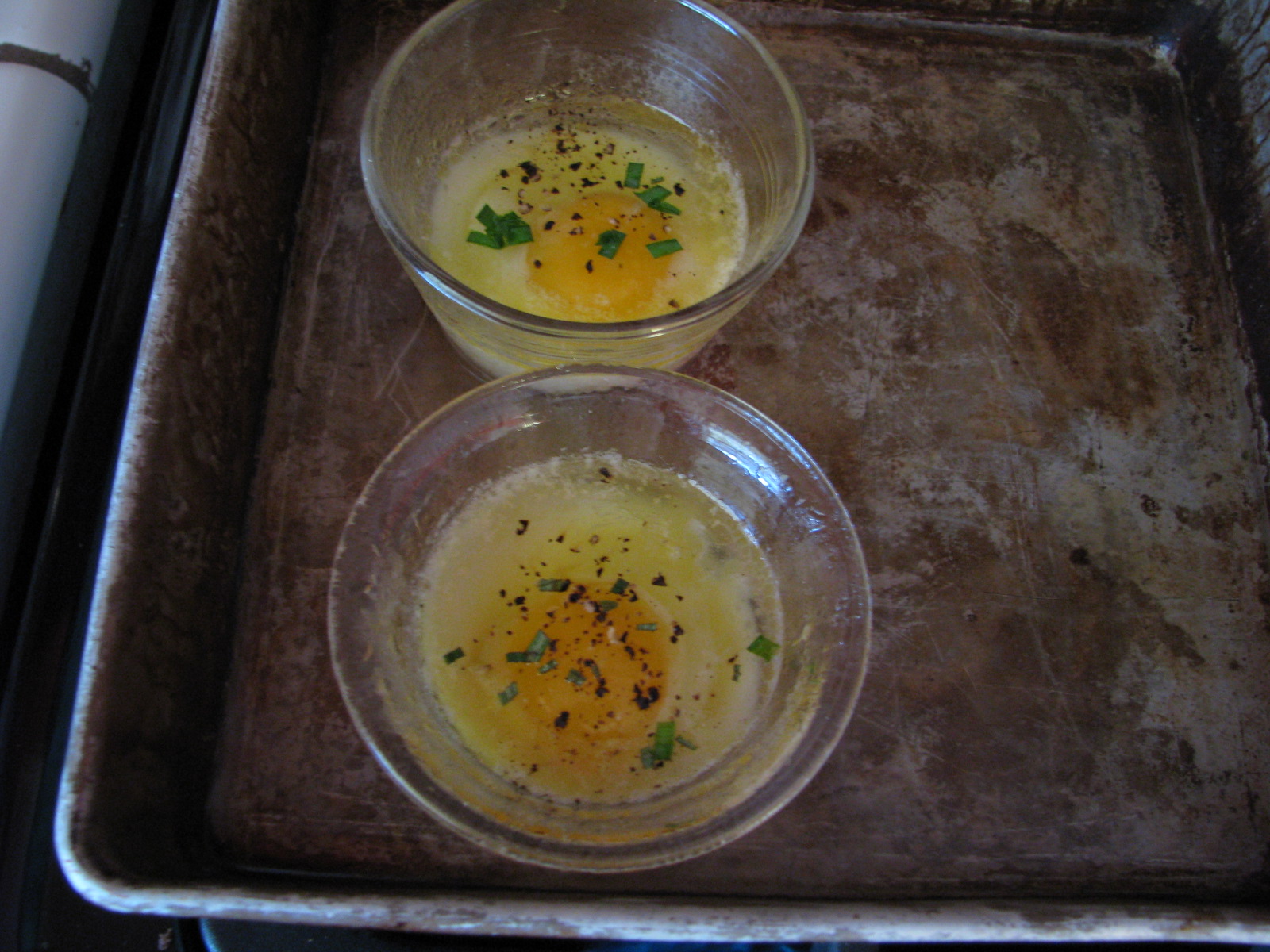
 Julia Child’s recipe for baked eggs.  Set ramekins in a pan of boiling water.  Add a small amount of oil to the ramekin.  Crack a fresh egg into the ramekin, and season with your choice of spices (I use salt and fresh cracked black pepper and fresh chopped herbs).  Add a small amount of cheese to the top, such as provolone, Havarti, or Swiss.  When egg white begins to turn white, place pan, ramekins and all, in a 350 degree oven for about 7 minutes.  Do not overcook!  (I still manage to over/under cook them, but they’re great anyway).

Nighttime Visitor

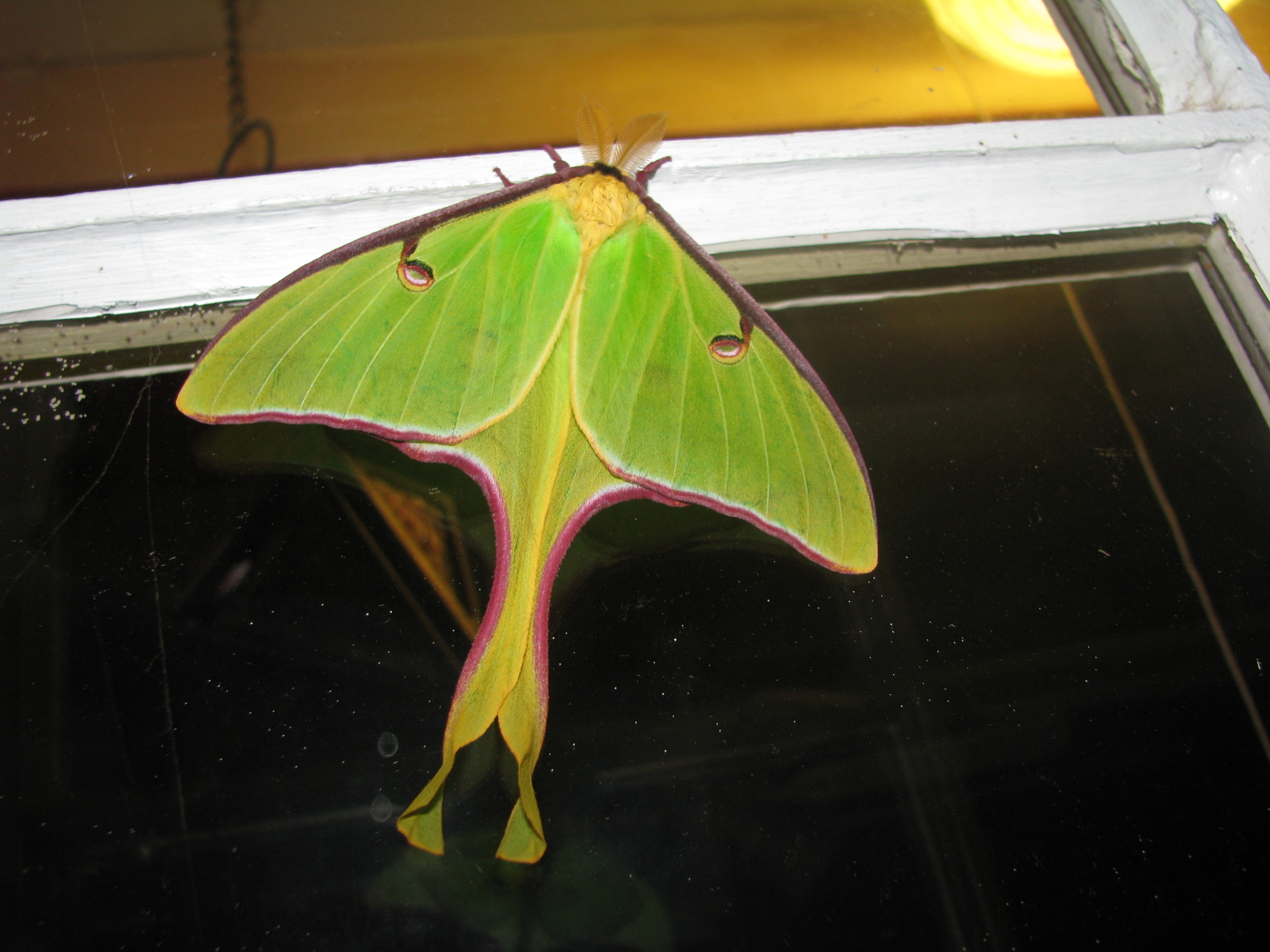
One of my favorite memories from my childhood was a little silver cardboard box that my Mamaw and Papaw kept on top of their vast collection of encyclopedias.  Inside the little box was a luna moth which Mamaw had set inside.  I must have asked them to get down that box a million times.  I remember the poor moth got so old finally that its wings deteriorated to the point that they just turned clear and finally, after years, my grandparents threw it away.  So, to see a Luna moth always brings me to a very happy place in my own mind.

  Luna moths emerge from cocoons which are on the ground, near the trees that the caterpillars feast on.  They come out in the spring, do not eat at all, mate and die.  This whole stage in their lives only lasts about a week.  But, what a treat to find one!  This big guy was on my kitchen window.  Four days later, it was replaced by another, equally as beautiful, but a bit smaller.

Busy as a….

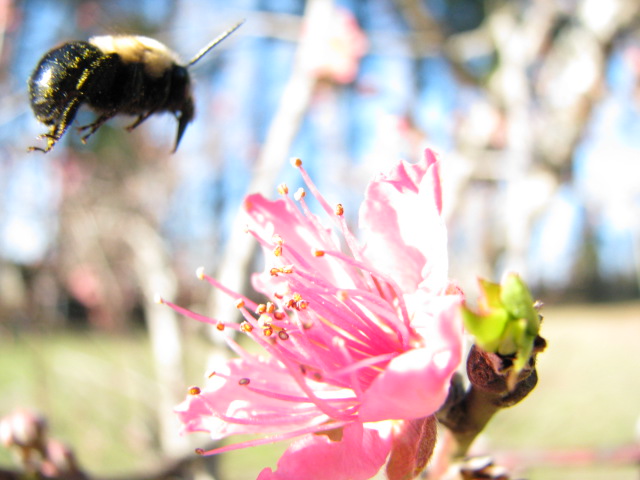
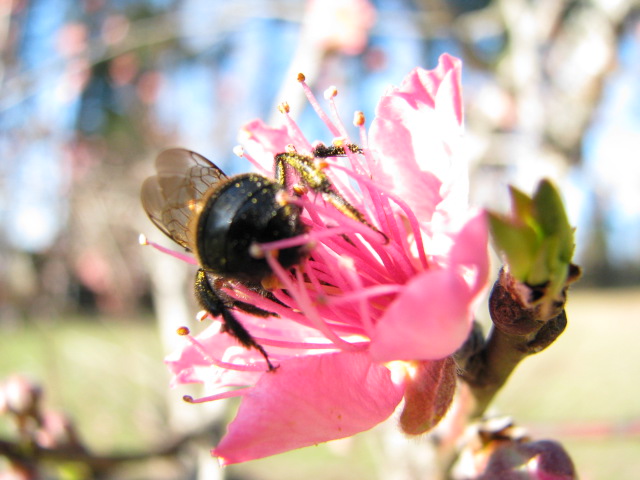
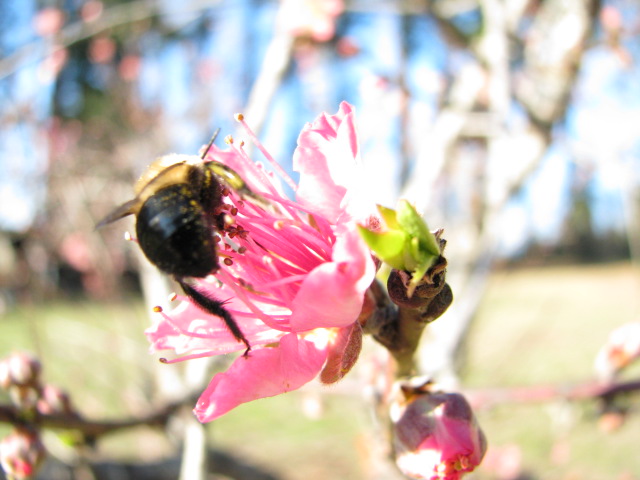
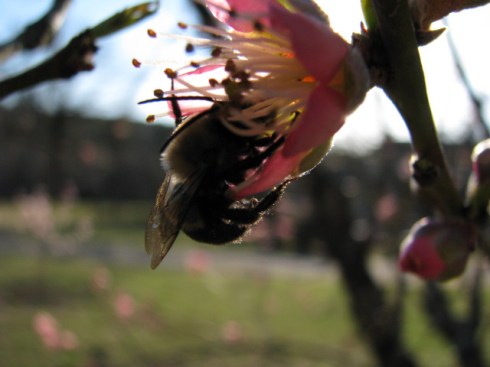
I decided quickly after these pathetic attempts to capture bees in action that should one ever want to punish me for eternity, hand me a camera and tell me to go out and get some great photos of bees.  I would probably turn into a sobbing, lifeless mess.

Local Woman Assaulted by Chicken

So, the other day it came time to feed the chickens.  Since the kids were in the house, and you know how kids can find trouble in a split second, I ran out to the chicken coop as fast as possible.  Unfortunately, some of the chickens ran out as I opened the coop door.  Since I didn’t want them to run off and hide their eggs only-God-know-where I tried to round the rogue chickens all up to get them back in the coop. 

The chickens didn’t care that I was in my fuzzy white robe, or that I was still in my pajamas or that there was a thunderstorm looming.  They just continued to run circles around the coop despite my best attempts to catch them.  They didn’t care that the neighbors probably thought I was some pajama-clad whack job chasing down chickens at 9 in the morning. 

Finally, I cornered one.  It was just me vs. chicken.  We stared each other down for a few minutes as we both planned out our attack strategy.  I leapt forward, scrambling in the most futile manner, trying to snag any part of a chicken with my hands.  Chicken came straight at my face, wings a-blazing.  My glasses went flying over my head.  Let me just tell you that you never realize how blind you really are until your glasses get slapped off of your face in a split second.  I froze, not wanting to smash my $300 pair of glasses (no matter if I got free frames, inevitably, my glasses would still cost $300 for whatever reason).  Everything looked like a big brown blob as I gently patted the ground looking for my glasses.  Bear in mind, the kids are alone in the house and a storm is approaching, and now it is starting to sprinkle and thunder.  I curse the chicken with the best words I know how.  It is probably the first time I have ever cursed at my poultry.  I made a 3 foot radius with my hands….no glasses.  I am suddenly struck with the thought of Velma on ScoobyDoo, screaming her famous line, “My glasses!  Where are my glasses?!?” and I come to completely sympathize with poor Velma and that it most certainly is NOT funny, not even in the least bit.  I feel terrible for ever making fun of Velma losing her glasses.  It also occurs to me that it’s a darn good thing that the Mystery Gang didn’t pack heat, because if they had, Velma would have rained down a hailstorm of bullets on the monster as soon as she DID locate her glasses.  Yes, it is THAT frustrating. Now I am nearly on the verge of tears, angry with my stupid genes for giving me this stupid, crappy vision and mad at the stupid hen for losing my stupid glasses.  Then I remember I have an ancient pair in my car. 

Shuffling so as not to crush my lost spectacles,  I run to the car as I am now getting soaking wet in the rain and throw on my old pair.  For those of you who have glasses, you will sympathize with me when I say it was like walking in the old Casa Magnetico house at Six Flags, or trying to walk after drinking a fifth of whiskey (I wouldn’t know personally, just a guess).  I ran, sideways, back to the coop where shortly thereafter I found my dumb glasses, about 4 foot BEHIND where I had been standing in the initial assault. 

Chicken: 1, Amanda: zero

Tomato Time Tutorial

It’s tomato time!  Well…almost.  Today we got a nice, lovely blast from the Arctic, with winds up to 35 mph and 32 degrees tonight.  I am NOT happy about it, but oh well. 

To cheer myself up a little bit, I am posting a no-frills how-to on planting a tomato.  First off, we are going with the assumption that you have your soil all ready.  I plant in straight compost in my raised beds.  Ready?  Ok…

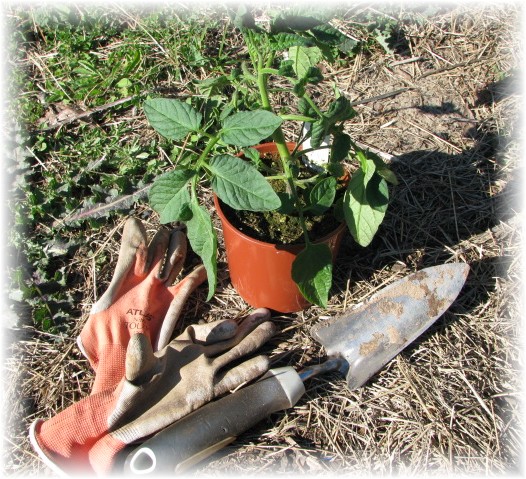
 So gather up your gloves (my new fave: nitrile treated microfiber gloves made by Atlas ~ $6), your trowel, and your ‘mater plants.

Well, as usual, I’m getting ahead of myself.  When you go to buy your little plants, always read the tag.  The tags give you all of the pertinent information.  In this case, you will see the description, followed by the word ‘determinate’.  Tomatoes come in 2 main varieties.  Determinate and indeterminate.  A determinate tomato is a plant which is more like a bush.  It will make fruit and after you harvest, it’s productive life is over.  An indeterminate tomato is a vine.  The plants can get absolutely monstrous, but it will continue to produce until it gets too hot to set fruit (when nighttime temps get above 70 degrees, you can pretty much forget fruit on MOST tomatoes), or until frost.  For example, I set out Roma tomatoes and Brandywines last spring.  The Romas are determinate, they made a nice, big bush and produced well in early summer.  Brandywines are indeterminate, and had a trailing form, with lots of fruit in both the early summer, AND in fall.  I decided to leave the Romas in through the fall to experiment, and though it produced a beautiful plant, I got the ugliest, tiniest tomatoes come fall.  And about 4 of them at that.  Anyway, so now you know the difference.  I prefer the indeterminate types myself since I like to plant once! Next, this tag gives you the maturity date.  That is, from the time you put the plant in the ground until you are able to harvest the fruit.  This is very important!  It also gives you recommended sun exposure times (full sun is like 8-12 hours a day), and how far apart to set out plants. 

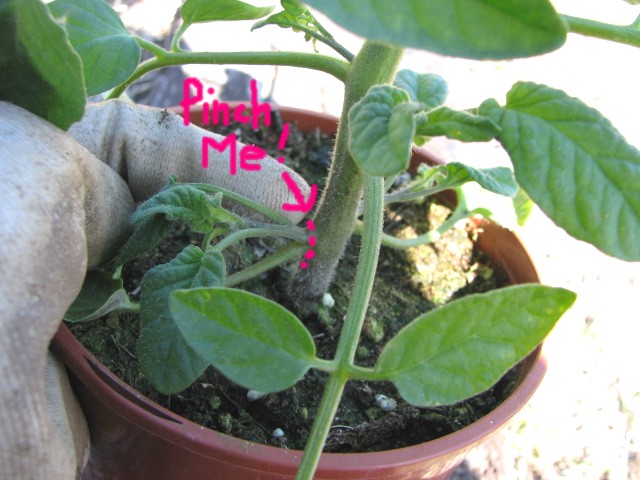
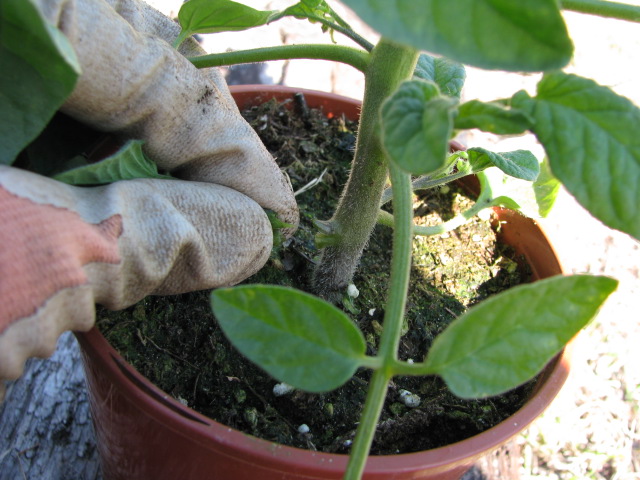
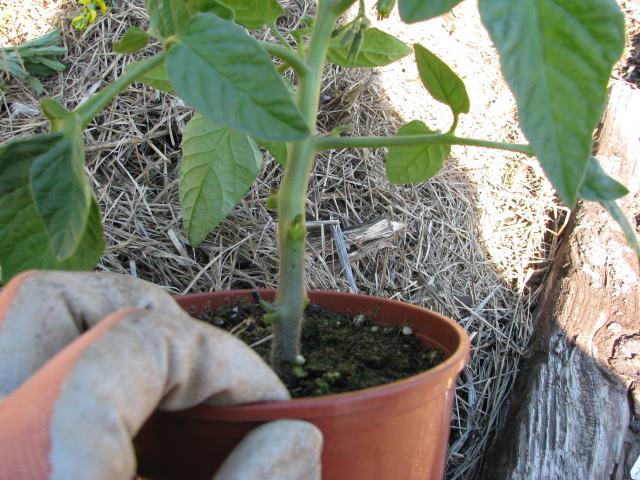
Before you remove the plant from the pot, remember this….on most tomato transplants, especially ‘leggy’ plants, you will want to remove the few sets of leaves closest to the soil.  Then, when it is planted, roots will form on this stem that you have created, and it will strengthen the plant and help it to be more stable and upright.  I just pinch ’em off with my thumb and forefinger.  On this plant, it wasn’t really too leggy, so I only removed 2 lower sets of leaves.


Here you can see what I pinched off.

Now, here is what the plant looks like with the lower leaves all gone, and ready to plant:

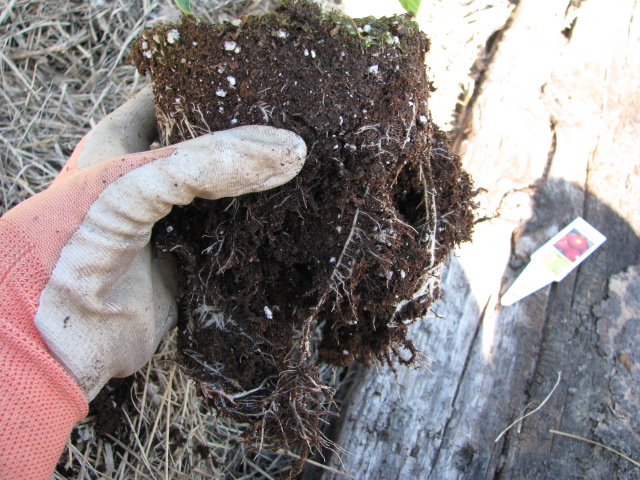
Here is the plant removed from the pot.  You can see that the roots are good and healthy and not too crowded (rootbound).  Ideally, you will not want to start with rootbound plants. 

On all plants that I plant, I always break up the soil gently and work out the roots just a bit.  On really rootbound plants, I will actually take a knife, whack off the very bottom of the whole thing, and cut an ‘X’ on the bottom and along the sides of the rootball.  This isn’t the case here, so i just teased the roots a bit, being careful not to damage them.


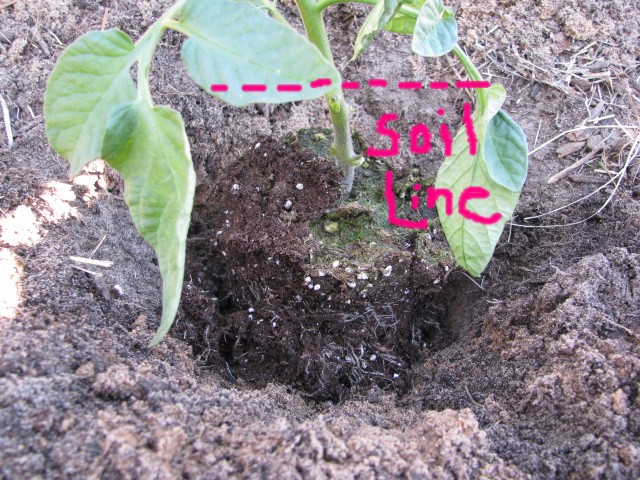
Now, I set the plant in a hole which is a bit wider than the rootball, and deep enough to cover those removed leaf scars I have just made on the stem.  You can see that my soil is pretty sandy stuff, but it’s got a whole bunch of compost added into it actually.  Kindof hard to make out in this photo.

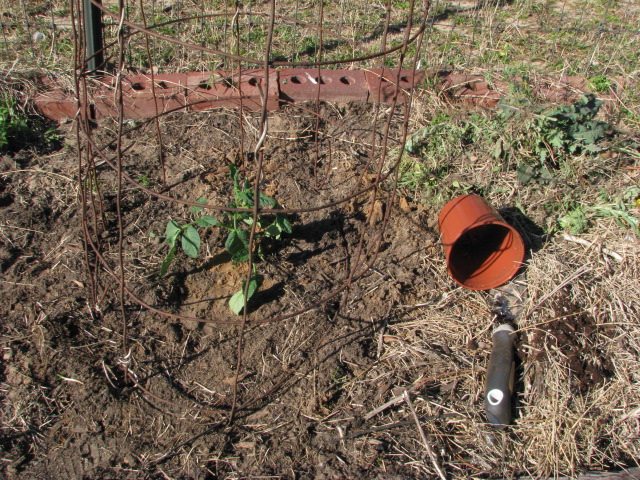
So now you will fill back in your soil, packing it gently to remove any large air gaps.  I also did something that I have done previously for some transplanted roses.  I took the pot that the tomato was in and buried it next to the plant, up to the lip of the pot.  When it is watering time, I fill up the little pot a couple of times and in this way I know that the water is actually reaching the roots.  You can also use soda bottles with the tops cut off, just poke some holes in the bottom before burying it.  This worked really well for the roses, especially in the drought of summer.  Honestly, I had pretty much forgotten that I had done that, and then I saw an ad for something similar for an orchard, and thought, “Aha!”.  I’ll just use my ingenious mind to come up with something cheap.  Lol. 

Now set your tomato cage over your baby plant and you’re ready to go.  Sorry that this pic is out of sequence!   Anyway, the cage will help support the plant.  As it grows, I use old cut up pantyhose to tie the growing plant to the cage to help support the heavy branches as the fruits develop.  Pantyhose won’t cut into the plant and they are super stretchy to boot.  This cage was made from ‘all stock’ fencing, and they are really easy to make. 

Water your plant well, and keep the soil well watered (read: not dry, but not soggy) for a week or two while the roots develop.  Yes, you can kill a plant with kindness.  I probably water mine every other day until the plant starts showing new growth.  I have sandy, well draining soil, so honestly the possibility of me drowning my plants is slim to none, but if you have really clay-ey soil, you have to be a lot more cautious.  Then again, that’s really something to deal with BEFORE you plant!  I have to admit I am no expert on fertilizing and last year, I probably threw out some 13-13-13 around the plants a time or two as they were growing, but who knows?  I have had great success just using straight compost and not worrying about fertilizers.  This year, though I am using organic fish emulsion which STINKS, but so far it seems to have been working well on my baby tomatoes I am growing. 

Here’s to homegrown tomatoes!

Weed Eaters

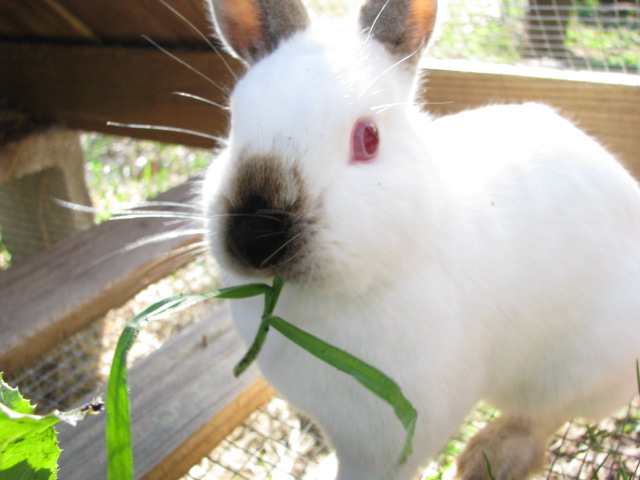
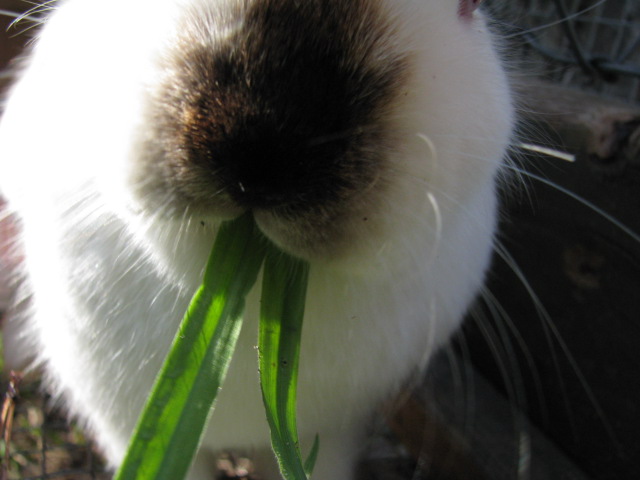
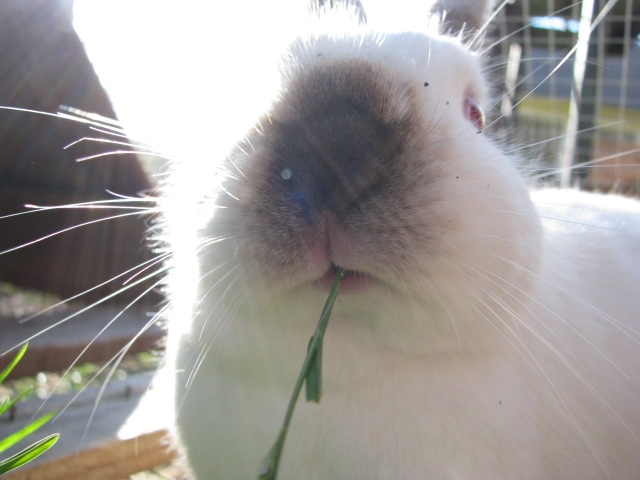
Last Easter, the Easter Bunny brought us 2 baby bunnies.  Their names are Bunny FooFoo and Widget.  I wasn’t quite sure what FooFoo and Widget’s official ‘jobs’ would be around the farm as they are certainly too small for food purposes (how could one eat a dwarf bunny?).  But, as it turns out, they are my Green Team in the garden.  These bunnies power through weeds like nothing you’ve ever seen.  Don’t believe me?  Watch this:

Goodbye, crabgrass

Any weeds that I pull in the garden go to the Green Team, where they promptly turn it into “Brown Gold” for my garden.  Now, how can you beat that arrangement???

Ode to a Turkey

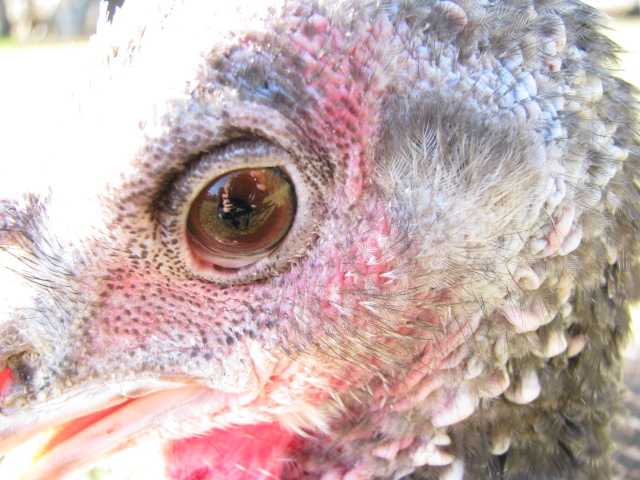
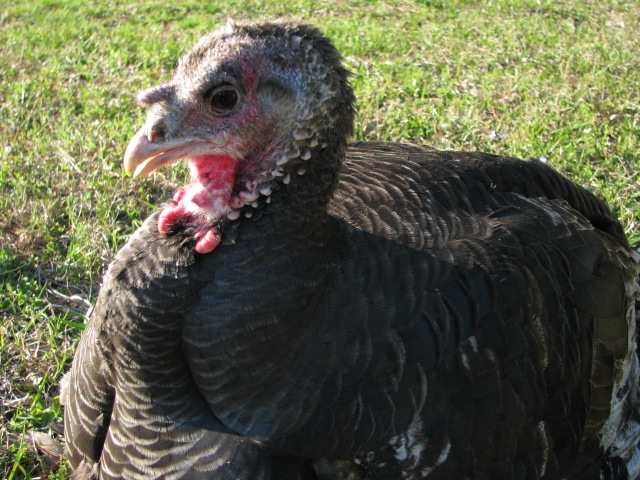
My turkey hen and one of her last sunsets

You may have heard someone say that a turkey is so dumb it will drown itself in a rainstorm by holding its head up, watching the rain.  You may have just heard someone say that a turkey is plain stupid.  I am here to assure you that both statements were obviously said by someone who has never owned a turkey. 

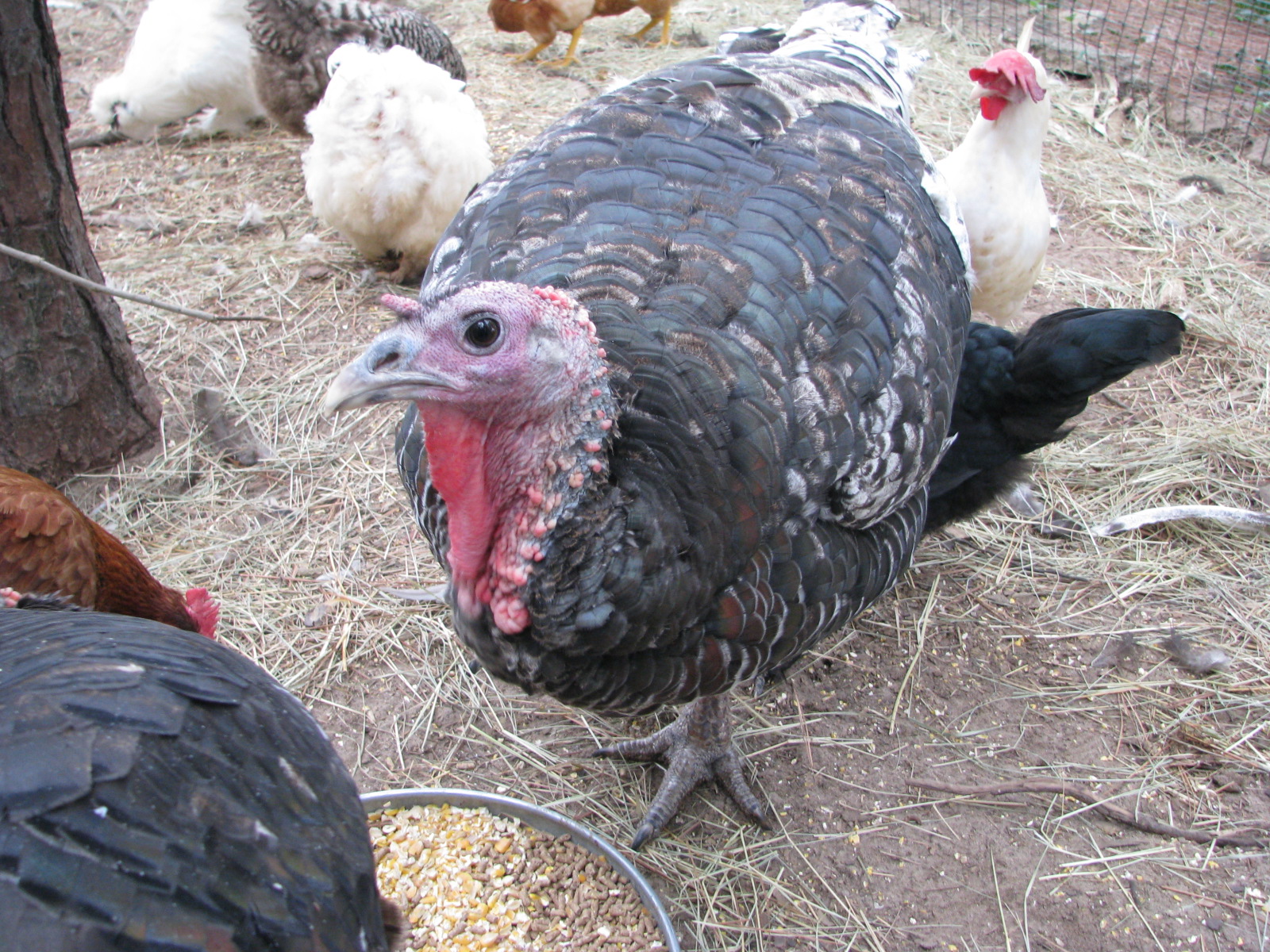
I bought my pair of Broad Breasted Bronze turkeys in March of ’09.  They were supposed to be slaughtered at about 6 months of age.  Well, that was the plan anyway.  After so many excuses, it eventually just became a joke about killing (or the non-killing of) the turkeys.  The truth was, we had grown pretty fond of the fat birds.  They are amazingly dog-like, and would follow you just to plop down right in front of your feet and occasionally the golf cart while in motion.  My hen would lay down in front of me and let us all pet her as long as we wished.  Tom was more standoffish, that is, until you brought out the feed cup and he suddenly became your best friend, waddling as fast as he possibly could to try and snag some food.  I had taught them how to drink from a chick waterer (using beer caps), how to eat (using Mardi Gras beads), and where to stay at night.  We shared a year together, until today.  Today I went out to the coop to find that Hen had prolapsed overnight.  To spare you the grisly details, think: insides on your outsides.  And, it was a complete mess.  Broad Breasted turkeys are not bred for longetivity.  They are bred to put on weight as fast as possible in the least amount of time.  They are almost always propagated, if you will, by artificial insemination, as they are so heavy they can’t ‘do it’ naturally.  Tom had already had leg trouble, but seemed to have gotten over it for the most part.  But now, here was a problem that definitely couldn’t be fixed, nor ignored.  I knew it was time to stop joking about killing the turkeys and time to actually do it.

Tom last fall in the coop.

I have never butchered an animal, ever.  But, keeping with my pioneer spirit, I knew that today would be THE DAY.  Trust me, I wasn’t excited about it. 

So, after lunch, I got my filet knife, Jason got his .22 and we got Hen from the coop.  I wasn’t as sad as I thought I would be because I knew she was in pain.  Jason shot her and let me tell you that a bird still moves around…a LOT.  In fact, to the point it is dangerous should you get too close.  But we managed to rope the legs and we suspended her from a plank, much like you would suspend other large game.  I did have to slit the neck (you let them ‘bleed out’), which was not quite as bad as I thought.  After a few minutes, I plucked the feathers from the breast and inside of the legs as fast as I could (birds have a HUGE amount of feathers, by the way).  Then, I took my knife and sliced the skin straight down the keel bone.  Then I cut out the breast muscles.  You would think this would be really bloody.  It is not. It is actually a very clean process.  I also skinned the drumstick (huge) and took them off of the bird via some shears.  All in all, the whole process took about 15 minutes or so. 

Then came Tom.  Poor Tom had squooshed about 4 of my young hens in his lifetime with his sheer gargantuan breast, just by laying on them.  Statistically speaking, Tom was deadlier to my chickens than the coyotes.  I really, really hated to kill Tom, but he would be so lost without Hen.  And, after all, I had bought them knowing that this would be the outcome.  Still…

Yes, we repeated the process with Tom.  Yes, I did cry, especially after my daughter said, “But, I LIKE Tom.”  I ‘talked’ to him, for the last time, in my best ‘Turkey-ese” (I have gotten pretty good at imitating a turkey now), and I walked away because I couldn’t bear to see him get shot.  And then he did, and then I repeated the whole butchering process over again, amidst several tears.  And now, Tom and Hen are in my refrigerator awaiting some seasoning and their futures as sausage patties. 

People may think, “But why would you do that? How could you do that?”.  My best answer is this:

I want to know where my food comes from.  This is why we made the decision to grow and process our own food.  I know that Tom and Hen had great lives, far better than their Butterball cousins who are packed, by the thousands, in windowless, disgusting buildings.  Tom and Hen knew what sunshine was, and fresh grass, and bugs, and what being loved by humans was like.  Every time we eat a chicken or a cow or a turkey who was raised in some industrial hellhole, we are supporting that.  For every McNugget your kids eat and every fast food burger that you eat, you are supporting that way of life.  I have chosen not to support that any more.  I loved Tom and Hen, but I knew what their future would be.  I have no interest in becoming a full fledged vegetarian, so I choose to raise my own meat humanely until the end. 

An ode to a turkey.  They will never be forgotten.

Hen

City Mouse, Country Mouse

Yesterday, I went down to our little local ‘general store’, if you will, to pick up a loaf of bread.  I was talking with one of the owners, who is a very nice lady, and we were discussing their produce stand.  I told her that I have been raising laying hens and would like to sell eggs, but that I had some older hens that need to be, how shall we say, removed from the flock due to their inefficiency.  She laughed and said, “Well imagine that!  A city girl doing all of that!”. 

My mind reeled in horror.  ME???  A ‘city girl’?  The phrase ‘city girl’  brings up images of girls who would never dare to soil their hands, touch a bug, or do anything which was ‘unbecoming of a young lady’.  A girl who wouldn’t touch an animal outside of a dog or cat, would rather stay in the air conditioning than to go outside, and would rather do anything on earth than sit on a pier with a fishing pole.  I also see visions of acrylic nails, country clubs, and attempting to keep up with the Joneses.  Ok, maybe I am confusing ‘city girl’ with ‘spoiled rich brat’, but I will venture to say that I am neither, perhaps with the exception of being spoiled.

  After all, we are talking about a person who, at a tender age of about 6, would chase the little boys all over the school playground with caterpillars, and BEGGED my Papaw to shoot a rabbit, so she could have its fur.  This same small girl fished with her Papaw as often as possible, and watched in awe when he cleaned them because she wanted to see what was going on in the inside.   A person who, while in high school,  brought home a pot bellied pig to live in her bathroom, took auto mechanics, and skipped school to go bass fishing.   A person who, even still at the age of 32, has four insects mounted on a styrofoam Dairy Queen cup in her kitchen ‘because they’re cool’. 

A ‘city girl’?  Perhaps in my location, but never in my heart.

What would you like to learn about?

I’m going to take a little poll.  Is there any subject which you’d like to read more about on this blog?  Such as: gardening, how-to’s, livestock, cooking/recipes, crafts, etc.  Please post your response as a comment and I’ll be happy to oblige!